
Biographies of Participants
Jack M. Balkin, Yale Law School

Jack M. Balkin is Knight Professor of Constitutional Law and the First Amendment at Yale Law School and the founder and director of Yale's Information Society Project, an interdisciplinary center that studies law and the new information technologies, as well as the director of the Knight Law and Media Program at Yale. He was a member of the University of Texas Law Faculty from 1988 to 1994.
Professor Balkin is a member of the American Academy of Arts and Sciences, and the author of over a hundred articles in different fields including constitutional theory, Internet law, freedom of speech, reproductive rights, jurisprudence, and the theory of ideology. He writes political and legal commentary at Balkinization, and has written widely on legal issues for such publications as the New York Times, the New England Journal of Medicine, the American Prospect, Washington Monthly, the New Republic Online, and Slate. In addition to Constitutional Redemption, his books include The Constitution in 2020 (with Reva Siegel); Processes of Constitutional Decisionmaking (5th ed. with Brest, Levinson, Amar, and Siegel); Cultural Software: A Theory of Ideology; The Laws of Change: I Ching and the Philosophy of Life; What Brown v. Board of Education Should Have Said; and What Roe v. Wade Should Have Said.
Justin Driver, University of Texas School of Law
Justin Driver joined the faculty of the University of Texas School of Law in 2009. Driver received his undergraduate degree from Brown University, a master's degree in teaching from Duke University, and a master's degree in modern history from Magdalen College, University of Oxford, where he studied as a Marshall Scholar. In 2004, he graduated from Harvard Law School, where he was an Articles Editor and Book Reviews Chair of the Harvard Law Review. Driver served as a law clerk to Judge Merrick B. Garland, United States Court of Appeals for the District of Columbia Circuit, and Justice Sandra Day O'Connor (ret.) and Justice Stephen Breyer, Supreme Court of the United States. His principal research interests include constitutional law and the intersection of race with legal institutions.
Driver's scholarly work is forthcoming in the following publications: Columbia Law Review, Georgetown Law Journal, Northwestern University Law Review, and Texas Law Review. In addition, his writing regularly appears in The New Republic, where he is a contributing editor.
Joseph R. Fishkin, University of Texas School of Law

Professor Fishkin's research and teaching interests include employment discrimination, election law, education law, constitutional law, torts, and distributive justice. He is particularly interested in questions of equality and equal opportunity at the intersection of law and political theory. His book manuscript, Opportunity Pluralism, is under contract with Oxford University Press. His article Equal Citizenship and the Individual Right to Vote will appear in the Indiana Law Journal in 2011.
William E. Forbath, University of Texas School of Law

Professor Forbath came to Texas in 1997 after more than a decade on the faculties of law and history at UCLA. Among the nation's leading legal and constitutional historians, he is the author of Law and the Shaping of the American Labor Movement (Harvard, 1991), the forthcoming Social and Economic Rights in the American Grain and Courting the State: Law in the Making of the Modern American State and about one hundred articles, book chapters, and essays on legal and constitutional history and theory. His scholarly work appears in Yale Law Journal, Harvard Law Review, Stanford Law Review, Law and Social Inquiry, and the Journal of American History; his journalism at Politico.com and in American Prospect and the Nation. His current research concerns social and economic rights in the courts and social movements of South Africa. Professor Forbath visited at Columbia Law School in 2001-02 and at Harvard Law School in 2008-09. He is on the Editorial Boards of Law & History, Law & Social Inquiry: Journal of the American Bar Foundation, and other journals, and on the Board of Directors of the American Society for Legal History, Texas Low-Income Housing Information Services, and other public interest organizations.
Mark Graber, University of Maryland

Professor Graber has held a faculty position in the Department of Government and Politics at the University of Maryland, College Park since 1993 and has taught at the University of Maryland School of Law as an adjunct professor since the fall of 2002. Additionally, he has been one of the organizers of the Constitutional Law "Schmooze" held at the law school during the past two years. Beginning with the 2004-2005 school year, he has a joint appointment at the law school as professor of Government and Law.
Professor Graber is recognized as one of the leading scholars in the country on constitutional law and politics. He is the author of Rethinking Abortion (Princeton University Press) and Transforming Free Speech (University of California Press). His most recent book is Dred Scott and the Problem of Constitutional Evil (Cambridge University Press). Professor Graber is the author of scores of articles, including "Naked Land Transfers and American Constitutional Development", published in the Vanderbilt Law Review and “Resolving Political Questions into Judicial Questions: Tocqueville’s Aphorism Revisited", published by Constitutional Commentary. He will teach Constitutional Law and a Constitutional History seminar.
Jamal Green, Columbia Law School
Articles Editor, Yale Law Journal. Law clerk to Judge Guido Calabresi, U.S. Court of Appeals for the Second Circuit, 2005-06. Law clerk to Justice John Paul Stevens, Supreme Court of the United States, 2006-07. Alexander Fellow, New York University School of Law, 2007-08. Joined the Columbia faculty in 2008. Member, American Bar Association.
Awarded Burton H. Brody Prize for best paper on constitutional privacy (2005); Smith-Doheny Legal Ethics Writing Prize (2004); and Edgar M. Cullen Prize for best paper by a first-year law student (2003). From 1999-2002, Professor Greene was a reporter for Sports Illustrated.
Lani Guinier

In 1998, Lani Guinier became the first woman of color appointed to a tenured professorship at the Harvard Law School and is now the Bennett Boskey Professor of Law. Before her Harvard appointment, she was a tenured professor for ten years at the University of Pennsylvania Law School. Educated at Radcliffe College and Yale Law School, Guinier worked in the Civil Rights Division at the U.S. Department of Justice and then headed the voting rights project at the NAACP Legal Defense Fund in the 1980s.
Guinier has published many scholarly articles and books, including The Tyranny of the Majority (1994); Becoming Gentlemen: Women, Law School and Institutional Change (1997) (with co-authors Michelle Fine and Jane Balin); Lift Every Voice: Turning a Civil Rights Setback into a New Vision of Social Justice (1998); and The Miner's Canary: Enlisting Race, Resisting Power, Transforming Democracy (2002) (co-authored with Gerald Torres); Meritocracy, Inc.: How Wealth Became Merit, Class Became Race and Higher Education Became a Gift From the Poor to the Rich (Harvard University Press 2007). In her scholarly writings and in op-ed pieces, she has addressed issues of race, gender, and democratic decision making, and sought new ways of approaching questions like affirmative action while calling for candid public discourse on these topics.
Gary Jacobsohn, University of Texas

Professor Jacobsohn's interests and work lie at the intersection of constitutional theory and comparative constitutionalism. He has recently completed a book on constitutional identity, which explores this idea through an examination of its expressions in India, Ireland, Israel, and the United States. He has held fellowships from the Woodrow Wilson Center for International Scholars, the Fulbright Foundation, and the National Endowment for the Humanities. He is a past President of the New England Political Science Association, and has served as co-editor of the Rowman and Littlefield series on Studies in American Constitutionalism.
Among Professor Jacobsohn's publications are: Pragmatism, Statesmanship and the Supreme Court (Cornell University Press, 1977), The Supreme Court and the Decline of Constitutional Aspiration (Rowman and Littlefield, 1986), Apple of Gold: Constitutionalism in Israel and the United States (Princeton University Press, 1993), The Wheel of Law: India's Secularism in Comparative Constitutional Context (Princeton University Press and Oxford University Press-India, 2003), and (with Donald Kommers and John Finn) American Constitutional Law: Essays, Cases, and Comparative Notes (Rowman and Littlefield, 2009). His book, The Disharmonic Constitution: A Comparative Inquiry Into Constitutional Identity, was published by Harvard University Press in 2010.
Andrew Koppelman, Northwestern University

Andrew Koppelman is John Paul Stevens Professor of Law and Professor of Political Science at Northwestern University. His scholarship focuses on issues at the intersection of law and political philosophy. He is the author of Religious Neutrality in American Law (Harvard University Press, forthcoming 2012), A Right to Discriminate? How the Case of Boy Scouts of America v. James Dale Warped the Law of Free Association (with Tobias Barrington Wolff, Yale University Press, 2009), Same Sex, Different States: When Same-Sex Marriages Cross State Lines (Yale University Press, 2006), The Gay Rights Question in Contemporary American Law (University of Chicago Press, 2002), Antidiscrimination Law and Social Equality (Yale University Press, 1996), which won a Myers Center Award, and more than 60 articles in books and scholarly journals. His article, "Bad News for Mail Robbers: The Obvious Constitutionality of Health Care Reform," is the most viewed article in the history of the Yale Law Journal Online (over 100,000 hits in the first month of posting). He is also an occasional contributor to the Balkinization blog.
Sanford Levinson, University of Texas School of Law
The author of over 350 articles and book reviews in professional and popular journals — and a regular contributor to the popular blog Balkinization — Levinson is also the author of four books: Constitutional Faith (1988, winner of the Scribes Award); Written in Stone: Public Monuments in Changing Societies (1998); Wrestling With Diversity (2003); and, most recently, Our Undemocratic Constitution: Where the Constitution Goes Wrong (and How We the People Can Correct It) (2006). Edited or co-edited books include a leading constitutional law casebook, Processes of Constitutional Decisionmaking (5th ed. 2006, with Paul Brest, Jack Balkin, Akhil Amar, and Reva Siegel); Reading Law and Literature: A Hermeneutic Reader (1988, with Steven Mallioux); Responding to Imperfection: The Theory and Practice of Constitutional Amendment (1995); Constitutional Stupidities, Constitutional Tragedies (1998, with William Eskridge); Legal Canons (2000, with Jack Balkin); The Louisiana Purchase and American Expansion (2005, with Batholomew Sparrow); and Torture: A Collection (2004, revised paperback edition, 2006).
Stephen Marshall, University of Texas

Ph.D., 2002, Government, Harvard University
Interests: Ancient and Modern Political Theory; History of Political Thought; 20th Century Political and Social Thought; African American Political Thought; Political Evil; Democratic Theory; Race and Social Justice
Anne Norton, University of Pennsylvania

Research Interests: Identity and history, Gender & race, Colonialism and post colonialism, Tradition and revolution
Recent Publications: Leo Strauss and the Politics of American Empire (Yale University Press, 2004); 95 Theses on Politics, Culture, and Method (Yale University Press, 2003); Republic of Signs: Liberal Theory and American Popular Culture (University of Chicago Press, 1993); Reflections on Political Identity (Johns Hopkins University Press, 1988); Alternative Americas: A Reading of Antebellum Political Culture (University of Chicago Press, 1986).
H. W. Perry, University of Texas School of Law

A specialist in constitutional and public law, Professor Perry is best-known for his award-winning book Deciding to Decide: Agenda Setting in the United States Supreme Court (Harvard, 1991). He is also co-author of Civil Liberties and the Constitution (8th ed., forthcoming) and is currently working on a study of decision-making in the U.S. Department of Justice. He came to Texas in 1994 after teaching for eight years at Harvard.
Aziz Rana, Cornell University

Professor Rana received his A.B. summa cum laude from Harvard College and his J.D. from Yale Law School. He also earned a Ph.D. in political science at Harvard, where his dissertation was awarded the university's Charles Sumner Prize. Prior to joining the Cornell faculty, he was an Oscar M. Ruebhausen Fellow in Law at Yale. His writing and research centers on American constitutional law and political development, with a particular interest in the intersection of citizenship with topics in national security and immigration. His book, The Two Faces of American Freedom (2010), was published by Harvard University Press and situates the American experience within the global history of colonialism, emphasizing how notions of republicanism and expansion have shaped U.S. law and politics since the founding. Rana's current project focuses on the concept of merit and its 20th century role in structuring democratic practice, security, and legal equality.
Lawrence Sager, University of Texas School of Law
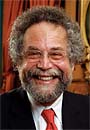
Lawrence Sager is one of the nation's preeminent constitutional theorists and scholars. His appointment as Dean is widely regarded as an event of great promise for the School of Law. Dean Sager came to Texas from New York University School of Law, where he was the Robert B. McKay Professor and Co-Founder of the Program in Law, Philosophy & Social Theory. He has also taught at Harvard, Princeton, Boston University, UCLA, and the University of Michigan. Dean Sager is the author or co-author of dozens of articles, many now classics in the canon of legal scholarship. Sager is the author of two books: Justice in Plainclothes: a Theory of American Constitutional Practice (Yale Univ. Press), and Religious Freedom and the Constitution (co-authored with Christopher Eisgruber) (Harvard Univ. Press).
Gerald Torres, University of Texas School of Law

Professor Torres is former president of the Association of American Law Schools (AALS). A leading figure in critical race theory, Torres is also an expert in agricultural and environmental law. He came to UT Law in 1993 after teaching at The University of Minnesota Law School, where he also served as associate dean. Torres has served as deputy assistant attorney general for the Environment and Natural Resources Division of the U.S. Department of Justice in Washington, D.C., and as counsel to then U.S. attorney general Janet Reno.
His latest book, The Miner's Canary: Enlisting Race, Resisting Power, Transforming Democracy (Harvard University Press, 2002) with Harvard law professor Lani Guinier, was described by Publisher's Weekly as "one of the most provocative and challenging books on race produced in years." Torres' many articles include "Translation and Stories" (Harvard Law Review, 2002), "Who Owns the Sky?" (Pace Law Review, 2001) (Garrison Lecture), "Taking and Giving: Police Power, Public Value, and Private Right" (Environmental Law, 1996), and "Translating Yonnondio by Precedent and Evidence: The Mashpee Indian Case" (Duke Law Journal, 1990).