
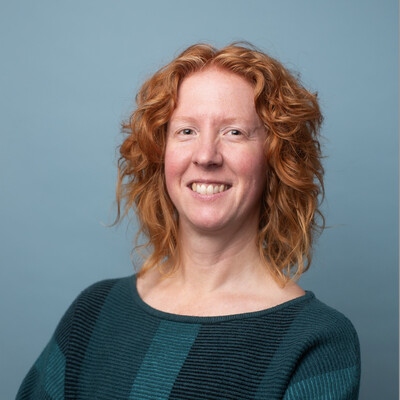
Interview conducted by Will Bonds ’27
Why did you decide to go to law school?
I wanted to go to law school because I saw it as an advocacy tool. I was interested in how we could change people’s experiences with the legal system to better serve them. Initially, I only applied to schools with Domestic Violence clinics, but I didn’t actually do that clinic at UT! I was quite committed to public interest from the start. Neither of my parents are lawyers, so I didn’t know much about how law worked, but I was really fortunate to get a public interest scholarship at UT, which made a huge difference for me.
What were you involved in and what was your most formative experience in law school?
PILA (the Public Interest Law Association) and the Justice Center were hugely influential for me. I spent a lot of time involved with those groups. I also co-founded the UT Chapter of If/When/How, which focuses on helping people understand their rights with respect to if, when, and how they become parents.
The Capital Punishment Clinic and the Immigration Clinic had profound impacts on me. In the Capital Punishment Clinic, I went to Texas’s death row and interviewed jurors who had previously been on a capital trial, and I saw our professor argue before the Fifth Circuit in New Orleans. In the Immigration Clinic, I represented someone in immigration court and helped them get released from detention.
What were your career goals when you were a student? Did they change as you went through law school?
My career trajectory wasn’t exactly planned—there’s been a throughline of wanting to make the law better for people, but not a perfect, straight-arrow path. Right when I was about to graduate, the Affordable Care Act passed, so I followed that massive policy change as an opportunity to work on reproductive health and learn more about health law generally.
What was your first job out of law school?
I worked at the Southwest Women’s Law Center in New Mexico, where I did really interesting work around contraception and abortion access. I also did more boring work on health insurance loss ratios, including writing comments on state regulations. I was on a two-year fellowship, and my goal was to help set up Medicaid expansion and establish ACA marketplaces in New Mexico. As part of that work, I worked on several aspects of reproductive health, which led to me interacting with national reproductive rights organizations.
One of the biggest takeaways from my career is that who you know and who is in your corner really makes a difference. Taking opportunities, even in law school, to build strong relationships with your peers is really critical, and it’s important to maintain those relationships even after you’ve moved somewhere else. There’s value in maintaining relationships and understanding different perspectives and life experiences—it makes life richer, and you never know where your next opportunity will come from.
In New Mexico, I was working on legislative efforts that a national organization was helping fund, and one of those people suggested that I apply for a fellowship at the Center for Reproductive Rights. I was really lucky that the fellowship worked out. I moved from working as a state advocate to working on state legislation at a national level, so my experience speaking with state legislators and encouraging them to make sure the law reflected people’s experiences helped me transition to my new position.
How do you feel law school prepared you for working on policy and legislation?
Aspects of law school help with this area, but if you’re interested in policy or legislation, you should take every opportunity to talk to people who do that work. A fundamental part of the work is statutory interpretation, which law school always covers, but the big-picture understanding of policy purposes and the nitty-gritty of compliance with the law and impacts on the ground aren’t as clear in law school.
Opportunities like legislative internships or policy-related classes would have been very helpful to me. Classes like Negotiations also would have really helped, since negotiating is such a central part of lawmaking and affecting change at the legislative level.
What did you do after your first fellowship?
At the Center for Reproductive Rights, I tracked legislation across the country, analyzing its potential effects and providing information for people on the ground in each state on how to potentially advocate for changes to the law.
It’s more common for people to do litigation before they do policy or advocacy work, partially just because law school directs you down the litigation pathway. There’s a myth that one order is better than the other, and I think I’m a perfect example of why that isn’t true—you can do so many different things regardless of where you start. I do think it’s important to be comfortable with discomfort when you’re moving into new areas, topic-wise or skill-wise, as you have to be uncomfortable until you get experience. But there’s no “correct way” to have a legal career.
What prompted you to join the Civil Rights Division at the Department of Justice? Was government service always on your radar?
My move to the DOJ again shows why connections and networking matter. I only found out about the job posting from a law school friend’s partner, who worked at the Civil Rights Division. I had worked at non-legal organizations for a fair stretch of time, and I wanted the experience of working in a more traditional legal environment, so I started doing informational interviews with federal agencies like HUD, where I knew someone who was a year ahead of me at Texas Law. I mentioned to another law school friend that I was interested in learning more about the landscape of government opportunities, and because I spoke up and kept in touch with people, this opportunity came up.
My group at the Civil Rights Division focused on disability issues, and the remedies in those cases often relate to Medicaid, where I had a lot of experience. So even though I lacked experience with motions practice and being in court, my understanding of the complex program of Medicaid was useful. I got to be a subject matter expert for the group, and I had strong writing skills as a foundation to pick up other pieces of the job.
What kinds of cases did you work on at DOJ?
I worked on two different types of cases. One category was cases relating to Olmstead (a Supreme Court case which basically says that people with disabilities should be able to access services in the community rather than go into an institution), and the other category was cases about the Civil Rights of Institutionalized Persons Act (CRIPA). I got to work on a longstanding CRIPA case, and I learned that change takes a long time, but it’s worth it and can make a huge difference in the lives of people in facilities serving people with disabilities.
I also got a chance to work on investigations, which involves looking for circumstances where federal government intervention could mean that people get what they need, and doing the work of understanding a state system and finding evidence to support whether there is a violation of the law. It was really important to me to see this process all the way through filing litigation, if needed.
It was also really fascinating to work with other agencies—I often spoke to people at HHS (related to Medicaid) or at HUD (for housing-related remedies).
My learning curve for litigation practice showed me that my policy skills were transferrable, I just needed to change to speaking in a litigator’s jargon. For example, in motions we’re trying to explain complicated concepts in an easily accessible way to a variety of audiences. I was practicing that skill in my policy world, so it was a matter of learning how to tailor that skill to the litigation context—what will a judge care about and how do we make it easy for the judge to decide?
So now you’re back at the Center for Reproductive Rights. What have you been doing since you rejoined?
I’m threading together all of my previous experience by helping healthcare providers meet the requirements of state and federal law. My policy experience gives me the background to help understand health insurance, licensure and other professional regulations—all the big-picture stuff. My experience at DOJ helps me understand what an enforcement agency needs to see from a healthcare provider to demonstrate compliance while still focusing on their patients and feeling less concerned about nitty-gritty legal details.
Do you have any advice for incoming law students or 1Ls?
Reinforcing my earlier points, connections with people are critical. I’ve gotten to do things that would have shocked me in law school, so allow yourself to be surprised and see where your career takes you! It may be a good thing to not have everything planned out. Legal research and writing is so important—get as comfortable with it as you can! Take advanced legal writing classes or seminars!