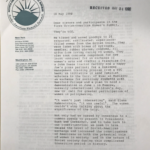
Sissy at 100: “Conscience of a World on the Eve of Annihilation”
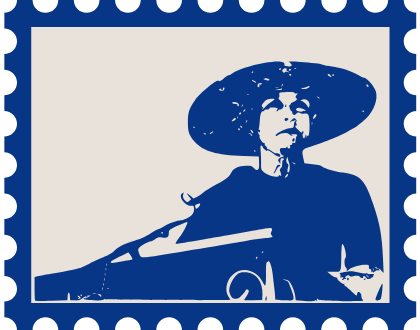


This “Spotlight on Sissy” was produced by the Sissy Farenthold Fund for Peace and Social Justice at the Rapoport Center as part of “Sissy at 100,” a yearlong campaign in the lead-up to Sissy Farenthold’s 100th birthday on October 2, 2026. It weaves together documents available on the Sissy Farenthold Papers online exhibition, including material newly digitized for Sissy at 100, to illustrate Sissy’s longtime advocacy for peace and disarmament.
***
Sissy Farenthold bore witness to nearly a century of global war and conflict. Born in 1926, she was eighteen years old when the U.S. dropped atomic bombs on the cities of Hiroshima and Nagasaki. Over the course of her life, she saw the effect of military interventions—both overt and covert—carried out by the United States. She was a prominent advocate for nuclear disarmament, feminist solidarity, and peace. Though she was most active in global women’s peace movements during the late twentieth and early twenty-first centuries, Sissy’s public opposition to militarism stretches back farther, to at least her time in the Texas Legislature.
During her first term as a State Representative, the Texas House considered a resolution inviting former president Lyndon B. Johnson to address the body. Sissy refused to vote for the resolution because its authors would not remove a clause commending the Johnson administration’s handling of the Vietnam War. She was the only Representative to vote against it.[1]
By the time she ran for Texas governor, was nominated to be the 1972 Democratic Vice Presidential candidate, and chaired the National Women’s Political Caucus (NWPC), Sissy had established herself as an opponent of the Vietnam War, U.S. imperialism, and militarism. A 1973 Ms. magazine profile noted that the peace activist Allard Lowenstein had been chosen as one of Sissy’s four nominators to “symbolize Sissy’s long-time stand against the Vietnam War.”[2] Sissy was not alone among feminists in her opposition to the war. In fact, the bi-partisan NWPC championed anti-war commitments even before Sissy became involved with that organization. Its 1971 founding document urged women “as women, not as imitators of the traditional male style and male politics” to support “immediate withdrawal from Indochina,” “a resolution that the U.S. will never again violate any nation’s right of self-determination,” “an end to war,” “support for international agreements to end the arms race,” and “an end to the use of physical violence as a traditional ‘masculine’ way of resolving conflict.”[3]
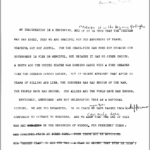
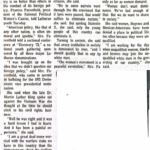
On the day of Richard Nixon’s second inauguration in 1973, Sissy delivered a speech in Houston that condemned the administration’s dangerous and costly war leadership. At the same time, she connected U.S. militarism to the failure of democratic principles: “We cannot remain a free republic at home and an arrogant empire abroad.”[4] Later that year, the Associated Press reported remarks Sissy delivered to a youth gathering of the U.S. Lutheran church: “American policy, like that of any other nation, is often immoral and ignoble,” Sissy told the crowd.[5] “I am a great deal more worried with the warfare state we have in this country than the demagoguery about the welfare state.”[6]
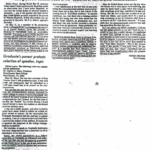
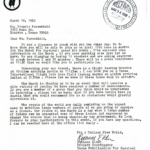
As with her support for other social justice issues, Sissy’s advocacy for peace brought backlash. When she was chosen as the commencement speaker for the West Chester State College Class of 1980, Sissy used the opportunity to call attention to the humanitarian crisis in Cambodia and the role of U.S. policy in engineering that crisis. Though she was met with boos over her “Cambodian histrionics” (as one contemporaneous letter to the editor described it) and a segment of the audience attempted to drown out her speech with a rendition of “America the Beautiful,” Sissy continued.[7] She was still the same public leader who had stood alone in the Texas House to condemn war and human suffering, as well as her country’s responsibility for that suffering.
Nuclear disarmament became a distinct focal point of Sissy’s activism during the closing years of the Cold War. Beginning in the late 1970s, after she heard physician and anti-nuclear activist Helen Caldicott speak, Sissy moved beyond what Caldicott called the “psychic numbing” that kept so many people from confronting the nuclear threat. “That was my introduction,” Sissy later recalled in a 2011 conversation with her cousin Genevieve Vaughan, adding that it was through her subsequent work with Genevieve that the issue “took deep enough root . . . to where I pursued it.”[8]
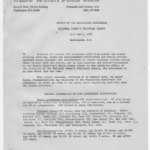
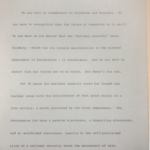
For Sissy, the stakes of the anti-nuclear movement were existential. Speaking in Austin in October 1983, she decried the deployment of Pershing and cruise missiles across Europe, a move that promised to escalate tensions with the Soviet Union. “We gather here because as our chances to survive have decreased, our will to survive has increased,”[9] she told the crowd. “We proceed as outraged citizens of this democracy, in solidarity with the outraged citizens of European democracies, and as the collective conscience of a world on the eve of annihilation. We cannot do less.”[10]
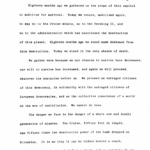
In 1983, Sissy visited the Women’s Peace Camp at Greenham Common in England and the peace camp in Comiso, Italy, where women were protesting the deployment of U.S. cruise missiles. Reflecting on Comiso, where local communities had no meaningful voice in NATO’s decision to deploy missiles, Sissy observed that “where nuclear weapons are involved, democratic processes and self-determination are the first casualties.”[11] In her eyes, the struggle against militarism was ultimately a struggle to reclaim civic governance: government secrecy and concentrated power had produced “an ignorant public, and . . . a public kept that way,”[12] in large part by the media. “Here are women on the front line,” she declared of the women of Greenham, Comiso, and the Seneca Women’s Encampment in New York—“and the response of the free press has been distortion and silence.”[13] Addressing the national security elite who decided U.S. nuclear policy with limited democratic input, she proclaimed: “your great, grey world of abstraction will not prevent us from being drenched in radiation.”[14]
At the 1985 UN World Conference on Women in Nairobi, Sissy and Genevieve were organizers of the Peace Tent, an independent gathering that ultimately drew more participants than many of the official conference sessions. The Peace Tent offered a liberating space where women from opposing nations could speak freely, dismantle the concept of the “enemy,” and collaboratively imagine peaceful resolutions to global crises. It stood as “the international feminist alternative to men’s conflict and war.”[15] Sissy reflected that, at the Peace Tent, attendees learned from “the women of Hiroshima and Nagasaki . . . the women of the South Pacific testing areas . . . the women of Western Europe where the cruise and Pershings are, and . . . the women from all the other areas where our nuclear infrastructure is placed.”[16] Only by listening to these people living amid militarism, Sissy argued, could its true human cost be understood.
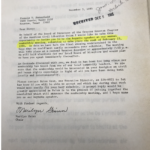
Sissy and Genevieve were also integral to the nuclear disarmament group Women for a Meaningful Summit (WMS). WMS was an ad hoc group of women that began in the United States in 1985 but soon expanded to include an international branch with women from around the world. WMS initially formed to exert a direct impact on the Cold War summit between President Ronald Reagan and General Secretary Mikhail Gorbachev that was held in Geneva on 19–21 November 1985. WMS sought to meet with both Gorbachev and Reagan, as well as other US and Soviet government officials, prior to or during the summit, sent recommendations to both leaders on how to reverse the nuclear arms race and avoid its expansion into space, travelled to Geneva during the summit, and participated in a range of activities while there, including joining a delegation that met with Gorbachev.[17] Sissy wrote of WMS: “As long as we are not seated around the negotiating table, women will continue to speak out in other ways in order to make our recommendations and express our foreboding concerns and hopes to officialdom.”[18] WMS expanded quickly after the first summit, becoming a transnational women’s peace group. It hosted several meetings to educate those involved and others, making recommendations for the summits and organizing a 1989 conference on the intersection of international security, development, and the environment,[19] as well as a 1990 Soviet-American Women’s Summit.[20]
Women for a Meaningful Summit produced its own platform on international security and the environment, placing it in dialogue and alliance with feminist peace activists in the Global South who emphasized the importance of development, peace, and environmental protection. WMS also aligned with the stance taken by some Global South feminist groups, such as Development Alternatives with Women for a New Era, that rejected the idea that nuclear energy should be a development strategy for the Global South. For WMS, “The unbreakable triangle of Disarmament, Environment and Development should be the new standard for decision-making to move this process forward. The protection of the environment is no longer a luxury, but a necessity.”[21] Through her work with the Institute for Policy Studies, including as board chair, Sissy collaborated with Isabel Letelier on the Third World Women’s Project.
In 1981, after meeting Salvadoran refugees through her law practice in Houston, Sissy began to advocate against the violence, displacement, and repression enabled and funded by U.S. military aid in Central and South America. “I am a citizen who has become increasingly distressed at the wanton destructiveness of our policies in the region,” she declared. At the ACLU’s 1986 annual meeting in Houston, Sissy chose “to speak of the silent people in our midst and the forgotten war that has driven them here.”[22] Though she was referring now to Salvadoran refugees, Sissy’s address mirrored a speech she gave during her 1974 gubernatorial campaign, proclaiming her candidacy for all “forgotten people.”[23] The similarity between these remarks, delivered twelve years apart, reveals a common thread uniting Sissy’s advocacy—an unceasing quest for justice for those who were ignored, dispossessed, and oppressed.
Sissy continued her peace activism after the Cold War. In 2003, she was among a group of anti-war activists who urged the Houston City Council to pass a resolution condemning the invasion of Iraq. In her remarks before the Council, Sissy argued that city governments could not claim to be removed from the foreign policy of the United States government or the economic consequences of the war.[24]
***
Today, Sissy’s search for peace is carried on by the Sissy Farenthold Fund for Peace and Social Justice at the Rapoport Center. Grounded in her trailblazing example, the Fund champions programming, community partnerships, research, and support for students that center feminist and Global South–based approaches to peace, directly linking the struggles for disarmament and anti-militarism to global fights for peace, democracy, equality, and environmental justice.
Sissy Fund–Supported Work on Peace and Disarmament:
- “Fighting Pollution: Protecting People and Planet with Law, Advocacy, and Action” – Earth Day talk by Diane Wilson (2026)
- “Crisis, Stasis, Slow Violence, and Short Histories: Understanding International Law Amid Contemporary Conflict” — talk by Zinaida Miller (2026)
- “The Growing Danger of Nuclear War: What We Must Do To Prevent It” & “The Growing Danger of Nuclear War: What Students Can Do To Prevent It” – talks by Ira Helfand (2026)
- “On Undefeated Despair: Writing Inside Empire” — 10th Sissy Farenthold Lecture delivered by Viet Thanh Nugyen (2026)
- Disarming Toxic Empire Special Series – special collection of the Working Paper Series (2025–26)
- Delegation to “Disarmament from the Margins” (2025)
- Delegation to the Meeting of State Parties to the Treaty on the Prohibition of Nuclear Weapons (2025)
- Law and Development after Decolonization: workshop and advocacy partnership with the Chagossian community (2025)
- Guantánamo and Beyond: Legacies of Exceptionalism, Discrimination, and Securitization – conversation with Mansoor Adayfi and Fionnuala Ní Aoláin (2025)
- Fady Joudah in Conversation with Roger Reeves – reading and dialogue (2024)
- Disarming Toxic Empire – conference (2024)
- “Writing Sudan” – reading by Fatin Abbas (2023)
- “When Wars and Wounds Collide” – reading by Sinan Antoon (2022)
- “Counter-Terrorism, Peacebuilding, and the UN” – talk by Fionnuala Ní Aoláin (2022)
Sources
[1] “Rep. Frances Farenthold: A Melancholy Rebel,” Texas Observer, Apr. 9, 1971.
[2] Elizabeth Frappiolo, “The Ticket That Might Have Been: Vice President Farenthold,” Ms., Jan. 1973.
[3] Statement of Purpose adopted by the National Women’s Political Caucus, July 11, 1971, UTEXAS.CAH.00291, Frances Tarlton Farenthold Papers, 1913-2018, Dolph Briscoe Center for American History, The University of Texas at Austin, Austin, TX, https://law.utexas.edu/wp-content/uploads/sites/28/NWPC_Founding_Document-1.pdf.
[4] Speech by Frances T. “Sissy” Farenthold delivered on Inauguration Day 1973 at Houston Peace Rally, Jan. 1973, UTEXAS.CAH.00291, box 3U186, Frances Tarlton Farenthold Papers, 1913-2018, Dolph Briscoe Center for American History, The University of Texas at Austin, Austin, TX, https://law.utexas.edu/farenthold/document/speech-inauguration-day-1973-houston-peace-rally/.
[5] Associated Press, “‘Sissy’ Tells Lutheran Youths U.S. Policy Sometimes Immoral,” Waco News Tribune, Aug. 8, 1973.
[6] “‘Sissy’ Tells Lutheran Youths U.S. Policy Sometimes Immoral.”
[7] “Commencement Speaker Stirs Scorn, Support,” Daily Local News (West Chester, PA), May 30, 1980, UTEXAS.CAH.00291, box 3U135a, Frances Tarlton Farenthold Papers, 1913-2018, Dolph Briscoe Center for American History, The University of Texas at Austin, Austin, TX.
[8] Sissy Farenthold, “On Her Introduction to the Peace Movement,” July 2011, University of Texas School of Law, Austin, TX, online video, 3:37, https://www.youtube.com/watch?v=xHzrMtu3qk8.
[9] Speech by Frances T. “Sissy” Farenthold titled “No to the Euromissiles” and delivered in Austin, Oct. 22, 1983, UTEXAS.CAH.00291, box 3U136a, folder ####, Frances Tarlton Farenthold Papers, 1913-2018, Dolph Briscoe Center for American History, The University of Texas at Austin, Austin, TX, https://law.utexas.edu/wp-content/uploads/sites/28/Speech-Peace-and-Justice-Coalition-No-to-the-Euromissile1.pdf (hereinafter cited as “No to the Euromissiles” speech, Frances Tarlton Farenthold Papers).
[10] “No to the Euromissiles” speech, Frances Tarlton Farenthold Papers.
[11] Speech by Frances T. “Sissy” Farenthold titled “Women’s Search for Peace,” 1988, UTEXAS.CAH.00291, box 3U126b, folder “Women: “Women’s Search for Peace.” Federation of Professional Women, Houston, 6/88,” Frances Tarlton Farenthold Papers, 1913-2018, Dolph Briscoe Center for American History, The University of Texas at Austin, Austin, TX.
[12] Speech by Frances T. “Sissy” Farenthold titled “American Peace Test,” May 31, 1986, UTEXAS.CAH.00291, box 3U136a, folder “Women and Peace: ‘American Peace Test’, 1986/05,” Frances Tarlton Farenthold Papers, 1913-2018, Dolph Briscoe Center for American History, The University of Texas at Austin, Austin, TX (hereinafter cited as “American Peace Test” speech, Frances Tarlton Farenthold Papers).
[13] “American Peace Test” speech, Frances Tarlton Farenthold Papers.
[14] “American Peace Test” speech, Frances Tarlton Farenthold Papers.
[15] Document titled “Peace Tent Statement,” 1985, UTEXAS.CAH.00291, box 3U147, folder “Gen’s Writings,” Frances Tarlton Farenthold Papers, 1913-2018, Dolph Briscoe Center for American History, The University of Texas at Austin, Austin, TX, https://law.utexas.edu/farenthold/document/peace-tent-statement/.
[16] Speech by Frances T. “Sissy” Farenthold on Hiroshima and Nagasaki, Aug. 7, 1983, UTEXAS.CAH.00291, box 3U124b, folder “Hiroshima/Nagasaki Peace Project, Houston, August 1983,” Frances Tarlton Farenthold Papers, 1913-2018, Dolph Briscoe Center for American History, The University of Texas at Austin, Austin, TX.
[17] See Karen Engle, “‘Private’ Diplomacy and Nuclear Disarmament: Revisiting the Cold War Activism of Women for a Meaningful Summit.” University of Toronto Law Journal 74 (2024), 43–68.
[18] Contribution to Institute for Policy Studies newsletter by Frances T. “Sissy” Farenthold titled “A Visit with Secretary-General Gorbachev,” Dec. 3, 1985, UTEXAS.CAH.00291, Frances Tarlton Farenthold Papers, 1913-2018, Dolph Briscoe Center for American History, The University of Texas at Austin, Austin, TX, https://law.utexas.edu/farenthold/document/farenthold-ips-report-on-gorbachev-meeting/.
[19] Document titled “Environment and International Security: A Women’s Platform,” n.d., UTEXAS.CAH.00291, box 3U147, folder “Women for a Meaningful Summit 1988-90,” Frances Tarlton Farenthold Papers, 1913-2018, Dolph Briscoe Center for American History, The University of Texas at Austin, Austin, TX (hereinafter cited as “Environment and International Security: A Women’s Platform,” Frances Tarlton Farenthold Papers).
[20] Report on the first “Soviet-American Women’s Summit” organized by Women for a Meaningful Summit, May 18, 1990, UTEXAS.CAH.00291, box 3U127a, Frances Tarlton Farenthold Papers, 1913-2018, Dolph Briscoe Center for American History, The University of Texas at Austin, Austin, TX.
[21] “Environment and International Security: A Women’s Platform,” Frances Tarlton Farenthold Papers.
[22] Speech by Frances T. “Sissy” Farenthold at ACLU meeting in Houston, Feb. 27, 1986, UTEXAS.CAH.00291, box 3U136a, Frances Tarlton Farenthold Papers, 1913-2018, Dolph Briscoe Center for American History, The University of Texas at Austin, Austin, TX.
[23] Speech by Frances T. “Sissy” Farenthold in Houston, Apr. 30, 1974, UTEXAS.CAH.00291, box 3G58, Frances Tarlton Farenthold Papers, 1913-2018, Dolph Briscoe Center for American History, The University of Texas at Austin, Austin, TX.
[24] “Activists Try to Get City Council to Vote for Peace,” KPFT News, Jan. 22, 2003.