Sissy at 100: “The Longest Revolution”
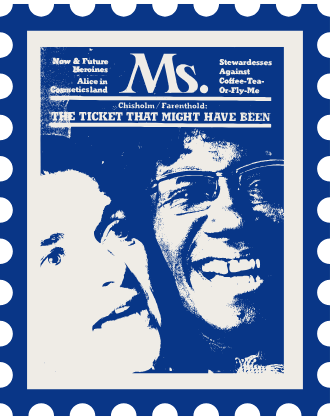
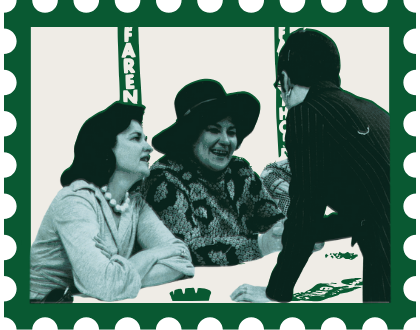
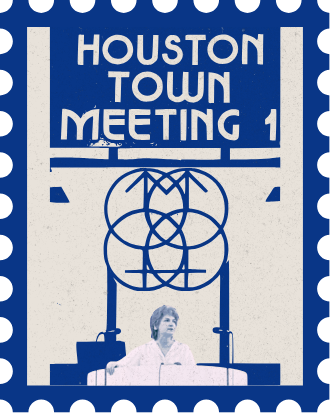
This “Spotlight on Sissy” was produced by the Sissy Farenthold Fund for Peace and Social Justice at the Rapoport Center as part of “Sissy at 100,” a yearlong campaign in the lead-up to Sissy Farenthold’s 100th birthday on October 2, 2026. It weaves together documents available at Sissy Farenthold Papers online exhibition, including material newly digitized for Sissy at 100, to explore Sissy’s longtime advocacy for reproductive justice.
***
Throughout her legal and political careers as well as her grassroots advocacy, Sissy Farenthold was committed to many of the principles that we understand today as “reproductive justice,” a framework articulated by women of color beginning in the 1990s. That is, Sissy advocated for the rights to have a child, not to have a child, and to parent with dignity in sustainable and safe communities.[1]
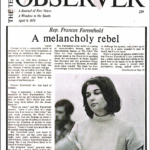
From 1965 to 1967, Sissy served as director of Nueces County Legal Aid Services. She later described her work in legal aid as a “searing” experience. “I saw the powerlessness of the poor,” she said. “I saw how they were abused and ignored. . . . It was hardcore poverty and so much of it went back to state government.”[2] In particular, Sissy witnessed the injustices visited upon poor Latino women and children in South Texas—such as predatory consumer practices, expensive public transportation, and limited access to health care. “I don’t think I’d have ever gone into politics except for that,” she said.[3]
When, in 1969, Sissy began serving in the Texas House of Representatives, where she was the only woman representative, she pursued legislation to improve the economic welfare of working mothers and their children. Specifically, she introduced bills that would create a standing committee on welfare, provide free daycare for young children of working moms, require greater action from the State of Texas to prevent childhood hunger, and enact a permanent committee on Children and Youth.[4] She also pushed multiple anti-discrimination bills and introduced a bill to provide legal service for indigent populations.[5]
Sissy was an advocate for gender equality. Although she at first did not support the Texas Equal Rights Amendment, her position changed by the end of her first term. She co-sponsored the Texas ERA in the 1971 legislative session, and Texas voters approved it via referendum in 1972.
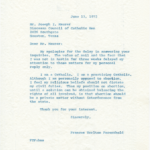
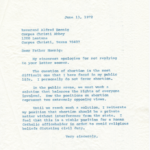
Sissy’s support for the right to abortion dates roughly to the same time period, notably before Supreme Court’s decision in Roe v. Wade (1973). She spoke in favor of abortion rights during her Texas gubernatorial campaign, which she told Ms. led to much “political and personal suffering.” Sissy identified as a Catholic and defended her position in a pair of 1972 letters she wrote to Catholic leaders in Corpus Christi who had questioned her support for abortion rights. She wrote that, notwithstanding that she “personally do[es] not favor abortion,” she believed women possessed a right to make private reproductive decisions without government regulation. “Abortion should be a private matter without interference from the state,” she wrote. “I feel this is a viable position for a Roman Catholic officeholder in order to avoid religious beliefs dictating civic duty.”[6]
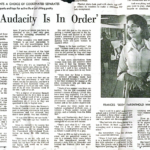
Ms. noted that, despite the criticism, Sissy “refused to compromise her stand on abortion . . . . At the [1972] Democratic Convention she was courageous enough to speak in support of putting a reproductive freedom plank in the party platform.”[7] Sissy was nominated at the convention to be the candidate for U.S. Vice President. Progressive support propelled her to a second-place finish. Sissy was the first woman to come that close to the vice-presidential nomination of a major U.S. political party. The Philadelphia Bulletin observed that “Ms. Farenthold has emerged as the new darling of the women’s movement—champion in her conservative home state of such unpopular causes as abortion, race relations, and health care.”[8] Indeed, Sissy always considered women’s rights in tandem with other issues. “I’m not just concerned with women’s causes although I think they have been long neglected,” she told the Seattle Post-Intelligencer in 1973.[9] “I’m just as concerned with the deeply-entrenched racism in this country that now has government sanction in the administration and in the Justice Department.”[10]
In February 1973, Sissy was elected the first chair of the National Women’s Political Caucus (NWPC). The multi-partisan organization had been launched two years earlier by more than 320 women from twenty-six states, including Gloria Steinem, Shirley Chisholm, Betty Friedan, Fannie Lou Hamer, and Bella Abzug. Congress’s failure to pass the Equal Rights Amendment in 1970 helped spur the Caucus’s creation, but its platform extended well beyond the ERA. Its founding statement of purpose called for action “against sexism, racism, institutional violence and poverty,” while committing the organization to recruiting women candidates, reforming political parties, expanding women’s role in political decision-making, and raising women’s issues in elections.[11] These broader commitments were important to Sissy, who later recalled that the Caucus’s opposition to “racism, sexism and institutional violence” was what made her feel like “an advocate for the Caucus.”[12]
Reproductive choice was also part of the Caucus’s agenda from its founding. At its 1971 organizing conference, the NWPC called for the repeal of all laws interfering with a woman’s right to determine her own reproductive and sexual life, a position directed specifically at restrictions on abortion and contraception.
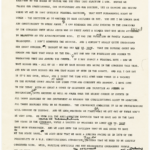
Even after the U.S. Supreme Court recognized in Roe the constitutional right for a woman to decide whether to terminate a pregnancy, Sissy called out the limits of formal legal abortion rights, particularly because they did not extend abortion access to poor women.[13] In a 1977 speech to the National Women’s Political Caucus, she began: “I come to you today with as great a sense of grievance and injustice as of indignation, and with anguish as well as anger over the recent course of events . . . as regards the Constitutional right to abortion.”[14] Sissy argued that “all three branches” of government had contributed to the erosion of access to abortion.[15] She first considered Congress, referencing efforts to limit the use of Medicaid funds for abortion care. Sissy then turned to the Executive Branch, criticizing President Jimmy Carter’s response to the unequal effects of abortion-funding restrictions on poor women. When asked about the disparity between women who could afford abortions and those who could not, Carter had responded that “there are many things in life that are not fair, that wealthy people can afford and poor people cannot.” Carter concluded that the government should not take action to guarantee full equality, “particularly when there is a moral factor involved.”[16] Sissy rejoined that this amounted to the government providing “morality for the poor” over welfare for the poor.
Sissy reserved her harshest criticism for the Supreme Court. In Beal v. Doe, Maher v. Roe, and Poelker v. Doe, all decided on June 20, 1977, the Court held, respectively, that federal Medicaid law did not require participating states to fund nontherapeutic abortions; that the Equal Protection Clause did not require a state that funded childbirth to fund nontherapeutic abortions; and that a city could provide publicly financed hospital services for childbirth without providing corresponding services for nontherapeutic abortions.[17] Quoting a dissent by Justice Blackmun, Sissy emphasized that the Court recognized the “existence of a constitutional right” while denying its “realization and enjoyment,” producing for indigent women what Blackmun called a “punitive and tragic” result.[18] Sissy concluded that abortion had become “a class issue, a race issue, a privacy issue.” She framed access—not simply formal rights—as central to reproductive justice.[19]
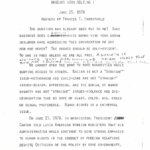
Unlike some of her contemporaries in the feminist movement, Sissy was unequivocal in her support for the rights of gays and lesbians, seeing their struggle as closely tied to questions of bodily autonomy and sexual liberation. In 1978, she delivered the keynote address at Houston’s Town Meeting I, the centerpiece of the city’s inaugural Gay Pride Week and the first “politically oriented” gay meeting in the United States. When asked why “a married white woman with four children” had chosen to stand with the gay community, she answered: “No one is free unless we all are free . . . we cannot open the door to some minorities while denying access to others.”[20] Again demonstrating her understanding of intersectional oppression and the need for solidarity across issues, she argued that “Racism is not a ‘straight’ issue. Motherhood and childcare are not ‘straight’ issues . . . Violence and discrimination take no note of class, color, age, creed, or sexual preference. Human rights is a universal issue.”[21] The speech left a lasting impression on those in attendance—LGBTQ+ activist Ray Hill recalled that it was interrupted by nine standing ovations.[22]
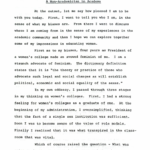
Sissy’s commitments to reproductive access, bodily autonomy, and reproductive justice continued even as the focus of her activism became more global. In 1981, Sissy warned of a “chilling repatriarchalization of our society” and remarked that “our political climate encourages privatization of public issues and political intrusion into private matters, the most private being the individual woman’s decision to bear a child.”[23] At the end of the twentieth and beginning of the twenty-first century, Sissy’s activism on peace and disarmament, inclusion of migrants, and economic justice, both in the United States and around the world, emphasized the creation of safe and equal communities where all people could freely raise their children and take care of their families.
***
Following the U.S. Supreme Court’s 2022 Dobbs decision, which eliminated the nationwide right to abortion and enabled the criminalization of abortion care in Texas, the Sissy Farenthold Fund and the Rapoport Center launched the Sissy Farenthold Reproductive Justice Defense Project. Built upon Sissy’s commitment to reproductive justice, the Project focuses on the systemic injustices and inequalities integral to abortion bans, pregnancy criminalization, and reproductive health care restrictions. It has become a vital resource for researchers, students, attorneys, and health care providers in Texas and around the world.
Sissy Fund–Supported Work on Reproductive Justice:
- Sissy Farenthold Reproductive Justice Defense Project (2022–)
- “Reproductive, Criminal Law, and the Carceral State” – colloquium speaker series (2023, 2024, 2026)
- “Toward an Abolitionist Human Rights Court: Rethinking Responses to Gendered and Racialized Violence” – book talk with Karen Engle (2025)
- “Fighting for Control: Power, Reproductive Care, and Race in the US-Mexico Borderlands” – book talk with Lina-Maria Murillo (2026)
- “Failing Moms”– book talk with Caitlin Killian (2024)
- “Pandemic Genres: Imagining Politics in a Time of AIDS” – book talk by Neville Hoad (2025)
- “The Long Struggle to Abolish Reproductive Slavery” – lecture by Dorothy Roberts (2023)
- “Strategies for Reproductive Justice in Texas after the End of Roe v. Wade: From the Local to the Global” – webinar series (2022)
Sources
[1] For a discussion of the history and development of the reproductive justice movement, see Loretta J. Ross and Rickie Solinger, Reproductive Justice (2017). For a contemporary statement of the term’s meaning, see “Reproductive Justice,” Sister Song, https://www.sistersong.net/reproductive-justice.
[2] Sissy Farenthold, interview with Evan Smith, University of Texas School of Law, Austin, TX, online video, 59:36, Oct. 26, 2015, https://www.youtube.com/watch?v=T8Ce84-mL2s.
[3] “Rep. Frances Farenthold: A Melancholy Rebel,” Texas Observer, Apr. 9, 1971.
[4] An Act relating to the creation of a permanent Committee on Children and Youth; providing for a Citizens Advisory Council and a Professional Advisory Council; for appointment and tenure of members; for powers and responsibilities and declaring an emergency,” H.B. 1434, 61st Legislature of the State of Texas, regular session, 1969, https://lrl.texas.gov/LASDOCS/61R/HB1434/HB1434_61R.pdf (authored by Rep. Frances Farenthold); A Resolution Directing the Texas Department of Health, the Texas Department of Public Welfare, and the Secretary of Agriculture regarding emergency food and commodity programs for the welfare of Texas children, H.C.R. 128, 61st Legislature of the State of Texas, regular session, 1969 https://lrl.texas.gov/LASDOCS/61R/HCR128/HCR128_61R.pdf, (authored by Rep. Frances Farenthold); A Resolution Amending Rule VII of the House Rules, Sixty-first Legislature, to create a standing Committee on Welfare, H.R. 8, 61st Legislature of the State of Texas, 2nd called session, 1969, https://lrl.texas.gov/LASDOCS/61CS2/HR8/HR8_61CS2.pdf (authored by Rep. Frances Farenthold).
[5] Relating to promoting and protecting the welfare of the people of Texas by prevention and elimination of certain unreasonable practices and policies relating to discrimination, H.B. 758, 62nd Legislature of the State of Texas, regular session, 1971, https://lrl.texas.gov/LASDOCS/62R/HB758/HB758_62R.pdf, (co-authored by Rep. Frances Farenthold); Relating to discriminatory action by state or local government officers or employees, H.B. 909, 62nd Legislature of the State of Texas, regular session, 1971, https://lrl.texas.gov/LASDOCS/62R/HB909/HB909_62R.pdf; Relating to providing legal services for indigents, H.B. 929, 62nd Legislature of the State of Texas, regular session, 1971, https://lrl.texas.gov/LASDOCS/62R/HB929/HB929_62R.pdf ;
[6] Letter to Reverand [sic] Alfred Hoenig Regarding Abortion, June 13, 1972, UTEXAS.CAH.00291, box 3G85, folder “Legislative Files: Subject Classified File: Abortion, April, 1971–July, 1971,” Frances Tarlton Farenthold Papers, 1913-2018, Dolph Briscoe Center for American History, The University of Texas at Austin, Austin, TX, https://law.utexas.edu/farenthold/document/letter-to-reverand-alfred-hoenig-re-abortion-dated-june-13-1972/. See also Letter to Mr. Joseph I. Maurer Regarding Abortion, June 13, 1972, UTEXAS.CAH.00291, box 3G85, folder “Legislative Files: Subject Classified File: Abortion, April, 1971–July, 1971,” Frances Tarlton Farenthold Papers, 1913-2018, Dolph Briscoe Center for American History, The University of Texas at Austin, Austin, TX, https://law.utexas.edu/farenthold/document/letter-to-mr-joseph-i-maurer-regarding-abortion-dated-june-13-1972/.
[7] Elizabeth Frappiolo, “The Ticket That Might Have Been: Vice President Farenthold,” Ms., Jan. 1973.
[8] Marcy Shatzman, “Different Ballgame if She Had Won?,” Philadelphia Evening Bulletin, Sept. 17, 1973.
[9] Susan Paynter, “Then Audacity Is in Order,” Seattle Post-Intelligencer, Apr. 5, 1973.
[10] Paynter, “Then Audacity Is in Order.”
[11] Founding Document of the National Women’s Political Caucus, July 10–11, 1971, UTEXAS.CAH.00291, Frances Tarlton Farenthold Papers, 1913-2018, Dolph Briscoe Center for American History, The University of Texas at Austin, Austin, TX, https://law.utexas.edu/farenthold/document/national-womens-political-caucus/.
[12] Gloria Steinem and Sissy Farenthold, interview by Amy Goodman, New York City, NY, online video, 38:32, Oct.14, 2013, https://law.utexas.edu/farenthold/video/amy-goodman-interviews-gloria-steinem-and-sissy-farenthold.
[13] Roe v. Wade, 410 U.S. 113, 153–54, 163–65 (1973).
[14] Speech by Frances T. “Sissy” Farenthold titled “Abortion Speech” delivered to the National Women’s Political Caucus in San Jose, CA, Sept. 10, 1977, UTEXAS.CAH.00291, box 3U134a Frances Tarlton Farenthold Papers, 1913-2018, Dolph Briscoe Center for American History, The University of Texas at Austin, Austin, TX, https://law.utexas.edu/farenthold/document/abortion-speech/ (hereinafter cited as “Abortion Speech,” Frances Tarlton Farenthold Papers.).
[15] “Abortion Speech,” Frances Tarlton Farenthold Papers.
[16] Jimmy Carter, “The President’s News Conference,” July 12, 1977, The American Presidency Project, University of California, Santa Barbara; “Abortion Speech,” Frances Tarlton Farenthold Papers.
[17] Beal v. Doe, 432 U.S. 438, 447 (1977); Maher v. Roe, 432 U.S. 464, 469–80 (1977); Poelker v. Doe, 432 U.S. 519, 520–21 (1977). The Court itself summarized the distinction between Beal and Maher: Beal held that the Social Security Act did not require funding, while Maher held that equal protection did not require a state funding childbirth to fund elective abortions.
[18] Beal v. Doe, 432 U.S. 438, 462–63 (1977) (Blackmun, J., dissenting). Justice Blackmun expressly stated that his dissent applied to Beal, Maher, and Poelker.
[19] “Abortion Speech,” Frances Tarlton Farenthold Papers.
[20] Speech by Frances T. “Sissy” Farenthold at Houston Town Meeting I, June 25, 1978, UTEXAS.CAH.00291, box 3U198, folder “Town Meeting I,” Frances Tarlton Farenthold Papers, 1913-2018, Dolph Briscoe Center for American History, The University of Texas at Austin, Austin, TX, https://law.utexas.edu/farenthold/document/address-by-frances-t-farenthold-houston-town-meeting-i/ (hereinafter “Houston Town Meeting I, Frances Tarlton Farenthold Papers).
[21] “Houston Town Meeting I,” Frances Tarlton Farenthold Papers.
[22] Recording of National Panel at “Frances T. ‘Sissy’ Farenthold” A Noble Citizen Conference, digital video, 1:55:09, May 11, 2016, https://www.youtube.com/watch?v=Dj6gX-Eo-S0.
[23] Speech by Frances T. “Sissy” Farenthold titled “A Non-Academician in Academe” delivered to Stephens College in Columbia, MO, Aug. 24, 1981, UTEXAS.CAH.00291, box 3U135a, Frances Tarlton Farenthold Papers, 1913-2018, Dolph Briscoe Center for American History, The University of Texas at Austin, Austin, TX.