

True Crime Numbers: The hidden math of justice
Written by Brian Pérez-Daple
Art by Vartika Sharma
What percentage of criminals should get away with it?
Ten? Twenty? More than fifty?
You might imagine the natural answer is none. From the mid-1930s until around 1968, most Hollywood films followed the Hays Code, a set of rules about what was acceptable to depict. In the unacceptable category: criminals who get away with their crimes. But the Code proved unworkable as a standard for the movies, and it’s unworkable as a standard for real life, too. Making sure every criminal is caught and punished would be wildly expensive and require a kind of society nobody wants—and it still wouldn’t work. We don’t drive our cars as if we want zero accidents ever to happen, and we don’t run our justice system as if we want zero criminals ever to get away with it. But what does our justice system imply about how many criminals should get away with it? Should we be happy with the way things stand now?
Estimating the gap
How big is the gap between crimes committed and criminals punished?
Let’s start with the clearance rate—the percentage of crimes police close, whether by arrest or by “exceptional means” (where police think they’ve identified the perpetrator but can’t make an arrest for some reason). According to the FBI, in 2024 American law enforcement cleared 43.8% of violent crimes—meaning 56.2% went unsolved. But, of course, there are variations among crimes. For that same year, the FBI reported the national clearance rate for wire fraud was just 3.2%. (The annual losses from fraud nationwide are in the ballpark of $10 billion per year.) Homicides were cleared at 61.4% (up from 52.3% in 2022), rape at 26.5%, property crimes at just under 16%.
There are local variations, too. The Houston police cleared over 90% of homicides in 2024 but just 9.9% of rape cases. Clearance rates are generally lower in poorer areas where crime rates are higher. Race matters, also. A recent study of homicide clearance rates in big cities found lower clearance rates in poorer communities that were predominantly Black or mixed minority. In mostly white neighborhoods, economic disadvantage didn’t have the same effect. What’s more, in a mostly Black neighborhood, each additional percentage point of Black population was associated with a 2.5% decrease in expected homicide clearances.
Even these numbers overstate accountability. Many jurisdictions lump arrests together with those cases cleared by “exceptional means,” where no arrest is made at all. The Baltimore County Police Department reported a 70% clearance rate for rape in 2016 but made arrests only about 30% of the time. It’s usually impossible to tell how many of these cases could have produced arrests if the police had more resources (or more will).
Clearance rates can also be gamed. Because funding is often tied to them, police departments have incentives to inflate clearance numbers. (Viewers of “The Wire” will recall colorful examples of this.) Investigations in some cities have found police systematically misclassifying serious crimes as less serious ones. Errors tended to run in one direction: they made the police look better.
At best, then, clearance rates tell us what percentage of reported crimes are solved. They say nothing about crimes never reported to police—and most crimes aren’t reported. In 2024, according to the Bureau of Justice Statistics, only 47.9% of violent crimes and 30.5% of property crimes were reported to police at all. (We know this from national surveys administered annually. Victims are willing to share with the surveyors what they don’t share with the police.)
Because not every solved crime is prosecuted, we can conclude fewer than one in five violent crimes are prosecuted.
Combine reporting rates with clearance rates, and the picture sharpens: roughly four out of five violent crimes are never solved. Because not every solved crime is prosecuted, we can conclude fewer than one in five violent crimes are prosecuted.
Prosecutions usually succeed once in court, but their high success rate depends in part on concealed failures. In the federal system in 2023, 93.5% of defendants were convicted. State rates are lower, but still relatively high. In New York in 2024, only 62% of felony cases ended in felony convictions, but roughly 17% of the remaining cases were resolved as misdemeanors. Around 10% were dismissed or resulted in acquittals. Those numbers hide the prosecutions that were declined because not enough evidence had been collected to convict a guilty defendant, or because that evidence couldn’t be used because there was a problem with a search warrant or some other investigatory slipup.
A different balance?
People who study the issue generally agree that if you want to deter crime, the most important thing isn’t how severely you punish it. It’s how certain the crime is to be punished at all, and how quickly. Our system inverts this: most crimes go unpunished; and when punishment comes, it comes slowly, and it’s severe. This is probably a bad approach. When criminals usually get away with it, crime is encouraged, and people stop trusting their government, especially in the poorer communities where most crimes are committed. Bringing the hammer down hard when criminals are caught doesn’t make up for that.
Suppose we wanted to strike a different balance. How? Larger police forces and lower caseloads are both associated with higher clearance rates. The same logic applies to prosecutors: more staffing means more ability to pursue hard cases instead of just reaching for lower-hanging fruit. It would also enable better quality work, leading to fewer shoddy search warrants, less excluded evidence, and fewer abandoned prosecutions. But notice that more prosecutions would also mean more defendants who need more lawyers, and more judges, too.
Congress has twice considered bipartisan legislation funding grants to help agencies clear violent crimes. It stalled both times. Here in Texas, the legislature passed a law in 2025 creating a grant program to help agencies increase clearance rates for violent crimes – then didn’t fund it. The will to change is weak.
Not all crime gets reported, and not all reports get to the FBI. And not all crimes get successfully prosecuted.
We could try another tack: reduce crime in the first place. Policing can help, but so can community investments. Unfortunately, we still don’t have a very good understanding of what policies cause a large change in crime rates. We do know that a society can reduce crime by defining less conduct as criminal, but we haven’t shown much appetite for that. Legislatures frequently pass more laws creating crimes, but they rarely repeal them.
Yet even when crime rates drop, as they sometimes do, we might still conclude too many criminals escape consequences. Crime victims are still victims when crime rates are low. And history shows that gaps in investigation can persist despite lower crime rates. Homicide rates have generally declined since the mid-1970s but so have clearance rates. Even with fewer murders, we still don’t solve almost half of them.
Some might object that more prosecutions will mean more prisoners, and the United States already imprisons more people than any other country in the world. (We have around 4% of the world’s population but something like 16% of its prisoners.) But if one side of the equation goes up, the other can go down: sentences don’t need to be as long. For decades though, making sentences shorter has mostly proven to be a losing political strategy. Maybe attitudes would change if efforts at sentence reduction were joined with steps that make the shorter punishments more likely.
So, what percentage of criminals should get away with it? Maybe not zero, but should it really be more than 90% of rapists in Houston? 97% of fraudsters nationwide? Nearly half of all murderers? To answer these questions, what we could really use are unbiased politicians—and voters—who understand both sides of the equation and are willing to grapple with hard problems honestly and in good faith.
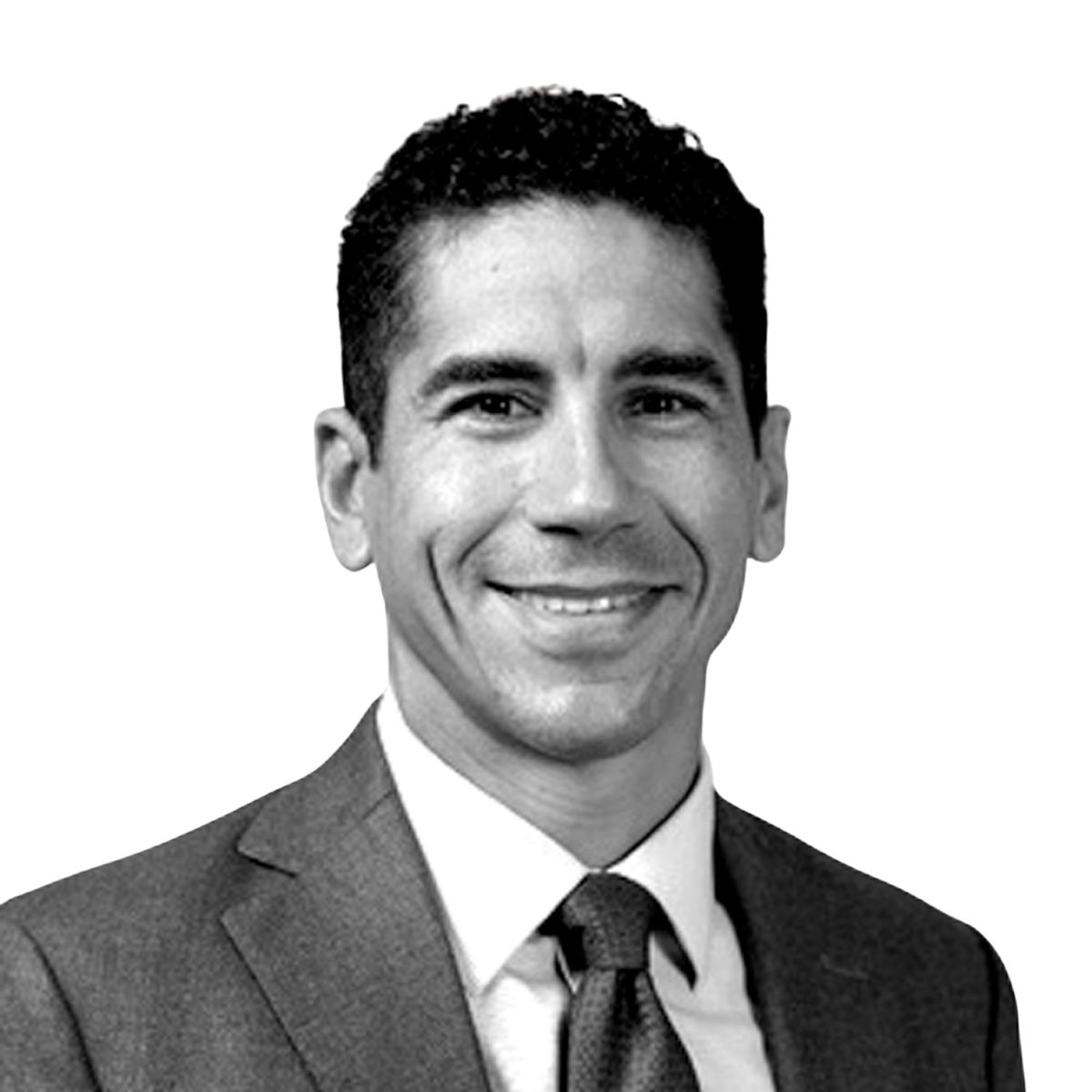
Brian Pérez-Daple is a lecturer teaching criminal law, criminal procedure, statutory interpretation, and evidence.