

A prosecutor and a capital defense lawyer reflect on the toll of pursuing justice from opposite sides of the courtroom
Written by Angela Shah
Portraits by Sarah Wilson
Collage by Mike McQuade
What is it like to hold another human being’s life in your hands?
For lawyers working within the Texas criminal justice system, that is not a rhetorical question. Public attention, rightly, centers on victims and their families, on the violence that sets the machinery of justice in motion. Far less visible is the toll the work takes on the lawyers within that machinery.
Guy James Gray Jr. ’73, and Gretchen Sween ’03, came of age in different eras and from opposite sides of the docket —one working inside the system for decades, the other often standing outside, challenging it.
A career prosecutor, Gray defied societal pressure to force his community to confront racial wounds, leaving permanent scars on his life. Sween traded in a comfortable life as a corporate attorney for a capital defense practice, often paying a personal price for revealing uncomfortable truths of how justice is unevenly applied.
Both say their time at Texas Law instilled the values that would guide them through the most difficult stretches of their careers. “You don’t spend time in Austin and not be changed,” Gray said.
Though fierce in practice, prosecutors and criminal defense lawyers generally avoid discussing the cost of justice on themselves. Gray and Sween candidly share how years of proximity to the violence and loss of crime leave their mark, and what it means to carry that weight long after the case files are closed.
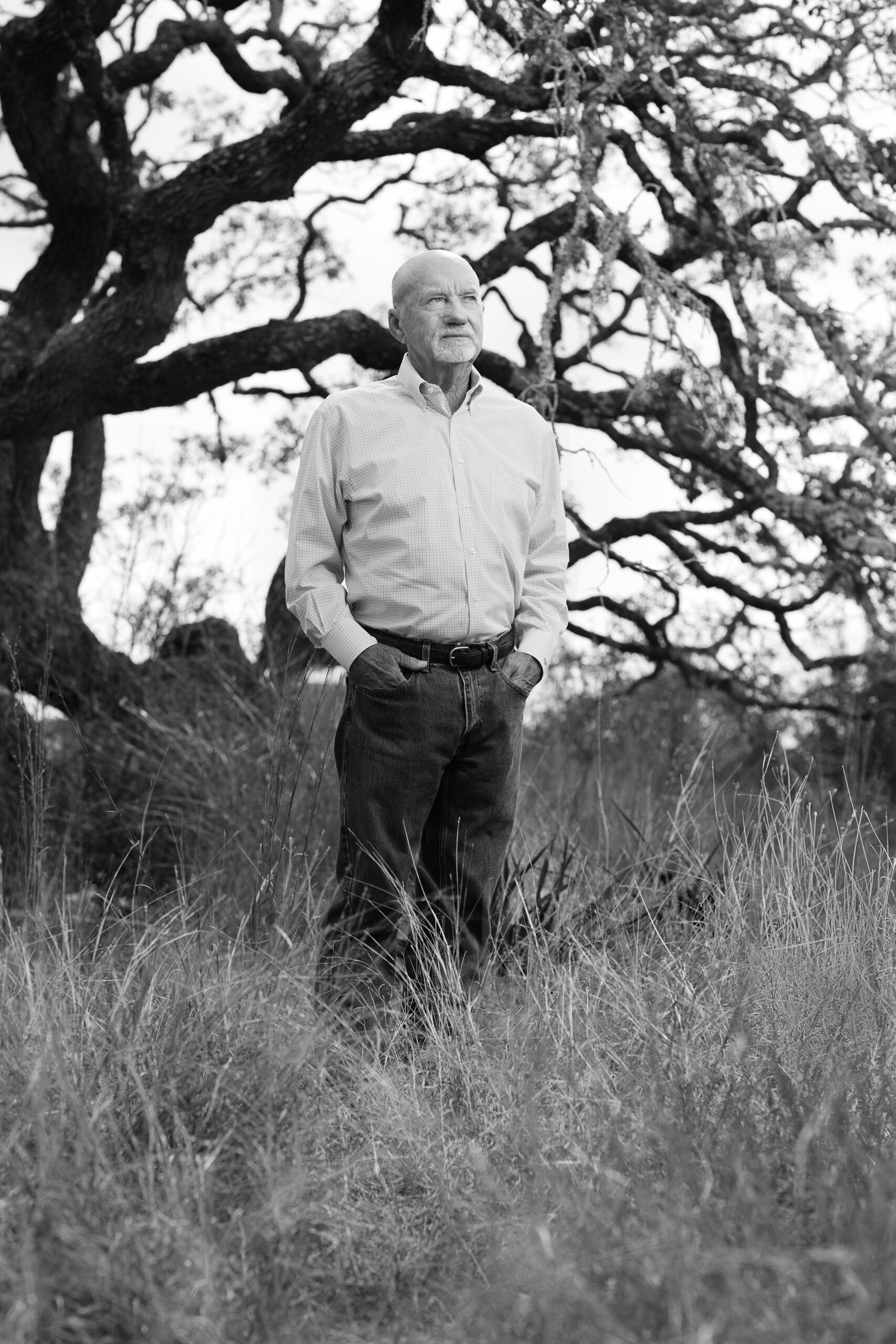
The Prosecutor
Guy James Gray Jr. still has the photos.
It’s not that he needs them to remember. Images of James Byrd Jr.’s dismembered, bloodied body have lived in Gray’s mind since that brutal night in 1998. Byrd, a Black man, was beaten, stripped naked, chained to the back of a pickup truck by three white men, and dragged down a dirt road outside Jasper, TX, his body torn apart and scattered in the truck’s wake.
Gray, now 76, is nearly three decades removed from prosecuting Byrd’s killers in trials that brought unwanted international attention and infamy to the small East Texas town. “Those images pop up in my mind almost daily,” he said. “They can’t be erased. I’ve just learned to live with them.”
One image stands out. A year after the murder, while preparing for the trial of the first suspect, Gray found himself sitting on the floor of his office at the Jasper County Courthouse, staring at scores of autopsy photographs scattered all around him. A capital murder conviction required proof of two underlying felonies. Murder was clear. The second was not.
Witnesses said Byrd had voluntarily gotten into the rusted 1982 pickup with the three white men and was seen drinking and smoking cigarettes with them. Then Gray realized the gruesome truth: The most severe damage from the dragging was on Byrd’s elbows, ground nearly to the joint. But there were no marks on the back of his head.
“He had to be alive when they chained him and started dragging him,” Gray said. “He had to use his elbows to hold his head up off the pavement. They kidnapped him,” the second felony, “and dragged him alive.”
“There is no forgetting that.”
Moral compass.
When he first began prosecuting capital cases, Gray, who is Catholic, sought guidance from church leaders. The Vatican is against the death penalty, but getting moral clearance to do his job was important to him. “You have to make sure that you mentally can live with the fact that you went to the jury and asked for and got the death penalty,” he said.
Where he lost faith was in his community. A fourth-generation resident of Jasper, Gray was deeply woven into the town’s social and civic fabric. His father and grandfather had served in local leadership roles. It was the kind of close-knit community where an accused killer might once have been a child who played in your home with your own son (which one of Byrd’s killers did).
That familiarity did not translate into support. Gray’s pursuit of justice for Byrd made him a target of residents who were angry that he was giving the community a black eye. “They’d tell me,” Gray recalled, “ ‘What in the hell are you doing, Guy James? He’s just a crackhead n*.’ ”
The racism itself did not surprise him; he had grown up with it. What shocked him was their conditional morality, rationed along color lines. “Even the extremely racist ones knew there had to be a prosecution, but pursuing the death penalty, and inviting the publicity, was disloyal to our Southern history,” he said.
The case drew national and global attention, including threats from hate groups emboldened by the spotlight. “One morning on the [home] answering machine was a message— three spaced-out gunshots,” Gray recalled. The FBI, assessing the threats as credible, installed the courthouse’s first metal detectors.
The Klan had long made a home in East Texas, though for years with a generally muted presence. Byrd’s killing, however, brought outsiders like Jesse Jackson, Al Sharpton, and the Black Panthers to Jasper to protest. The Klan responded in kind.
When Gray and his family ran everyday errands, he said they constantly looked over their shoulders, a big-city reflex unusual in a small town. Gray knew that many local Klan members rode motorcycles, so hearing the roar of one put them on alert immediately. Gray’s sons slept with shotguns under their beds.
Someone I knew, who knew me, called me a ‘traitor to the cause.’ We are not still in the damn Civil War.
Guy James Gray Jr., Prosecutor
“Someone I knew, who knew me, called me a ‘traitor to the cause,’” he said. “We are not still in the damn Civil War.” He sighs and shakes his head slowly, as if, even decades later, he can’t understand that thinking.
“I’m not a progressive,” Gray said plainly. But he also refused to go along simply to get along.
Convicted
One by one, Gray prosecuted, and won convictions for, each of Byrd’s killers – all in one year. Two of the three juries, each nearly entirely white, returned death sentences.
Only he, a “hillbilly insider,” could have pulled it off, reflected Gray. “Thousands of prosecutors could do a trial,” Gray said. “It’s an art form to pick a jury to try a white man for killing a Black man in East Texas. Only a prosecutor who was raised in East Texas culture could have successfully picked this jury,” he said.
The exposure to the killers’ hate filled worlds, along with his neighbors’ scorn, forced him to build what he describes as a hard shell. “You just have to get mean to survive,” he said. “The more pressure that came with this, the better I was able to focus.” He adds, “You can’t be a good D.A. unless you get in there and fight.”
It helped that Gray’s wife, who he calls his “rock,” never asked him to back down. “She told me I had to,” he said.
Still, his pugilistic approach carried a physical cost. “I’m not a therapy guy,” Gray said. “I probably drank too much.” He briefly tried Valium to sleep but stopped because the drug left him groggy. He played golf but ate poorly, gained 30pounds, and his blood pressure spiked. Within six months of the final trial’s conclusion in 1999, Gray was hospitalized and underwent a quadruple bypass heart surgery.
“I feel like one of those old football players or boxers with a little bit of Alzheimer’s,” he said. “I sometimes struggle to remember like I want to.”
‘Speak Up’
Gray was shaped by a strong sense of civic service. His grandfather served as county judge, and his father had always intended to go to law school. Gray fulfilled those ambitions.
Texas Law degree in hand, he returned home, missing country life. Private practice quickly soured him on “paperwork lawyering.” The prosecutor’s office — working with police, assisting witnesses, picking juries — was a better fit.
By 1998, he was more than two decades into prosecuting crimes. For Gray, Byrd’s murder echoed an earlier injustice.
Back in the 1930s, he explains, the region had “barrelhouses,” honky-tonks where Black men could drink bootleg “white lightning,” gamble, and otherwise find entertainment. White patrons would drive out and take an attractive woman to divert attention, Gray said, “while they switched dice or decks so they could swindle the Black patrons.” It was a common con across the country but racially devastating in Jasper.
One night, the woman assigned to distract a man named Sunday became drunk and passed out in bed with him. The pair was discovered fully clothed and without any evidence of intimacy. “They tied him to the back of an old Model-T Truck and dragged him around the courthouse square,” Gray said. “They hung him from a tree limb and shot him, I believe, 17 times.”
No one was ever prosecuted.
Gray said he first heard Sunday’s story around a campfire at around age 10. His father and uncle had been young men at the time and felt there was nothing they could do. “I got the feeling my daddy was telling me, ‘If it’s ever you, speak up,’” Gray said.
Aftermath
The Byrd case did not turn Gray into a hometown hero. There was, instead, what he describes as a polite ostracism. He chose not to run for another term as district attorney. Around that time, one of his sons died in a traffic accident, and the family decided to leave Jasper and move to Kerrville.
He has not returned.
“I don’t have anything pulling me there,” Gray said. “I had lots of friends I could no longer count as friends after the trials. You don’t really get over it.”
I asked Gray about his tenacity in pursuing the death penalty for Byrd’s killers, especially in light of the decades-old murder of the man called Sunday. What do you think your father would say?
“It made me proud,” Gray said. “And I knew my daddy would’ve been proud of me.”
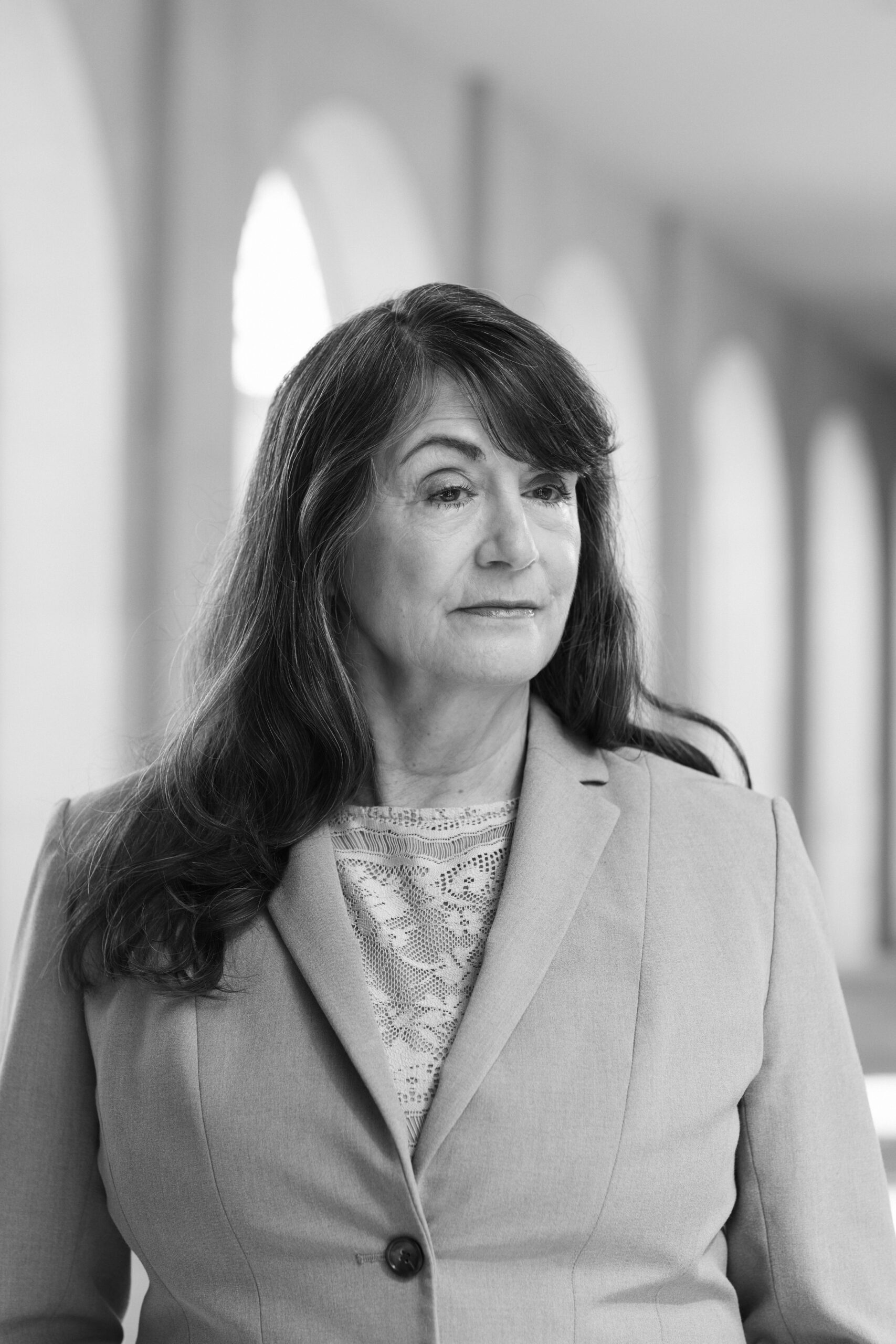
The Defense Attorney
Gretchen Sween never met the client who changed the trajectory of her career.
Raphael Holiday was executed at the Walls Unit in Huntsville, TX, on an unseasonably warm evening in November 2015. Around 150 miles away in Austin, Sween was sitting in her parked car, sobbing and ignoring the steady stream of phone calls from the condemned man’s supporters.
She had been his lawyer for just one month: “I was consumed with feeling the senselessness of it all,” she said, “anger, frustration, impotence.”
The next day, Sween found an envelope addressed to her sitting on her office chair. Holiday had sent her a card; bright yellow and red flowers and the word “generosity” decorated the cover. “He was telling me it’ll be OK, that it meant so much for him to have someone fighting for him at the end and not being abandoned,” she said.
Sween felt an overwhelming sense of failure. Despite her best efforts, her client was dead. Yet, once her anguish gave way to a dull pain, his beyond-the-grave gratitude revealed to her a way forward.
In the following weeks, Sween said Leonard Cohen’s song “Anthem” slipped into her mind’s soundtrack. Cohen sings that brokenness is not a dead end, but a pathway through which change can happen. “Raphael’s execution was a catalyst compelling me to do my part to let more light” into a broken criminal justice system, she said.
A little over two months later, in January 2016, Sween left a comfortable practice as a civil appellate attorney and began working for the Texas Office of Capital and Forensic Writs, a public defender specializing in post-conviction legal representation primarily for indigent individuals.
Some people will say, ‘Wait, you’re representing the boy with the BB gun, killing the bunnies?
Gretchen Sween, Defense Attorney
It’s Personal
The change was more than a simple switch from civil to criminal law. In this work, the stakes were her clients’ lives. Sween also realized a hard truth: no matter how well she did her job, the odds were low she would succeed. “This is a law practice where, if you lose, they kill your client,” she said. “Yeah … it feels very personal.”
Today, Sween has six clients, including Robert Roberson, who was convicted of abusing and killing his daughter Nikki in 2002. Law enforcement, Sween said, used Roberson’s autism — the perceived lack of emotion, for example— as evidence of guilt and failed to properly investigate the child’s death.
At trial, prosecutors relied on the now-widely debunked “shaken baby syndrome” to convict him. Sween argues that new medical science, as well as a fresh look at old evidence, shows the 2-year-old likely died from chronic illnesses or accidental causes, not abuse.
In the decade Sween has represented Roberson, he – and she – have faced three execution dates, including two in the last two years – all stayed at the 11th hour. The reprieves are welcome, of course. But, she said, “I was back to where I was when I started fighting for him in 2016.” She feels like Sisyphus; the rock is heavy and the path is steep.
Stamina
Now at age 62, she realizes her work is taking a toll on her life. Recently, she’s been intentional about making sure she does “something life-affirming,” even if small, each day: watching sports on TV, relishing dinner conversation with her husband, or playing with her menagerie of pets. “I’m never going to say I’m ‘off the clock,’ so it wasn’t about working less,” she said. “I just have to do something to make sure I have the stamina for this.”
Capital defense lawyers reside in a corner of the legal community that ranks high on both compassion fatigue and social isolation. Yes, Sween is embraced by those in the anti-death penalty movement — John Grisham, the best-selling novelist and Innocence Project board member, features Roberson’s case in Shaken: The Rush to Execute an Innocent Man (due out June 2026) as a stark example of the criminal justice system’s flaws.
Day to day, though, Sween said it can be lonely work. Many lawyers mercilessly battle one another in court and socialize afterwards. That’s something she enjoyed about her days in civil litigation, she said. But when the “other side’s job is to try to kill your client, it’s hard to have the [same] attitude of ‘it’s just a job.’”
Beyond her “day job,” Sween regularly works a second shift— raising public awareness for her clients by holding courthouse press conferences, death-row exonerees often by her side, and in interviews with media ranging from People magazine to The Guardian newspaper to a Dateline podcast series, along with Reddit AMAs and social media posts.
Her ease in front of the camera isn’t accidental. Sween studied drama at NYU’s Tisch School of the Arts, eventually earning a PhD in Humanities at The University of Texas at Dallas. “Acting,” she said, “is not about faking; it’s empathizing with someone else’s story.”
By the time she hit her 30s, though, she had grown tired of scraping by. “Law school,” she said, “seemed like the least cynical option.” A decade older than the typical Texas Law 1L, Sween came to campus in 2000 feeling like an interloper. But winning a moot court competition, thanks in part to her theater chops, helped her feel as if she belonged. She also signed up for the law school’s Capital Punishment Clinic.
Sween began to see that the law wasn’t a rejection of her earlier life but a maturation of it. Death penalty advocacy helped fulfill the social activism that had fueled her in her theater work and drew out her empathy.
The thing about being a defender of the vulnerable is the vulnerable isn’t always who you think it is.
Gretchen Sween, Defense Attorney
Why?
When Sween was about four years old, her mother left her abusive, alcoholic husband, Sween’s biological father. In their new apartment, Sween would stand on the balcony and call for her pet rabbit, Bunny, who roamed the woods behind the building. One afternoon, she saw a boy on a nearby balcony lift a BB gun. “He killed my rabbit,” she said, pausing to remember the grief she felt as a child.
Why would he do that, she asked. Decades later, she’s no closer to answering that question, but she hopes her work can help her understand. “Some people will say, ‘Wait. You’re representing the boy with the BB gun, killing the bunnies,’” she said. “The thing about being a defender of the vulnerable is the vulnerable isn’t always who you think it is.”
That’s an uncomfortable stance in a black-and-white world, and Sween said she often feels like she is “screaming into the wilderness.” But stopping would exact an even greater price. “I have to figure out a new way to push on that boulder,” she said.