
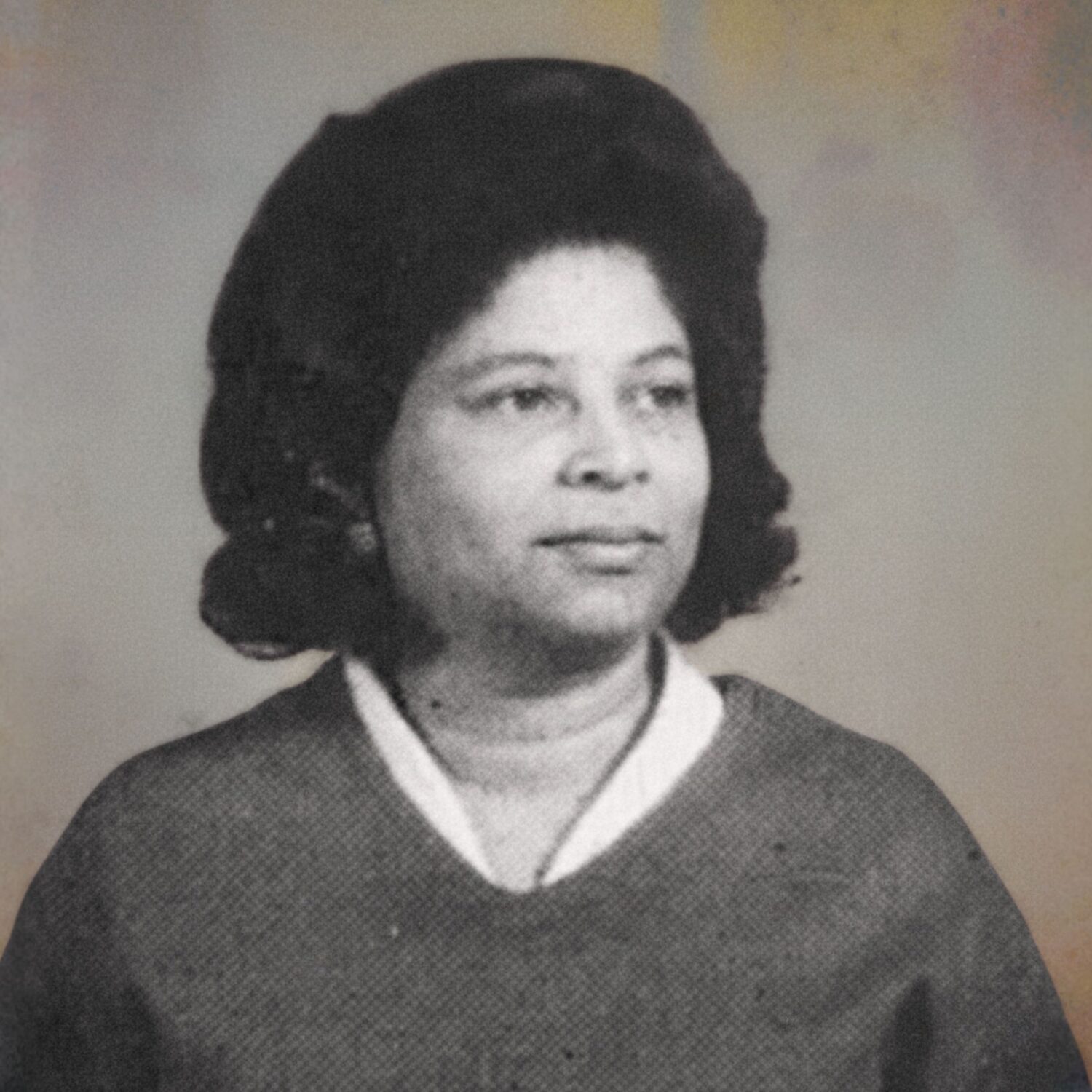
Harriet Murphy ’69 was a pathbreaking changemaker going all the way back to her high school years in Atlanta, where she was a friend and classmate of Martin Luther King Jr. “We all called him M.L.,” she loved to say.
“It was not unusual for those who came through Atlanta to become leaders—not only political leaders but just leaders,” Murphy recalled in a 2012 interview, calling the city a “tremendous environment to grow up in” and making “me very candid and very outspoken and believe in my opinions.”
After graduating from Texas Law, Murphy practiced law part-time for eight years and was head of the government department of Huston-Tillotson College (now Huston-Tillotson University) in Austin for five years. In 1973, Murphy earned her place in the history books as the first African American woman officially appointed to a Texas judgeship. She spent 20 years as a judge on the City of Austin Municipal Court, a term of service which included presiding judge. Murphy died in January 2024, leaving an important legacy.
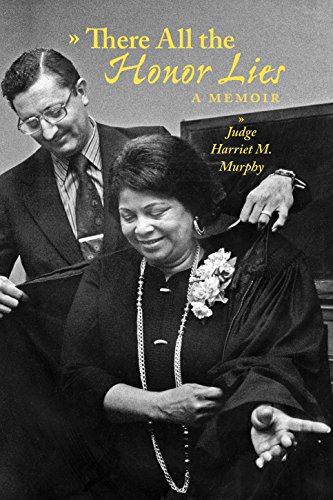
Murphy took care to tell her own story—part of her commitment to building that legacy for herself and her beloved Austin community—in the autobiography “There All the Honor Lies”, published by the University of Texas Press in 2018.
We are pleased to share an edited and abridged version of the book’s chapter on her time at The University of Texas at Austin, “Law School at UT,” in which Murphy chronicles her experiences coming to and thriving at the Law School, despite obstacles that might have deterred others.
‘Law School at UT’
I understand as well as the next person the complicated reputation of the lawyer. Supposed sentries of the law, for every “good” lawyer it seems there are two corrupt attorneys out there practicing for the money rather than for the people. Popular opinion was hardly the only barrier to my becoming a lawyer, however. Race and gender lines were drawn on the judicial system in those days, and I had both working against me. Black and a female? It was a marvel that UT even admitted me.
On top of those distinct challenges, I harbored my own self-doubts—going all the way back to when I was 13 years old. A deacon of the church one day asked me what I wanted to be when I grew up. I told him that I wanted to be a lawyer and that I would fight for Black people. He said, “That’s a good thing, Harriet, but lawyers don’t make it into heaven.” Right away I decided I’d rather go to heaven than be a lawyer. Later, I realized he was just one more man holding me back.
Doubt festers, though. At Spelman College, I worked for a time as a research assistant to an Atlanta University librarian. For $15 a month, I scoured the papers looking for stories about Black soldiers in World War II, cutting out every article pertaining to buffalo soldiers and Tuskegee flyers. One other article was about Benjamin Davis, a Black lawyer in Atlanta. He had represented a communist labor leader named Angelo Herndon against the state in 1933. I read about how throughout the trial, Davis was referred to by the prosecutor as “that n****r lawyer” and how when the verdict was appealed, all mention of that word was stricken from the record. I thought I’d be crying all over the courtroom if that happened to me.
But my pressing need for justice outweighed my fears. The first step was to take the LSAT. Then, after consulting several white friends, I decided to apply to UT. According to them, it was the best school to go to if I was serious about returning to Gregg County. (Editor’s note: Murphy had relocated to Gregg County, Texas, with her first husband in the early 1960s and originally intended to return there after school.) “There’s no respect for Harvard here,” they told me. Swallowing my pride over the fact that UT had only recently begun accepting Black students, I applied and was admitted in the spring of 1966.
Wandering around campus for the first time after my acceptance, I recall being duly impressed by the Law School and its faculty. Assistant Dean (Thomas) Gibson was particularly nice and agreed to let me defer until the summer semester. I matriculated as the lone Black student among the Class of 1969 and became the only Black student, period, for a time after Bertrain Christian graduated in the spring of 1967.
The very first thing I did was to trade in the white Cadillac I’d driven to Austin. The car was so long I couldn’t easily parallel park it at UT! If I did manage to snag a parking space, often I’d have to wait for the cars around me to empty out just so I could back out of the parking lot. I quickly grew tired of that and exchanged the Cadillac for a Thunderbird: small, sleek, and sexy.
Then, to have a little income while I was a law student, I started teaching at nearby Huston-Tillotson College, another historically Black college. Through the grapevine, I learned that Thurgood Marshall was coming to Austin on business, so I wrote and asked whether he would visit my classes. He was too busy for that, but we did squeeze in a friendly lunch, and it was great to see him again. I told him about Page Keeton, then the dean of the UT School of Law. I expressed my disappointment that Keeton had made no visible efforts to increase the number of Black students at the Law School.
Thurgood’s chiding was patient but to the point. “Dean Keeton and I are very good friends,” he said. “I’m also a friend to his brother who teaches at Harvard. You may not know it,” Thurgood continued, “but Keeton has done a lot for us. He worked very hard with me on the case that opened the University of Oklahoma law school, and his brother helped too.”
I never knew that—no one had talked about Keeton’s history prior to his coming to Austin. It changed my whole attitude toward the dean, who I thought cared nothing for helping African Americans advance.
I didn’t know until I got to the University that there was only one Black student at the Law School. But I did have the nerve to question professors where younger students wouldn’t dare to. For example, there was a constitutional law professor who lectured saying that the tactics Blacks were taking in using sit-ins were wrong, and I questioned him about it. My theory was that one of the main reasons for the tactic of sit-ins was because they were the only way to do so, to fight for changes.
Because I am generally powerless to stand back and do nothing when I sense an opportunity for change, I began helping to recruit Black students to UT’s law school. As the only Black student in the Law School at that time, I joined a committee organized by Jim Boyle, a white student and my good friend, to recruit Black students to the Law School. I must say, we had some real success. It’s probably the thing I’m most proud of from my time at UT.
Committee members served as ambassadors to Texas-area schools (including UT), interviewing interested seniors and sharing with them just why the UT law school was such a good option. We targeted the Black schools, including Prairie View A&M University and Jarvis Christian College (now Jarvis Christian University) in Hawkins, Texas, and then expanded outside the historically Black colleges and universities as well. And when we weren’t recruiting students to law school, we joined UT’s undergraduate community to protest other important issues, such as UT’s refusal to let Black athletes try out for the school’s football team.
All told, we netted 12 or 13 student recruits for the fall of 1968. One of them, Richard Scott ’72, went on to become a judge and today the Precinct 1 court is named after him. Other notable names included Isaiah Hardy ’73, Jasper Roee ’72, Ivry Pollard ’71, and Carnegie Mims ’71—a pretty marvelous turnout.