
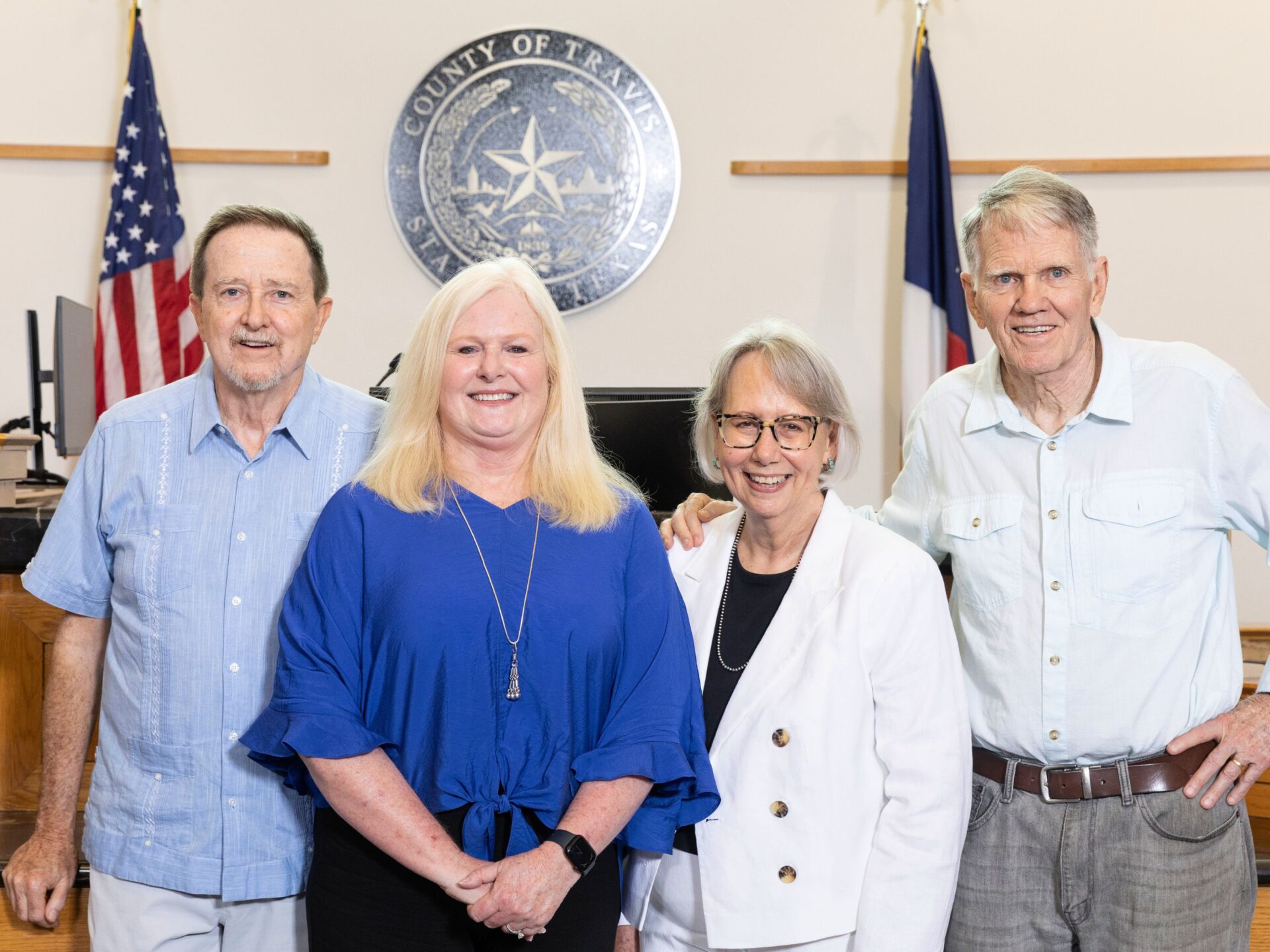
More than 1,000 Texas Law students have served as practitioners with the Travis County Juvenile Public Defender since Texas Law’s Juvenile Justice Clinic launched in 1975.
To celebrate the 50th anniversary of the clinic—which began as a seminar led by Professor Michael Rosenthal—65 former directors, supervising attorneys, clinic alumni, and current students gathered for a reception at Austin’s Easy Tiger bakery and beer garden in the fall.
“I love that I got to see them in the early stages of their legal education and the beginning of their legal careers, and to see how they’ve thrived,” Pamela Sigman, the clinic’s director, says of its accomplished alumni.
The program offers litigation experience while exposing students to the operations of the juvenile justice system. Each spring semester, a dozen 2L and 3L students manage the legal defense of indigent children and teens who have been charged with criminal offenses. Generations of student practitioners have handled more than 8,500 cases under the supervision of practicing attorneys, says Sigman, a judge with Austin Municipal Court and Travis County Counsel at First Appearance Magistration Court.
“What gets me excited is starting with a group of law students who in January are a bit nervous and overwhelmed, and three months later are grabbing that file and saying, ‘Give me the case. I’m ready to go,’” Sigman says.
By April, clinic students have gained “the confidence and the knowledge to handle the cases with little supervision,” Sigman says.
Reality Check
Student attorneys represent eight to 10 clients in a semester, starting out on misdemeanor cases, such as shoplifting. They often take on felony property crime cases, such as stealing a car, later in the semester.
The beauty of the clinic is you’re not sitting in a classroom listening to a professor. You’re right there in the detention center or the jail, talking to your client.
Sandra Ritz ’93
Those students are responsible for every aspect of representing a client, starting with a visit to Gardner Betts Detention Center in Austin for an interview. They research the charges, put together an argument for release, and address probable cause. If the case proceeds, the students develop a plan and present it in court. Students manage plea bargains and negotiations. They also help clients and their families access services, such as a better school or foster care.
“It was the step by step to everything I do now,” says Sandra Ritz ’93, a criminal defense attorney with an Austin private practice who in 1992 was a student in the clinic. “The beauty of the clinic is you’re not sitting in a classroom listening to a professor. You’re right there in the detention center or the jail, talking to your client.”
Working in the clinic “was a real serious slap of reality about things that I never had even thought about,” adds Ritz, who stayed on as an intern to wrap up cases after the semester ended. “But at the end of the day I always felt good about what I was doing to help the situation, whether it was making a legal argument or for practical things like helping the family find counseling.”
Varied Communication
Student attorneys learn how to communicate with a wide variety of people: judges, prosecutors, children and teens under stress, and parents who might challenge their role. With their clients, they develop a rapport, ask intelligent questions, and listen closely for the answers, Sigman says, an approach that ensures effective advocacy in both the courtroom and detention hearings.
Students may have only one or two hours from when they meet their client to create a plan and then advocate in court. “That’s a really good skill—to be able to think on your feet and know what issues you need to address quickly as part of your advocacy,” Sigman says.
To get there, the clinic offers practice opportunities in a low-stress setting. Role-playing court proceedings, such as a suppression hearing or docket call—while taking turns as witness, defense attorney, and prosecutor—helps students feel comfortable when they go into court.
Over the decades, there’s been a change in how the job’s emotional demands are viewed, Sigman explains. While law school remains as rigorous as ever, students in the clinic are invited to acknowledge the emotional strain that comes from working with young clients who have experienced trauma—and the importance of self-care.
“You can still train people to be good lawyers who are tough and resilient while also recognizing and supporting them because it’s a hard job,” Sigman says. “As a lawyer, you’re going to be a better advocate if you recognize those challenges and reach out for support and feedback.”

Alumni Look Back
Today, clinic participants work in civil and criminal law, as in-house counsel, and on the bench in communities around the country.
Catching up with them for the anniversary was gratifying, says Sigman, who in 2026 marks her 30th year with the clinic.
Travis County Commissioner Ann Howard ’88 says the clinic was the perfect outlet for the work she wanted to do in the community.
“Receiving my own clients in the clinic—getting to go to bat for them, learn their situation and why they were involved in the conduct they were—was just right up my alley,” says Howard, who took the clinic twice and later audited it. “I’ll never forget sitting in a private conference room with my client, a young teenager, and hearing his story and then trying to figure out the best course forward,” she says. “That was a magical time for me, to have that one-on-one meeting with a child who was in trouble.”
It has truly helped me be a better juvenile court judge today. I would have never imagined I would one day preside in the very courts I began in as a student attorney.
Judge Aurora Martinez Jones ’07
Judge Aurora Martinez Jones ’07 says she’s “so grateful” for her experience as a law student with the clinic, which set a strong foundation for her in-court work defending youth and helping them remain in the community. She now presides over the 126th District Court, where she oversees all Child Protective Services cases filed in Travis County. The court also is a designated juvenile court for the county.
“It has truly helped me be a better juvenile court judge today,” she says. “I would have never imagined I would one day preside in the very courts I began in as a student attorney.”
Ritz says her experience in the clinic continues to fuel her client advocacy.
“I love being able to say that I helped someone in some form or fashion, and that really started in the Juvenile Justice Clinic,” she says. “I still go over to Gardner Betts and interview juveniles and represent them in detention hearings. The passion I had 30 years ago in this clinic, I still have it.”