
The pages of Dorothy C. Most’s scrapbook offer an engaging look at the life of a Texas Law student in the 1920s.
Her scrapbook includes memorabilia, photographs, correspondence, greeting cards, newspaper articles, ephemera, and anecdotes related to students, faculty, events, and activities at The University of Texas at Austin between 1920 and 1925.
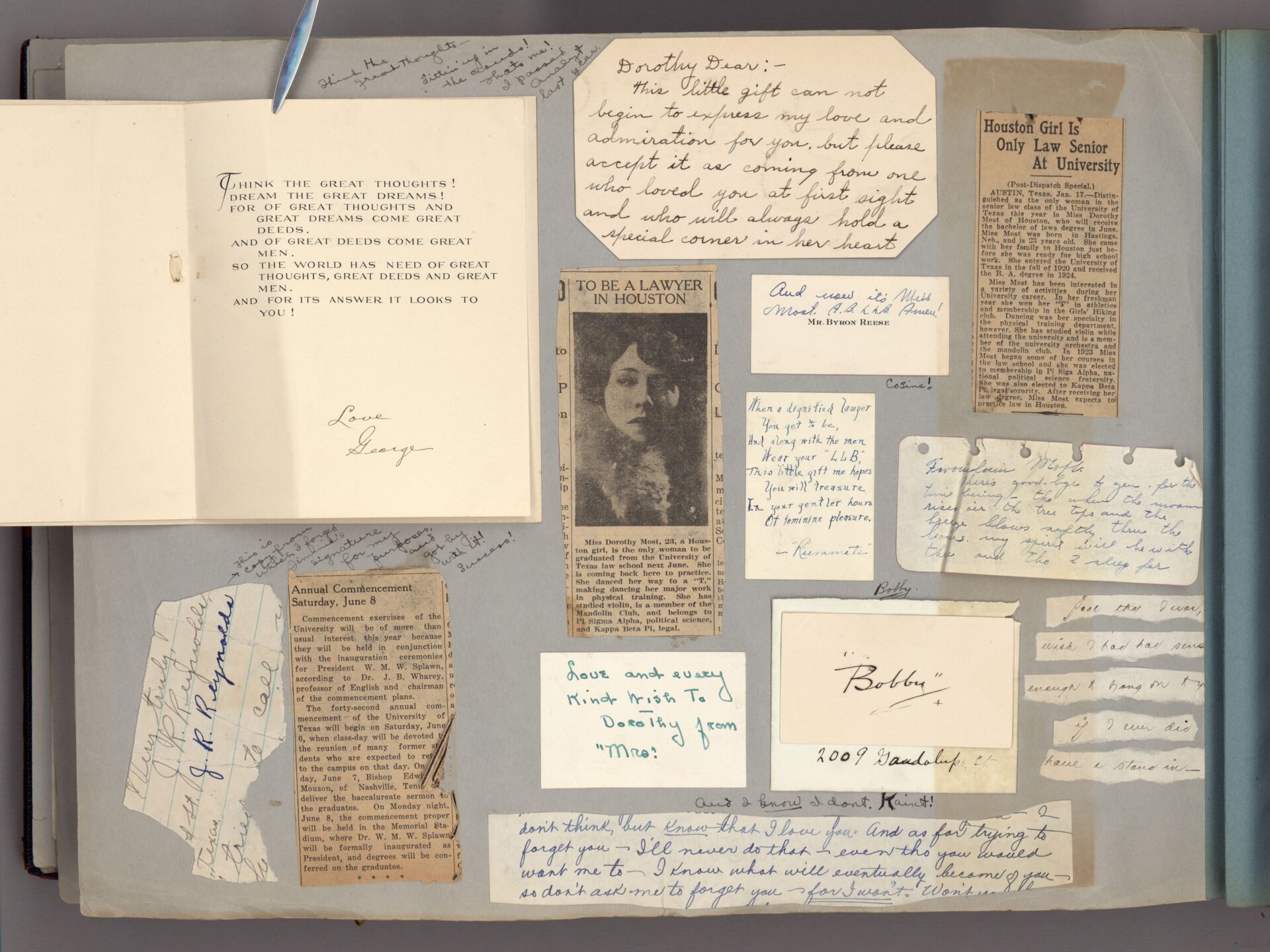
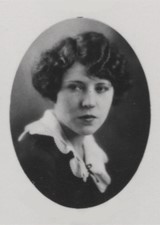
Most ’25 was born in Hastings, Nebraska, around 1900 and moved to Houston during her high school years. She enrolled at UT to earn her law degree—a bachelor’s, as all Texas Law degrees were until 1969—and was the only woman in her law school class. Starting around 1915, each Texas Law graduating class had included at least a few women, making Most’s status as the sole woman in her class even more remarkable.
Most was notable in other ways, too. After graduation, she worked for Baker, Botts, Parker & Garwood in Houston, becoming one of only two women members of the Houston Bar Association at the time, according to a 2004 article in UT Law magazine.
By 1930, Most had moved to New York City where she became an advisor and dean of women at St. John’s College School of Law. She received her doctorate of juridical science there in 1931. But her talents extended beyond the law. Most had played in the UT symphony orchestra and studied at the Houston Conservatory of Music, and in New York, she attended the Juilliard School of Music and served as a director of the Brooklyn Opera Company. She eventually returned to Texas and resumed practicing law.
“She led a pretty incredible life after leaving Texas Law,” says Tiffany Criswell, archivist with the school’s Tarlton Law Library, which houses the scrapbook. “You can tell from her book that she was funny and had a great way of looking at life. I think everyone can learn something from her.”
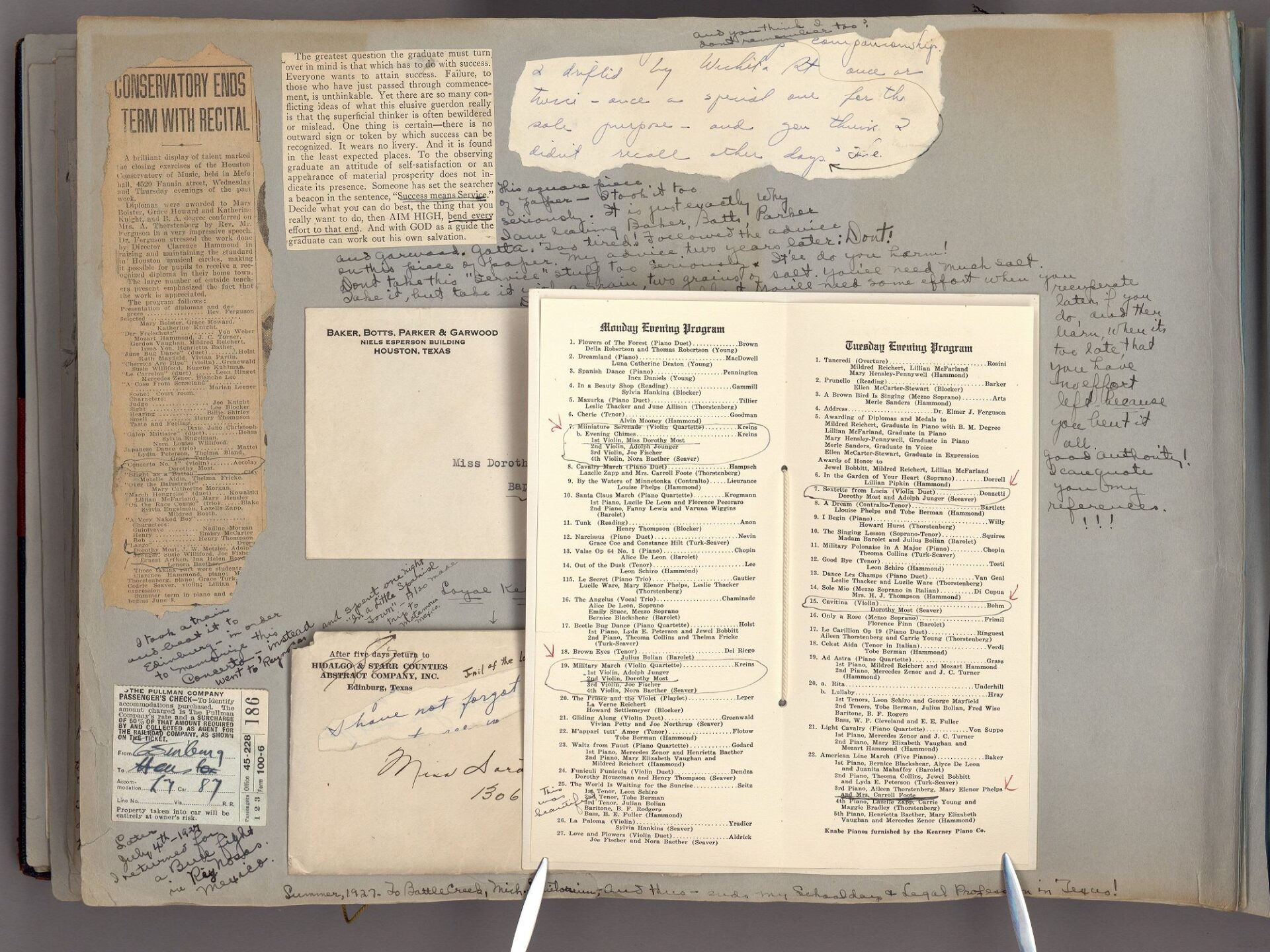
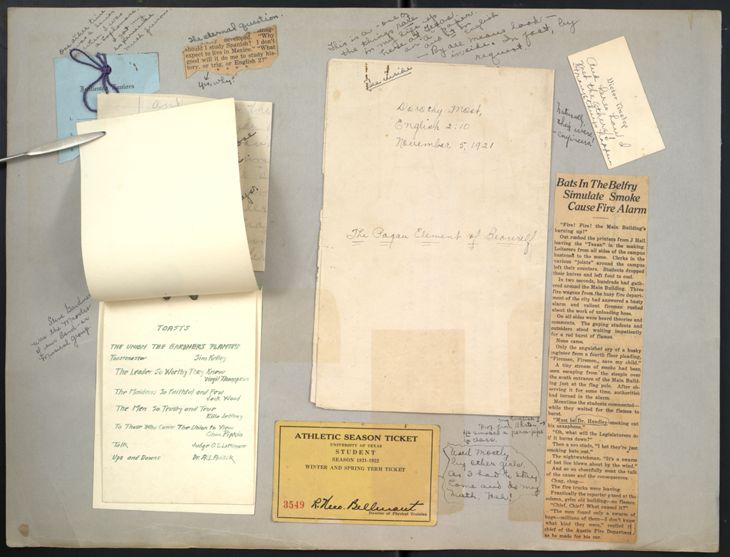
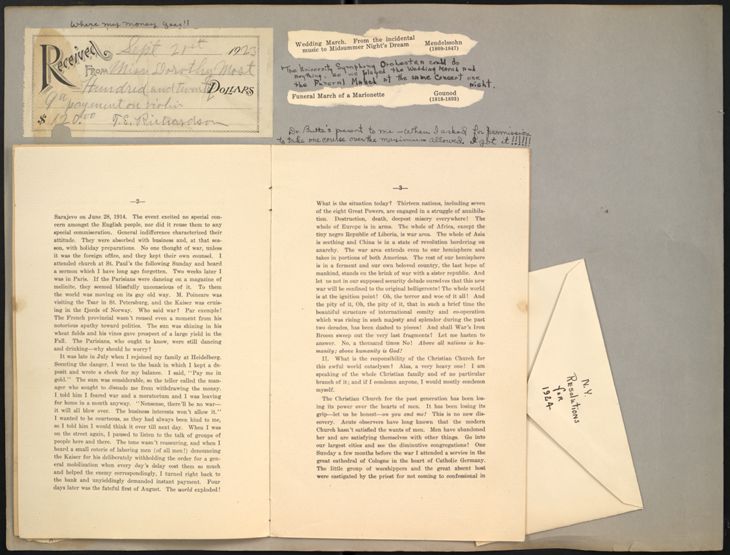
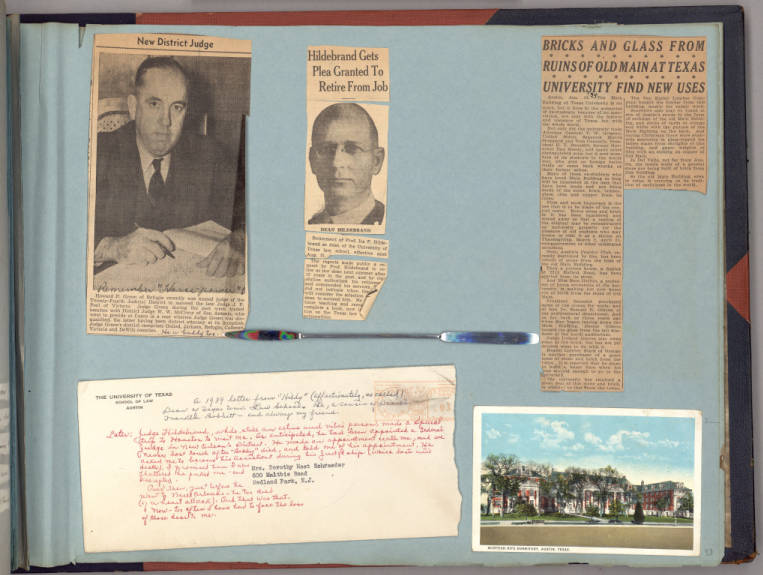
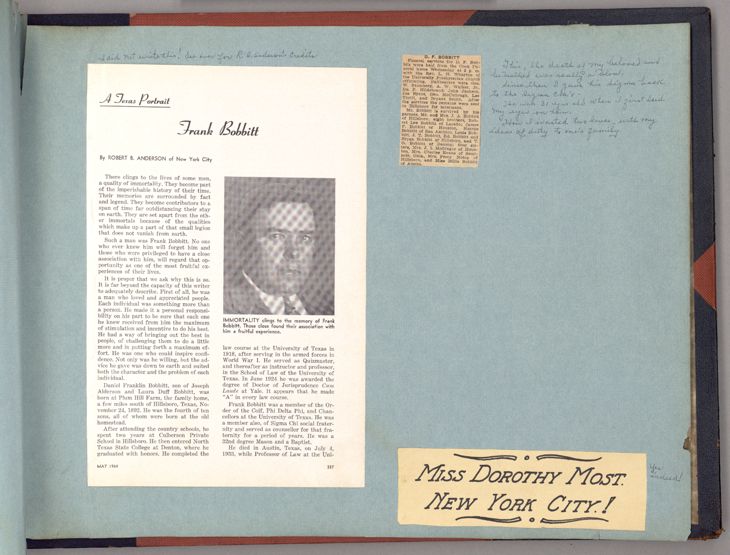
Most’s voice appears on nearly every page. As the UT Law article explains, “Most annotated moot court competition programs, law school assignments, chamber concert flyers (she was an accomplished violinist), dance cards, photos of campus buildings (including a postcard of the cafeteria burning), and an assortment of invitations to join various clubs.”
The scrapbook also includes several items related to her post-graduation job search and time in Houston. After 1933, the only apparent additions are a 1939 letter from Texas Law Dean Ira Hildebrand and some annotations in red ink, dated 1975.
Recently, Criswell shared her thoughts about the scrapbook and its creator.
What makes Most’s scrapbook such an important piece of Texas Law history?
We have almost no other firsthand accounts of a student’s time at Texas Law, so this scrapbook is very special to us.
It’s a bit of a miracle this scrapbook made it back to Texas Law. Most gave the scrapbook to a niece who lived in San Diego. Her niece wanted to downsize and gave the scrapbook to a friend who had a Texas connection. This friend eventually gave it to her father, donor Arthur Hausman, who asked the law library if we would like to have it. We received it in 1984.
We do not know who the niece was or if she went to UT. The little we know about her father is referenced in a 2004 UT Law magazine article.
Which scrapbook entries are particularly noteworthy or entertaining?
On the front of page 5, she has an envelope with her “Resolutions for 1922.” Her full list is scanned, and it’s pretty amusing. She resolves to “turn down all dates exceeding three per week” and to never go to the library “for purposes other than those for which said building was designed.”
Who can access the physical scrapbook?
Anyone can view the scrapbook in the archives reading room by appointment, but we encourage people to view the scrapbook online to help us preserve it. It’s currently in an exhibit case in the “New and Noteworthy” room on the second floor of the library.
After reading Most’s scrapbook, what personal impression do you have of her?
Dorothy was committed to making the most—no pun intended—of her time. She worked hard but had a lot of fun as well.