
There’s a story, almost a parable, that Professor Steven Collis likes to tell to illustrate why we need institutions like the Bech-Loughlin First Amendment Center, which Collis was recruited to Texas Law to launch and direct in 2020.
The parable is this: The Puritans left England to practice their own faith freely. They arrived on the shores of North America, established their own colonies, and were indeed able to create spaces of religious freedom … for people who believed precisely what they believed.
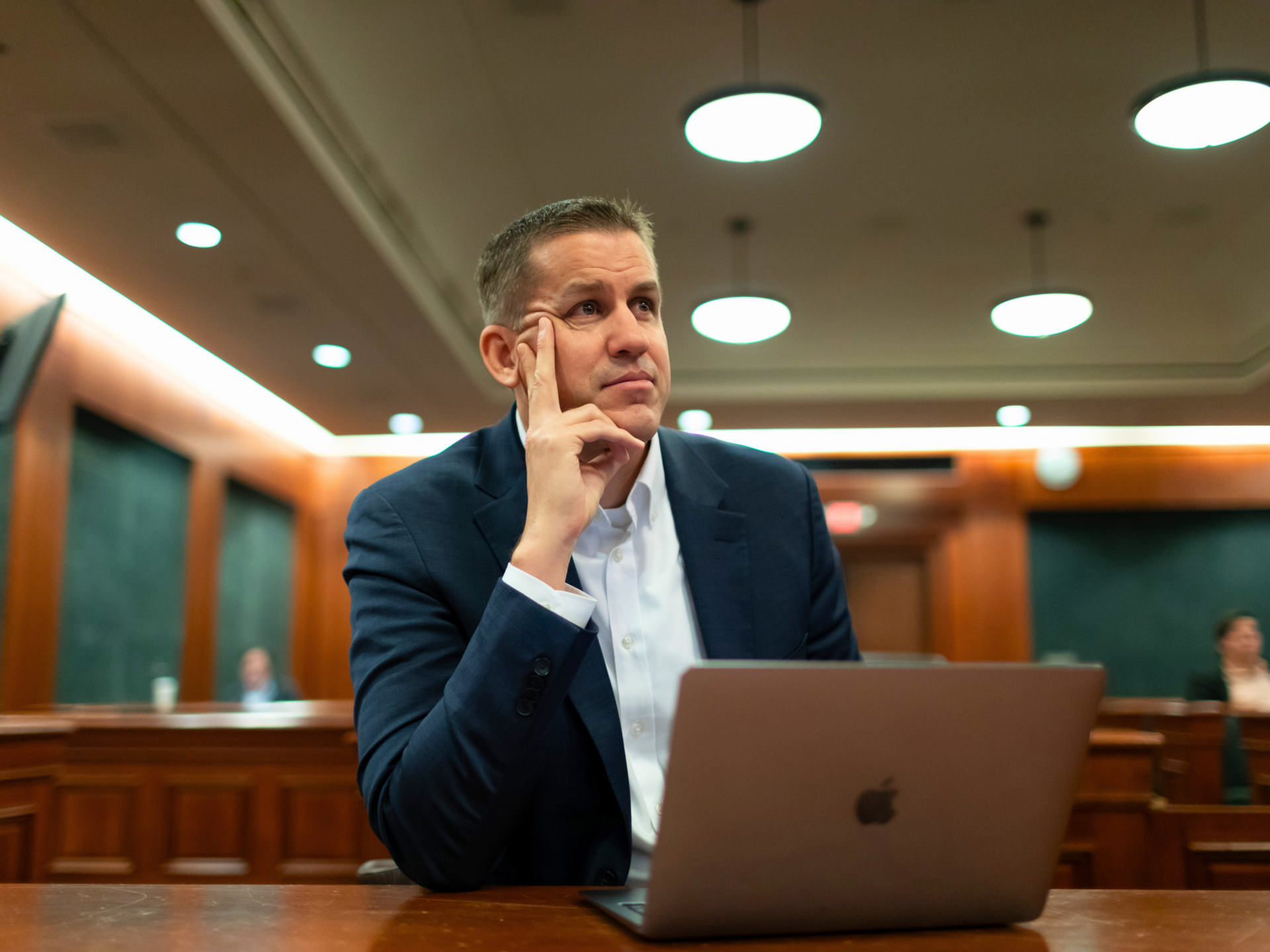
“Scholars call it the ‘Puritan Mistake,’ a term coined by the Law School’s own Douglas Laycock,” says Collis. “They wanted liberty for themselves, but not for anybody else. And that mistake is repeated again and again by all groups of people across the entire political spectrum. What they miss is that power never stays in one place for long. That’s why you need the First Amendment.”
Officially, then, the center’s mission is to conduct research and educate students and the public on the meaning and value of the First Amendment and the rights to speech, assembly, the press, petition, and religious freedom it enshrines. Unofficially, the center helps people resist a recurring set of impulses: suppressing speech that angers or unsettles them, punishing people who think or believe differently, or ignoring the rights of those whose speech is vulnerable.
“It goes against all of our intuitions to defend freedom for ideas we hate,” says Nadine Strossen, former president of the ACLU and member of the center’s advisory board. “It is this incredibly radical, counterintuitive idea, which is why it took so long to root itself in some, though not all, human societies, and why it remains so vulnerable.”
It goes against all of our intuitions to defend freedom for ideas we hate.
Nadine Strossen,
former president of the ACLU and member of the Bech Laughlin Center’s advisory board
That we have a First Amendment at all, says Collis, is both a kind of miracle, given human nature, and a brilliantly pragmatic political solution to the challenge of managing the inevitable tensions that arise in a pluralistic society with a host of different faiths, traditions, ethnicities, and political beliefs competing for space and priority.
“How do we structure the law in a way so people from these diverse backgrounds can thrive alongside one another in the same society?” he says. “At any given time in the United States, different groups are finding their freedoms being burdened, and which group is facing those burdens will change over time. A lot of it depends on which government actor is in power.”
A Shield That Changes Hands
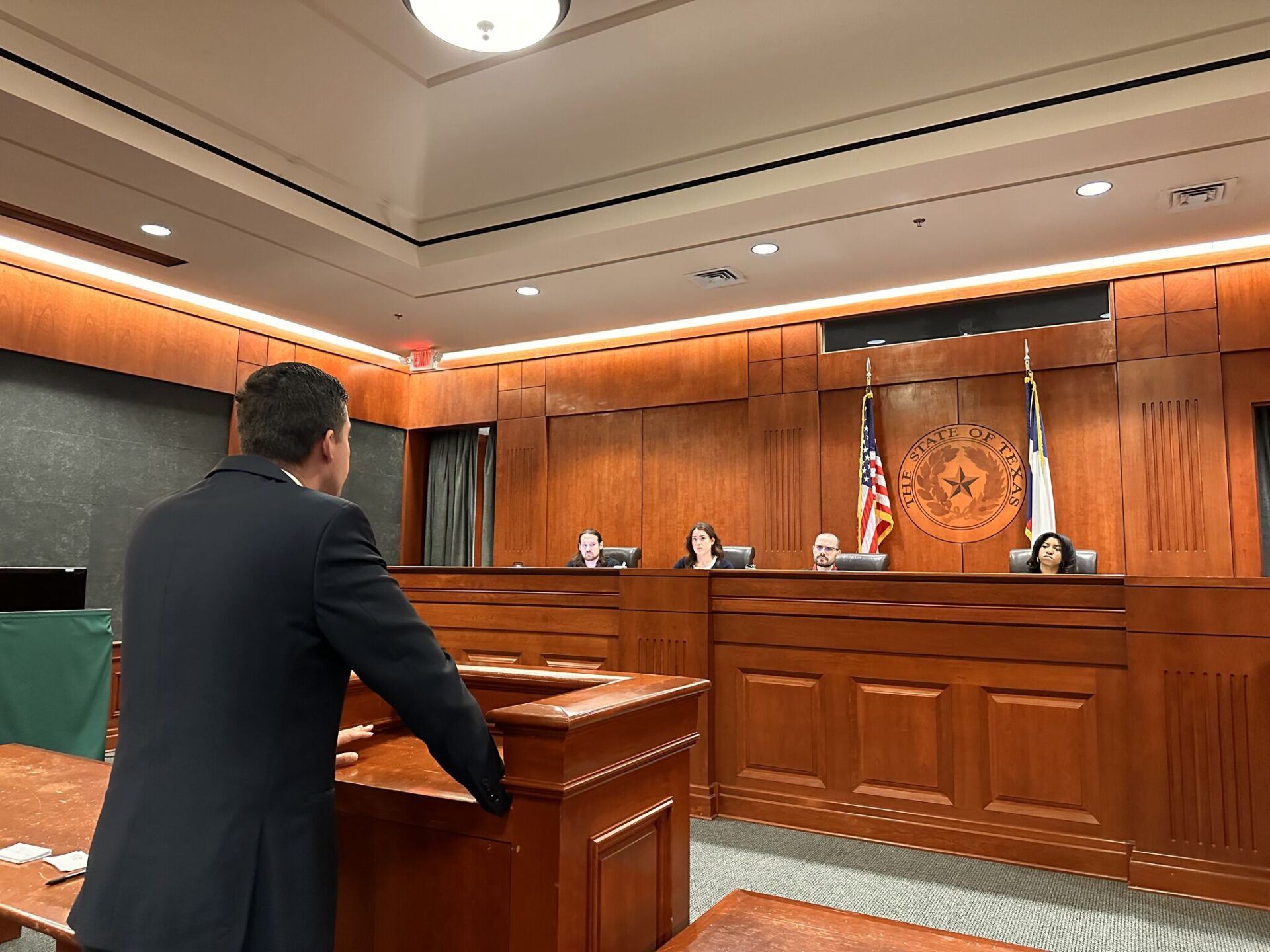
What’s kept First Amendment freedoms vital over the course of the country’s history has been both the law itself and the virtuous cycle that results when power changes hands. Every time a new player reaches a position of government power, at any level, a new coalition is instantly incentivized to reach for the First Amendment as a shield with which to protect their freedoms. That coalition changes radically over time, but all actors in this country eventually rely on the First Amendment.
It’s no coincidence, in other words, that the Bech-Loughlin Center came into existence in 2020, nor that it is one of a number of new First Amendment-oriented centers and institutes that have been created over the past decade, including at the law schools at Yale, Columbia, Harvard, and Notre Dame. Each of those other institutes focuses on only a part of the First Amendment, whereas the Bech-Loughlin Center works on all its freedoms and related issues, but they are still part of a common ecosystem. They are an “immune system response,” as Strossen puts it, to the pressures that universities have faced.
For Collis, who left a research fellowship at Stanford Law School to join the faculty at Texas Law and help launch the center and who, in a former life, was an equity partner at a large law firm, this chronic political charge is a feature rather than a bug. And it’s one that plays out especially constructively at The University of Texas, where a lot of the faculty are on the political left but the major power centers in the state are on the right. Having both of those groups in the mix, he says, produces a structural pressure for people to be more open to opposing views than is the default at many other universities.
“People here have to engage with what others are thinking,” he says. “That creates an environment where something like our center can thrive in a way that I don’t think is possible at another university. I find it incredibly rewarding because all sides are concerned about their speech being shut down or are concerned about their viewpoints facing discrimination.”
Thinkers, Not Provocateurs
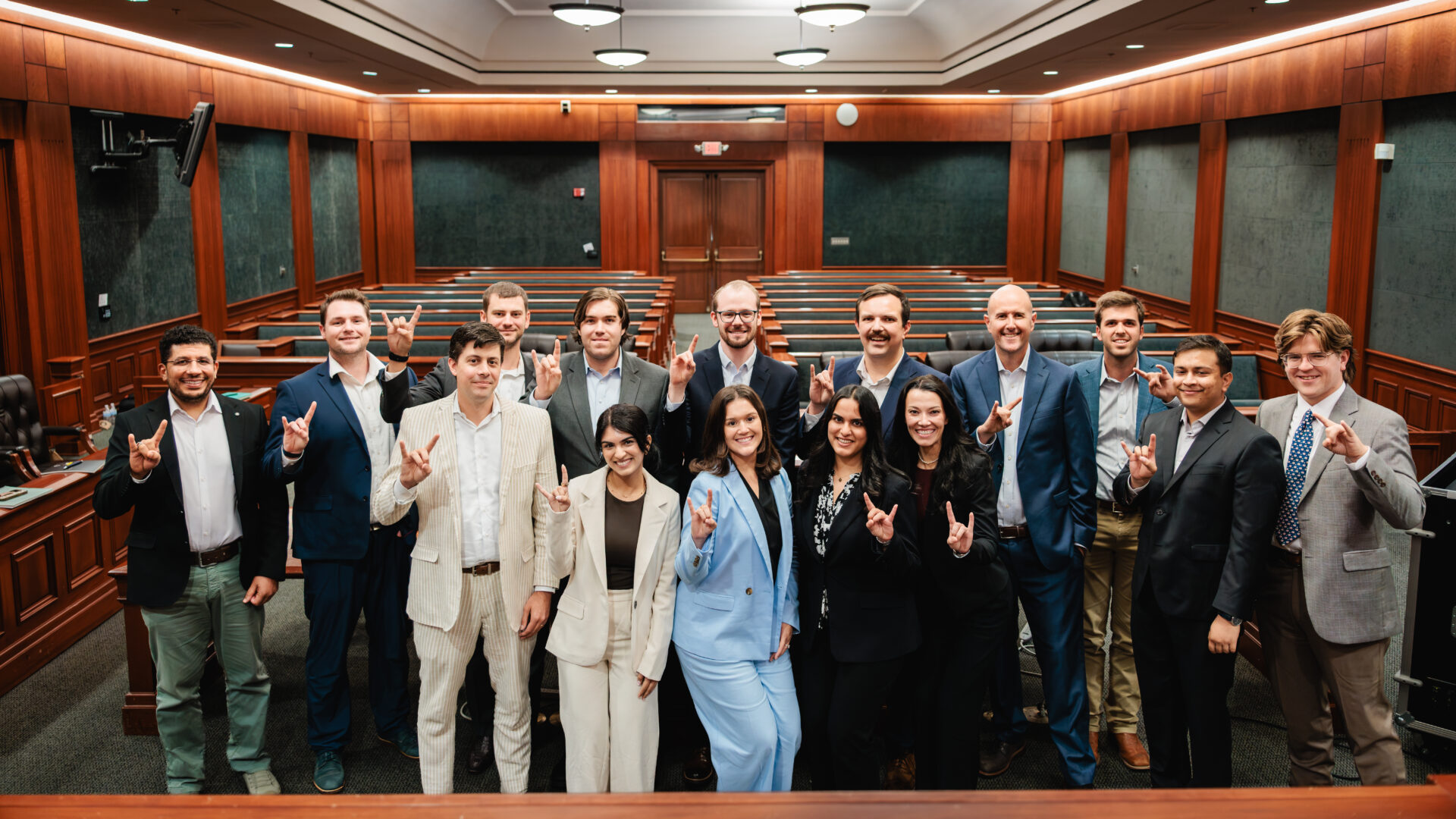
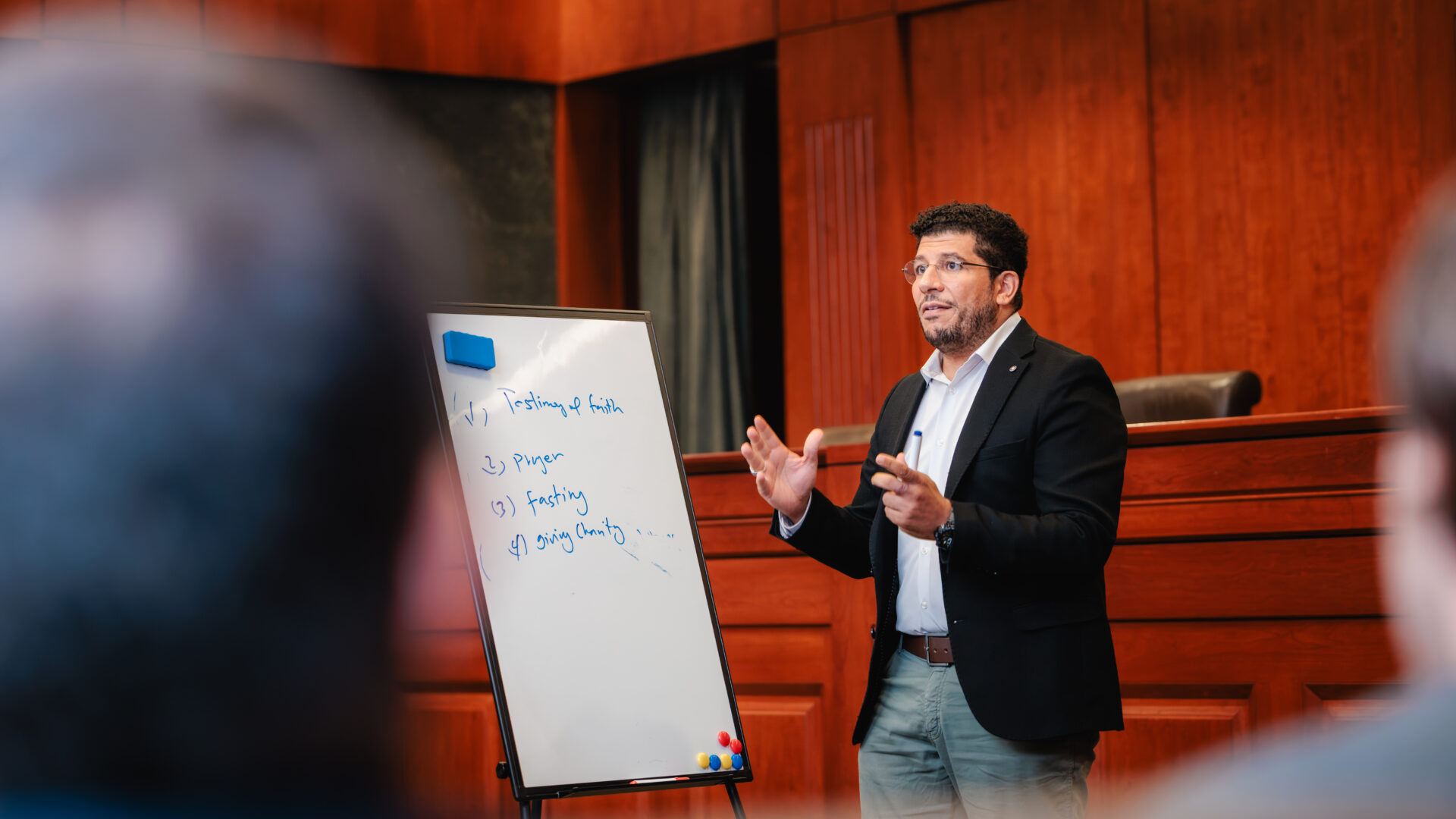
The center responds to this dynamic in a few ways. It has an ideologically diverse board of advisors, faculty affiliates, and resident and nonresident fellows. It hosts debates, panel discussions, book launches, lectures, and fellowships focused on various aspects of the First Amendment and its judicial and political contexts. It supports and produces research from across the political spectrum. It also operates the Law and Religion Clinic, overseen by Collis and managed day-to-day by law professor John Greil. The clinic provides law students the opportunity to work on real religious liberty cases and provide counsel to real clients.
It’s a balancing act, says Collis. The center takes an expansive approach to the kinds of public discussions it will foster, as a scholarly entity, while being very pragmatic when it comes to choosing cases and clients for the Law and Religion Clinic.
We are looking to bring in thoughtful people who recognize the complexity of these issues, not provocateurs.
Professor Steven Collis
Recent public events have addressed, for instance, topics like displaying the Ten Commandments in classrooms, the United States’ arrest of deposed Venezuelan president Nicolás Maduro, “The Anatomy of Cancel Culture,” and “Drag Bans and the First Amendment.” Two of the center’s events this semester even better highlight the center’s focus: a conference on the theme of “Dialogue Between Religion and Science” and a lecture titled “The Bible and the American Founders.” Invited speakers for these and all events come from across the political spectrum and have been, on occasion, participants in white-hot culture war debates. At the same time, Collis prioritizes bringing in those who are serious thinkers at the top of their fields. “We are looking to bring in thoughtful people who recognize the complexity of these issues, not provocateurs.”
The Law and Religion Clinic, meanwhile, prioritizes cases that enable students to do real work in the semester or two they spend with the clinic. Case selection is focused primarily on pedagogy—what will provide the best learning experience for the students—and less on politically charged issues that would distract from the learning experience. “The vast majority of religious freedom matters have nothing to do with huge culture war debates,” says Collis. “Of course,” says Greil, “if there is a client with a real need, or a voice that isn’t represented in the conversation, we know lawyers can’t be afraid to represent unpopular clients.”
Learning From Doing
Zara Kabir, now a third-year student, first heard about the First Amendment Center when she was still in high school in Dallas. Her dad was on the board of their mosque, and he mentioned to her a potential lawsuit the mosque was facing.
“It was a new mosque,” says Kabir, “and so no one had any experience of how you even deal with that situation. Who do we even contact?” She asked a friend studying at Texas Law, who gave her the information for the Law and Religion Clinic.
Though the mosque and the clinic ultimately didn’t work together, Kabir was excited by her research. “I spent time on the clinic’s website and became so interested. That’s part of why I came to the law school, since I hope to be able to do law that helps my community.”
Kabir, who finished her second semester with the clinic, has been involved in a variety of efforts. She and student colleagues drafted a letter to the U.N. on behalf of a Christian pastor imprisoned in China for leading his church there. She helped draft an amicus brief for a case in the United States Supreme Court in which Muslim, Orthodox Christian, and Catholic parents claimed a religious free exercise right to opt their children out of lessons that violated their religious beliefs. She’s also done a fair amount of client intake, getting basic details from people who reach out to see if the clinic can help them.
This is a pretty typical array of student responsibilities, says Greil. He left private practice in 2023 to join Texas Law. The clinic typically has about ten cases or clients active at any given time. Many of them are smaller bore, helping individuals or congregations deal with basic legal issues or helping them navigate complex bureaucracies. In recent semesters this has included helping Sikh clients gain accommodation to bring religious items into a city landmark, advising a Muslim halfway house on corporate documents, and assisting a historically Black church prepare for pastoral succession.
“Most religious liberty claims are somebody who needs an exception from a rule,” says Douglas Laycock, emeritus professor at Texas Law who served on the initial recruitment committee for the center and remains on its board of advisors. “Someone can’t shave his beard because he’s an Orthodox Jew, for instance, and that’s part of his religious obligation. It should be simple, but bureaucrats instinctively don’t want to make exceptions, and most of our clients are individuals or small congregations of modest means without money for legal representation. Once the religious claimant has a lawyer who can explain what the rules are and can make credible threats that if we don’t work this out, we will go to court, these cases tend to get resolved informally.”
Each semester, the students also get to break into teams to work on bigger federal cases. Currently, one team is co-counsel with Jones Day, an elite national law firm, on Perez v. City of San Antonio. They’re representing indigenous religious leaders in their effort to have the city alter its plan to destroy a sacred religious site along the San Antonio River.
The other team is co-counsel with the Foundation for Individual Rights and Expression (FIRE) on Dubash v. City of Houston, representing two animal rights activists, one of them Hindu, who were expelled from Houston’s Discovery Green Park for showing graphic videos of industrial animal production. The litigation represents the first case where FIRE has co-counseled with a student clinic.
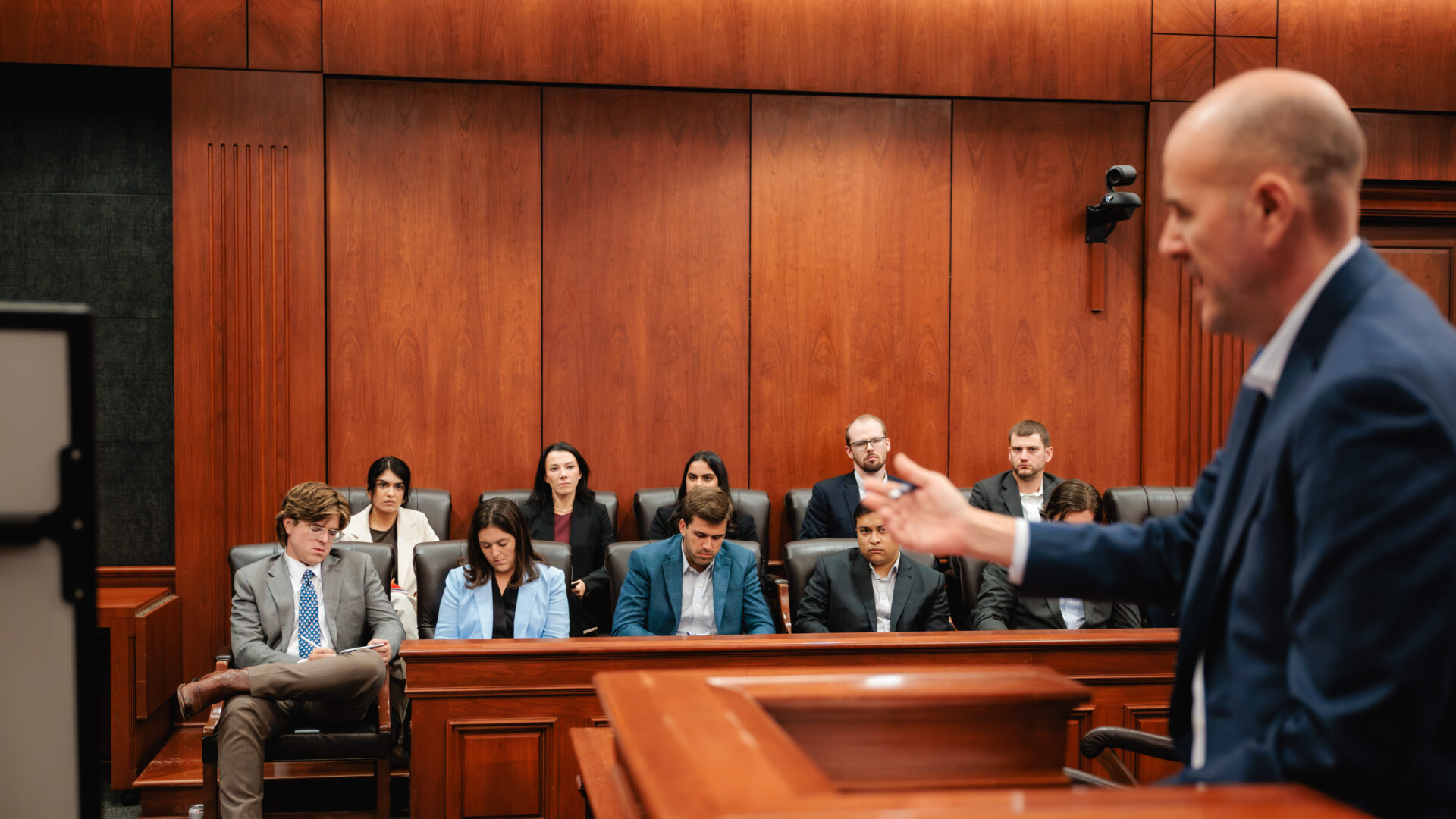
Recently, a federal district judge appointed the Clinic to represent a plaintiff in a jury trial; students argued contested motions, picked the jury, made opening and closing statements, and examined real witnesses on the stand.
Everyone has opinions about religious freedom and free speech, but you see how these concepts really click in students’ minds when they’re working on a real case.
Professor John Greil
In these cases, says Greil, the students are dealing with fundamental First Amendment issues of religious freedom, speech, and the proper boundaries of state action. They’re getting to see attorneys practice law at the highest levels—and do it themselves.
“Everyone has opinions about religious freedom and free speech,” says Greil, “but you see how these concepts really click in students’ minds when they’re working on a real case. And the students at Texas Law are just so high caliber. For me to be able to help form them as attorneys, to see the progress that they can make, I’m constantly impressed at what they’re able to do.”
All of Us, Together
The hope, for everyone involved in the center, is that the more exposure people get to the realities and complexities of the First Amendment, the more likely they’ll be to see its wisdom and to resist, if ever they find themselves in positions of power, the seductive appeal of coercion.
“It’s funny,” says Collis. “When we first launched, many of the students who were interested in our work were more right-leaning, because they felt that their First Amendment freedoms were under threat. This last year, we’ve seen an influx from the left, because suddenly they see their freedoms as being under threat. I want everyone to realize that these freedoms matter to all of us, and that it’s a lot more entertaining and fun if we’re all in there together with different views, exposing each other to them.”