
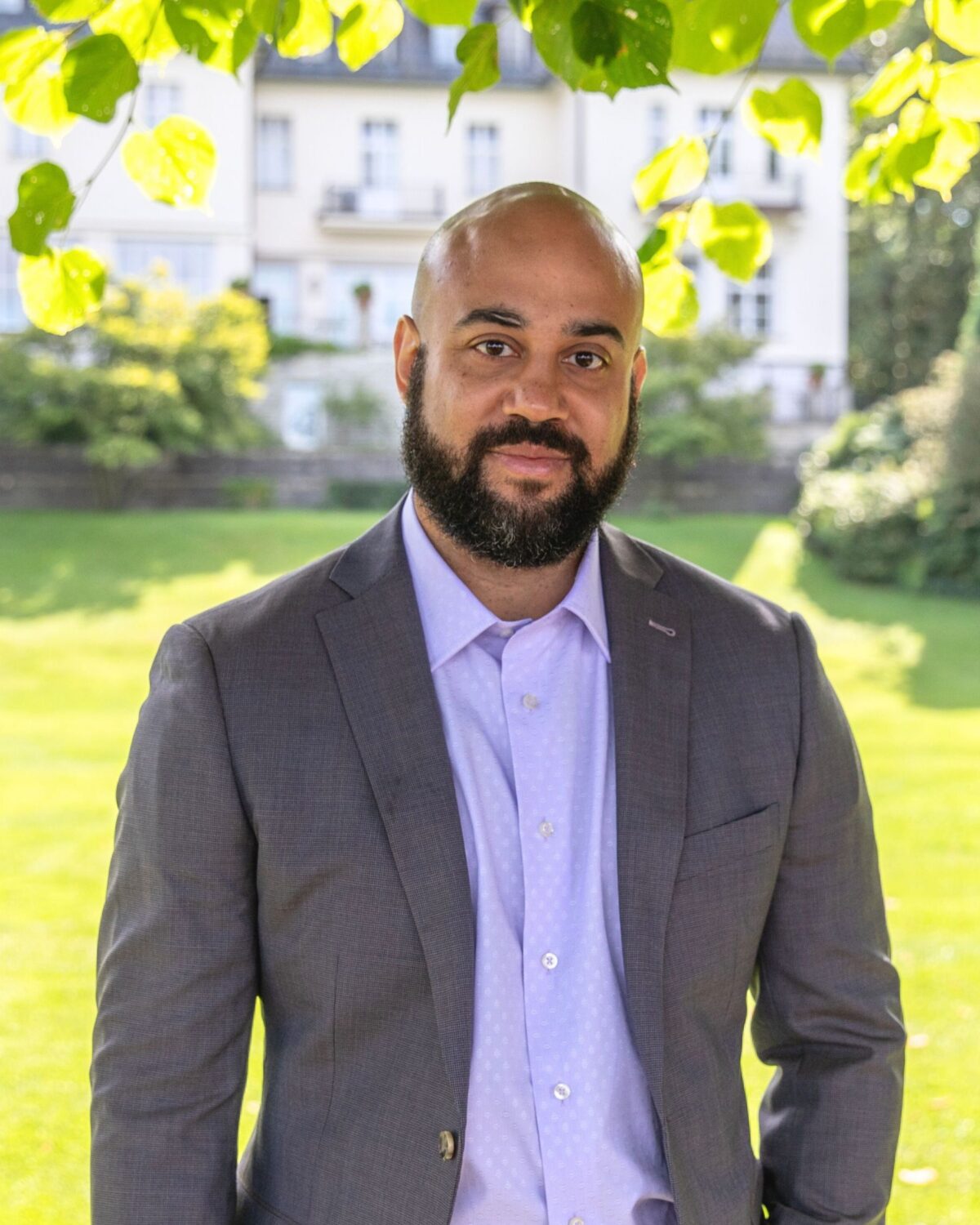
As a scholar of election and constitutional law, Professor Joshua Sellers has plenty to keep him busy these days.
“I sometimes say a lot of what’s happening in the U.S. is bad for democracy, even if it’s good for my career,” the Texas Law professor says.
Sellers—who also studies race and the law and American politics—earned his bachelor’s degrees in political science and Afroamerican and African Studies from the University of Michigan. He then added a juris doctor and doctorate in political science from the University of Chicago, where he served as an articles editor for the University of Chicago Law Review. Next, Sellers clerked for Judge Rosemary Barkett of the U.S. Court of Appeals for the 11th Circuit, worked as a litigation associate at Jenner & Block LLP in Washington, D.C., and fulfilled a longstanding goal by becoming a professor.
Sellers has published articles in leading journals, including the Stanford Law Review, Vanderbilt Law Review, University of Pennsylvania Law Review, and New York University Law Review. His scholarship has twice been recognized with awards from the AALS Section on Election Law, and Sellers was named a Berlin Prize Fellow in 2022 by the nonpartisan American Academy in Berlin—which seeks to deepen “transatlantic ties and advances democratic values”—for representing the highest standards of excellence in his field. He was elected to the American Law Institute in 2023 and is an adviser on the institute’s Election Litigation project.
We recently sat down with Sellers to learn how his interest in election law began, hear about his time in Germany, find out what he’s watching in upcoming elections, and more.
How did you first become interested in election law, also called the law of democracy?
In college, I was studying redistricting from a political science perspective, and that’s also when Bush v. Gore was decided. That was a watershed moment, and I knew I wanted to focus on this stuff. It was still a burgeoning field then, but now it’s mainstream, with related front-page news every day.
After college, you continued with your studies in political science. How did you decide to add law?
I knew if I really wanted to understand election law, I was going to also need a law degree. And even at that time, I wanted to be a professor. It’s been fortuitous that the field has grown as it has.
I enjoy teaching, getting up in front of people, and communicating ideas to help create the next generation of state leaders. That’s the obligation we have.
Since you wanted to be a professor even then, do you enjoy the job?
I love it. It’s the perfect job for certain types of people, and I’m one of those people. I enjoy teaching, getting up in front of people, and communicating ideas to help create the next generation of state leaders. That’s the obligation we have. For those of us who also enjoy research, writing, and scholarship, it’s ideal.
Does election-related news come up in your classes?
That’s very much the case. I teach 1L Constitutional Law, Election Law, and last semester I also taught a law and politics colloquium with Professor Teddy Rave. In all those courses, I’m bringing in stuff that’s on the verge of being decided by the Supreme Court. Students expect some engagement with the constant election litigation. I’ll tee up for the class, “This is a case that’s pending. We’re going to talk about it, explore the briefs, and we’ll probably get a decision by the end of the semester. So, we need to leave some space to revisit it and see what the courts have done.” That’s fun—it makes the material always relevant. Students, especially those who want to go into this field, need to be aware of how election litigators are approaching issues right now. By the time students finish the Election Law course, they’ll have a strong sense of not only how to do the work, but also what the cutting-edge issues are.
By the time students finish the Election Law course, they’ll have a strong sense of not only how to do the work, but also what the cutting-edge issues are.
Several years ago, you won the prestigious Berlin Prize and were hosted by the American Academy in Berlin. What was your experience like?
It was an amazing honor. They are given out once a year to 10 people working in America across a variety of fields—journalists, novelists, composers, scholars—who all go live for a semester in this picturesque villa outside Berlin, on a lake. The hope is to cross-pollinate ideas, although there’s no expectation of collaboration. They take good care of you, and you’re given space to just work. I took full advantage of being there and interacting with these phenomenal people. Probably the most prominent fellow when I was there was the poet Claudia Rankine, who’s won the MacArthur Fellowship “genius grant.” It was a great group of folks.
I love Germany, the history there is fascinating, and you learn all about the villa’s history. There’s a glass structure with cubicles to work in. You could also work in a nice little library, in your room, or do what I did: go into Berlin to work at different cafes.
That must have been wonderful. What sort of work came out of your time there?
You give a big talk to a select audience that the academy brings in. And the academy helps connect you with a lot of other people around the city. In my case, that led to invitations to present to the U.S. Embassy folks and German think tanks. I was there in fall of ’22 during the midterm elections, and there was a ton of appetite from Germans to learn about American politics, because we have such an odd system. It was almost like translation, explaining how things work, and I’ve continued doing that. I’ve recently been contributing to Verfassungsblog, a European legal blog, where I’m writing these short pieces about American politics for a European audience. That all largely stemmed from the experience in Berlin.
Meanwhile, you’re an advisor to the ALI. Can you talk about that role?
The American Law Institute puts out restatements—big reports on the law—and offers suggestions about how the law might change. Last year, ALI finally initiated an election litigation project, which is long overdue because so much has been happening. I’m an advisor on that project: a couple times a year we convene, go over the reporters’ work, add chapters to the restatement, and offer input like, “I would rephrase this section,” or “This would be a better case to cite.” Last year, around 50 of us assembled in Philadelphia to spend a day going through the report line by line, the reporters took notes, and we made edits. These are multi-year projects, and eventually this restatement will get presented at the annual convention to the entire ALI body, which will have a chance to review and then vote whether to approve it.
Restatements give judges and practitioners a handbook of sorts, to say, “I’m facing this issue in my case. What’s the best understanding of the relevant law as laid out by scholars, experts, and practitioners?” Restatements can be very useful, and I know judges really appreciate them. It feels like an important service project to be part of.
It certainly does. With the elections coming up, what are you already tracking?
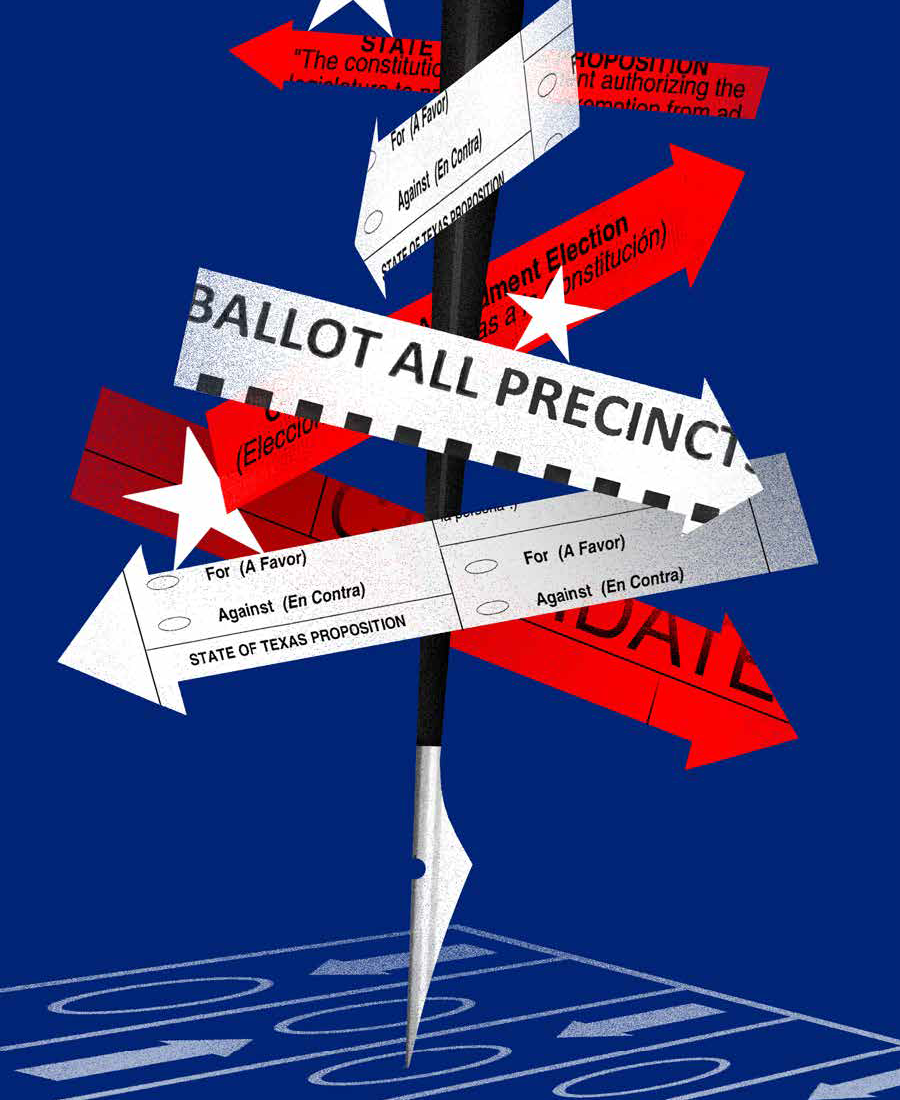
There were quick redistricting efforts in Texas and then, in response, in California. Other states are still considering it, like Virginia, and we’ll see what happens in Florida. That’s yet to shake out.
We typically redistrict every 10 years. This mid-decade redistricting is so aberrational—there’s almost no history of it. States have the constitutional power to do it, and Texas chose to with the hope of securing five additional Republican seats. That inspired California to respond in kind, and they had to put the issue to the voters, but the voters approved mid-decade redistricting. California altered its maps to increase the Democratic yield there by five seats. After the court upheld the Texas redistricting, it was certain to permit California’s response. This might wind up being a wash, depending on what happens in other states, but it all stems from this potentially being a very close election with control of the House at stake. Every seat counts. The unfortunate reality is that of our 435 House districts only 25 to 30 are competitive each season. Most representatives are in very safe seats and don’t have to worry about losing office. I, and many others, wish there were more competitive races around the country. But gerrymandering is the principal reason why we don’t have more competitive districts.
Why are those safe seats a concern?
Candidates typically appeal to the median voter. But if you’re in a safe district, then you don’t really have to worry about that. If anything, you’re worried about being primaried, so you play to the wings of the party.
That means people are getting elected from the party fringes. There’s a good argument that’s facilitating polarization in Congress. Competitive districts would be one way to make candidates compete for the median voter. If more moderates run, that’s probably going to change the nature of campaigns, who gets elected, and then how Congress functions.
Is there anything else you’re watching on the election front?
I’m most anticipating a Supreme Court decision involving the question of whether, when, and where so-called minority opportunity districts must be created. The Voting Rights Act, in some circumstances, requires the creation of electoral districts designed to select a minority population’s candidate of choice. The idea is that, when voting is already racially polarized, the Voting Rights Act requires the creation of what used to be called majority-minority districts. Now we generally refer them as minority opportunity districts.
Will that continue to be the case? It’s possible the Supreme Court says that’s an outmoded approach and race can no longer be taken into consideration in that way for redistricting. So, there’s the big question of the law going forward. And the related question: If the court dispenses with the status quo, how are states going to respond? The demise of the Voting Rights Act would be thunderbolt on its own, but there’s also immediate implications for the upcoming midterm elections.
When will the Supreme Court issue a decision?
It could be very soon, or not till June. We’re just waiting to hear. If the court issues a decision now—depending on what it says—several states might quickly try to alter their maps for this fall. Now, we’re getting late in the season. Candidates are already running in some of these districts, so it might be too late to make those changes. But if the court issues a decision very soon, I think some states would try to make a quick change. That’s something a lot of us are anticipating with concern, about how things might shake out depending on what the court says.
Ideally, you want things settled early, so everybody understands the rules of the roadway ahead, everything from who the candidates are to voters knowing what district they’re in. People get concerned, rightfully so, when there are 11th-hour shifts. Late-stage changes create the possibility of allegations of impropriety. I would prefer that things are stabilized months out. You cannot have late-stage chaos.
When you look ahead to the 2028 elections, what stands out?
Like many others, I’m concerned about the president’s interference in free and fair midterm elections. His endless, and baseless, claims about fraudulent elections undermine the legitimacy of our election systems and demean our election workers.
As someone with such deep expertise, what would you like the average voter to know?
Our system is so decentralized compared to other countries. That means that we’re all, in some ways, responsible at a local level for how our elections are run. I want to credit the people who give their time to elections, because that’s a form of public service we shouldn’t take for granted. Some are volunteers who just come in for election season, but there’s work happening all year round. We don’t want to lose sight of that, especially when there are threats to our elections. People are working on everything from the funding side of things; cybersecurity, which is increasingly an issue; and even the designation of polling sites. So, people should be cognizant of work that’s happening all the time and not think of democracy and voting as something that just happens every two or four years. It’s an ongoing project that we’re all collectively committed to.
People should … not think of democracy and voting as something that just happens every two or four years. It’s an ongoing project that we’re all collectively committed to.
Speaking of projects, how has Texas Law influenced your scholarship?
Being here has been enormously intellectually generative, given the quality of my colleagues and my ability to bounce ideas off them, have them read my draft work, get their feedback, and have informal conversations. Peer effects matter. We foster a healthy intellectual climate that I’ve really benefited from in the 2 1/2 years that I’ve been here. So, I’m grateful for that.
I’m also grateful to be talking about and teaching these issues in Texas, which is a state that has a longstanding history of litigating in these areas. Texas has generated a lot of Supreme Court cases and constitutional and election law. I used to teach these cases from a distance and not have any connection to the state. Now there’s something about it that resonates more—being in Texas, where we still have debates about what direction our democracy is going to go.

For more of Sellers’ election insights, read “America Votes” from the spring 2024 issue of Texas Law Magazine.