
“This nation will remain the land of the free only so long as it is the home of the brave.”
This often-repeated quote from Elmer Davis—a news reporter and author who was the director of the United States Office of War Information during World War II—recognizes the critical role played by those who serve in the U.S. armed forces.
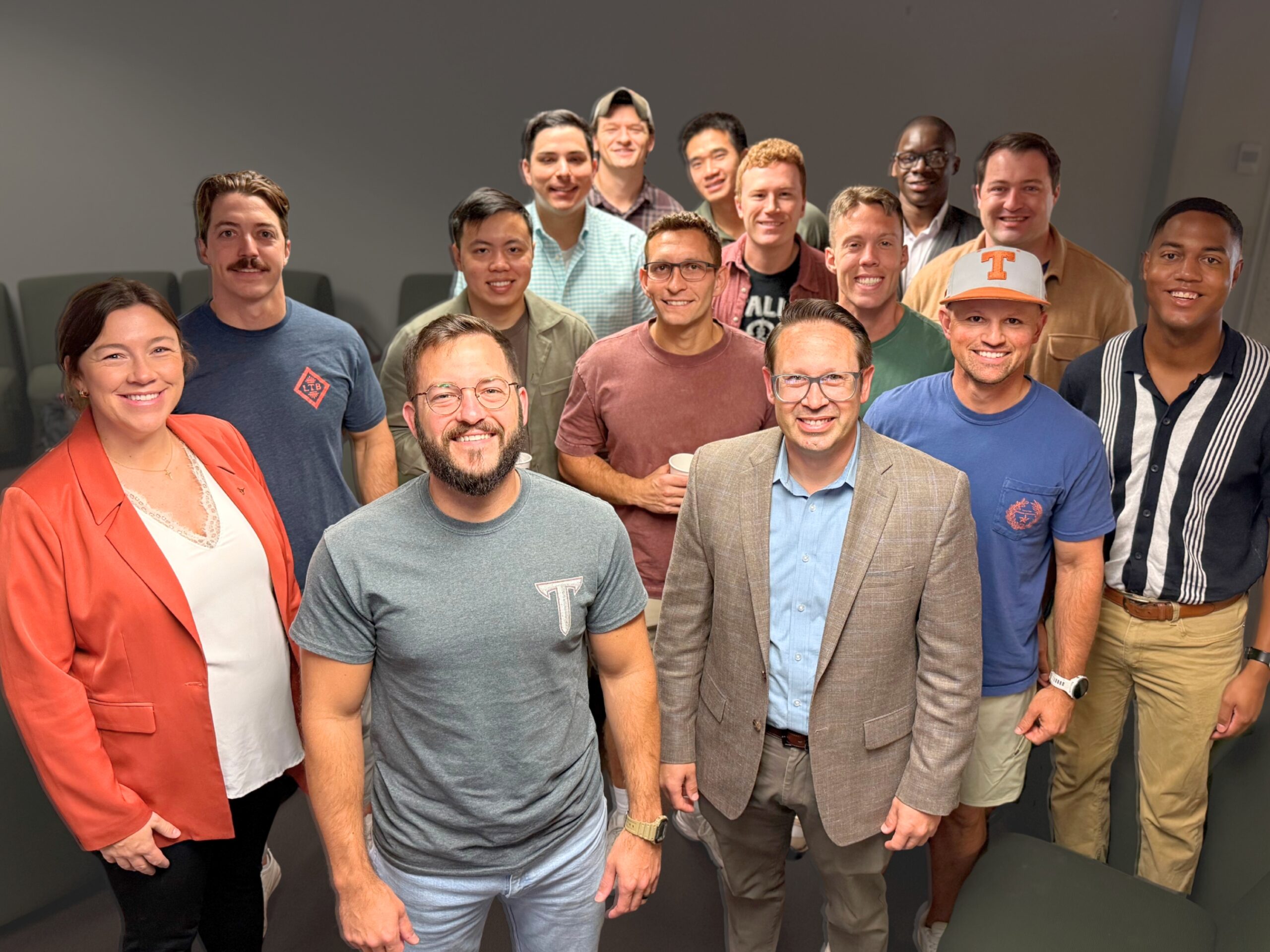
For 18 current Texas Law students, this call to duty preceded their pursuit of a law degree.
The experience these veterans gained through their military service not only helps them meet the challenges of law school but also adds a unique dimension to the school’s student body.
“Veteran students bring a wealth of invaluable experience, perspective, and leadership to the classroom, elevating discussions and inspiring their peers to think critically and collaboratively,” says Assistant Dean for Admissions and Financial Aid Matthiew Le. “Military service instills resilience and adaptability—qualities that veterans share with their classmates, enriching the learning environment and fostering a culture of perseverance.”
These students receive peer support through the Texas Law Veterans Association, now in its 10th year. TLVA offers weekly gatherings, information sharing, networking with veteran alumni, and trusted camaraderie.

“Texas Law does great by its veteran applicants but also recognizes that your service isn’t all that defines you. It’s the study of law that defines your future,” says TLVA President Ben Werner ’27, who was a lieutenant colonel in the U.S. Air Force. “TLVA delivers the peer support and camaraderie that helps student vets maximize their benefits and reach their potential.”
2025 marks the 250th anniversary of two branches of the U.S. military: for the Army on June 14 and the Marine Corps on Nov. 10.
In honor of our student veterans, we’re saluting one 3L from each of four different service branches: Adam Buckley from the Marine Corps, Micah Clark from the Army, Joe Holden from the Navy, and Tyler Moore from the Air Force.
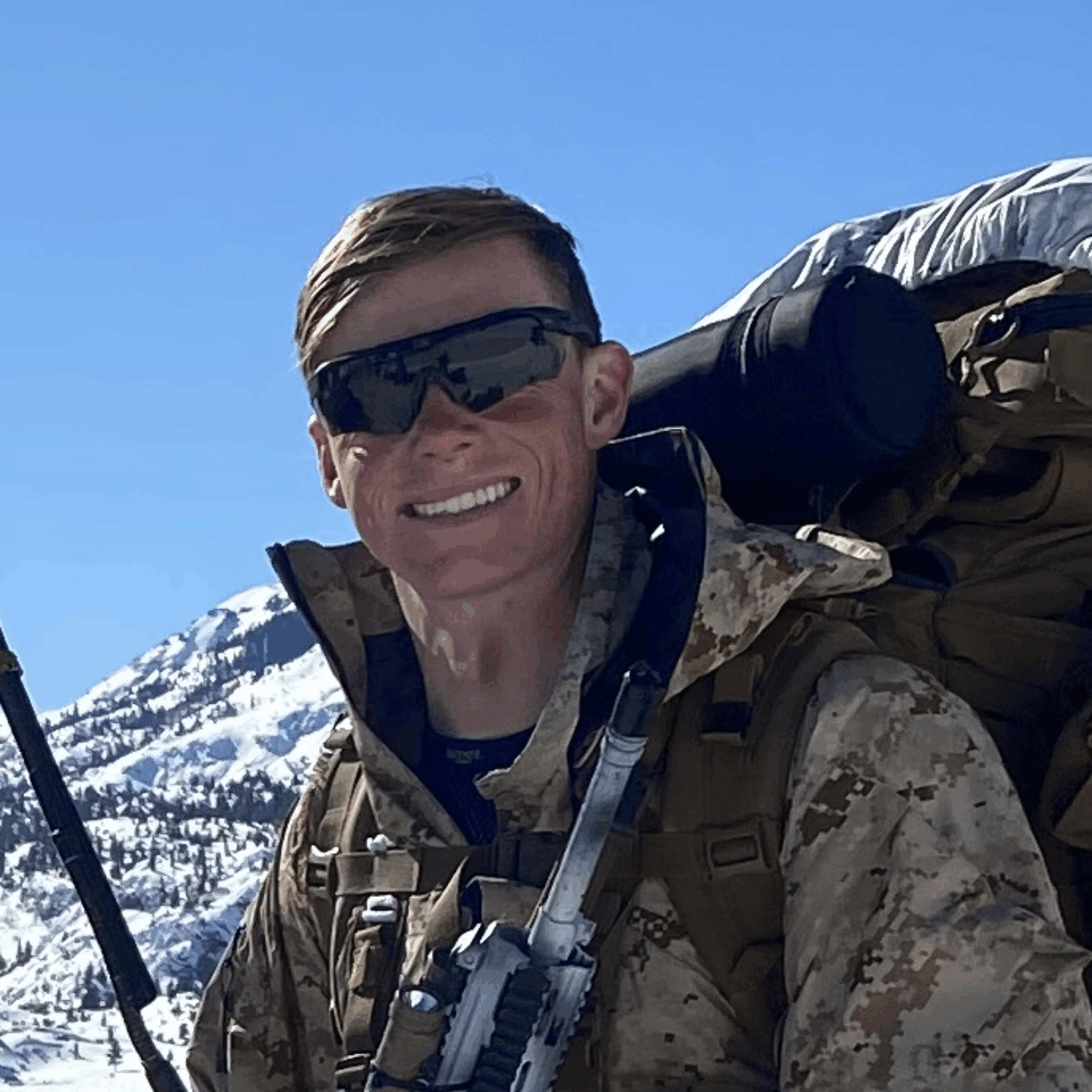
Adam Buckley,
Marine Corps
Degree: Bachelor’s degree in political science and Russian, Texas A&M University
Buckley was an infantry officer in the Marine Corps from 2019 to 2023, including three years at Camp Lejeune, North Carolina, serving as a platoon commander and completing a one-year deployment to Okinawa, Japan. He then went on to serve as a company executive officer and participated in the annual Marine Corps Mountain Warfare Exercise in Bridgeport, California.
Q: Your law school experience is a bit different than most, as you are also working toward a master’s from the McCombs School of Business. Can you explain how that works?
You have to apply to both programs and be admitted separately, then apply for admission to the dual degree program. Your first year is like a normal 1L at the law school, then you start taking MBA classes in Year 2. You can either focus exclusively on MBA classes that year, or you can take classes in both schools. The great thing about the dual program here is that both schools have been very willing to provide flexibility in scheduling, allowing me to take as many hours as I am able. This has been massively helpful for my family and me.
How did your experience in the armed forces help you navigate law school?
For me, the primary benefits of entering law school with military experience are discipline and perspective. When things get busy academically, it is helpful to have a baseline level of discipline in setting and keeping a schedule. Perspective is important because law school can be challenging, but the military taught me to deal with adversity on a relative basis. Most obstacles appear more daunting than they are, but few are insurmountable if you analyze the task objectively, break it into its constituent parts, and tackle them one at a time.
What inspired you to pursue a legal education?
A passion for reading, writing, and persuasive speaking, combined with an interest in business and finance. Law school seemed like a great way to bring those interests together. It was important to me that I serve my country first, but I always knew I wanted to go to law school. Growing up, I read the autobiographical “One L” by Scott Turow, and it created this idea in my mind that law school could be an exciting intellectual challenge in the same way that the military would be a physical and mental challenge.
How has Texas Law made you feel welcome as a veteran?
The veteran community at Texas Law has been extremely supportive since the start of my 1L year. One of the first people I met was Tom Rielly ’25, who at the time was president of TLVA and introduced me to attorneys at the firm I’ll soon be joining. Those connections are invaluable for someone entering law school without much prior exposure to the legal industry.
What’s next for you?
I am graduating in December with my JD and MBA. After taking the February bar, I’ll join the energy transactions group at Haynes Boone in Houston.
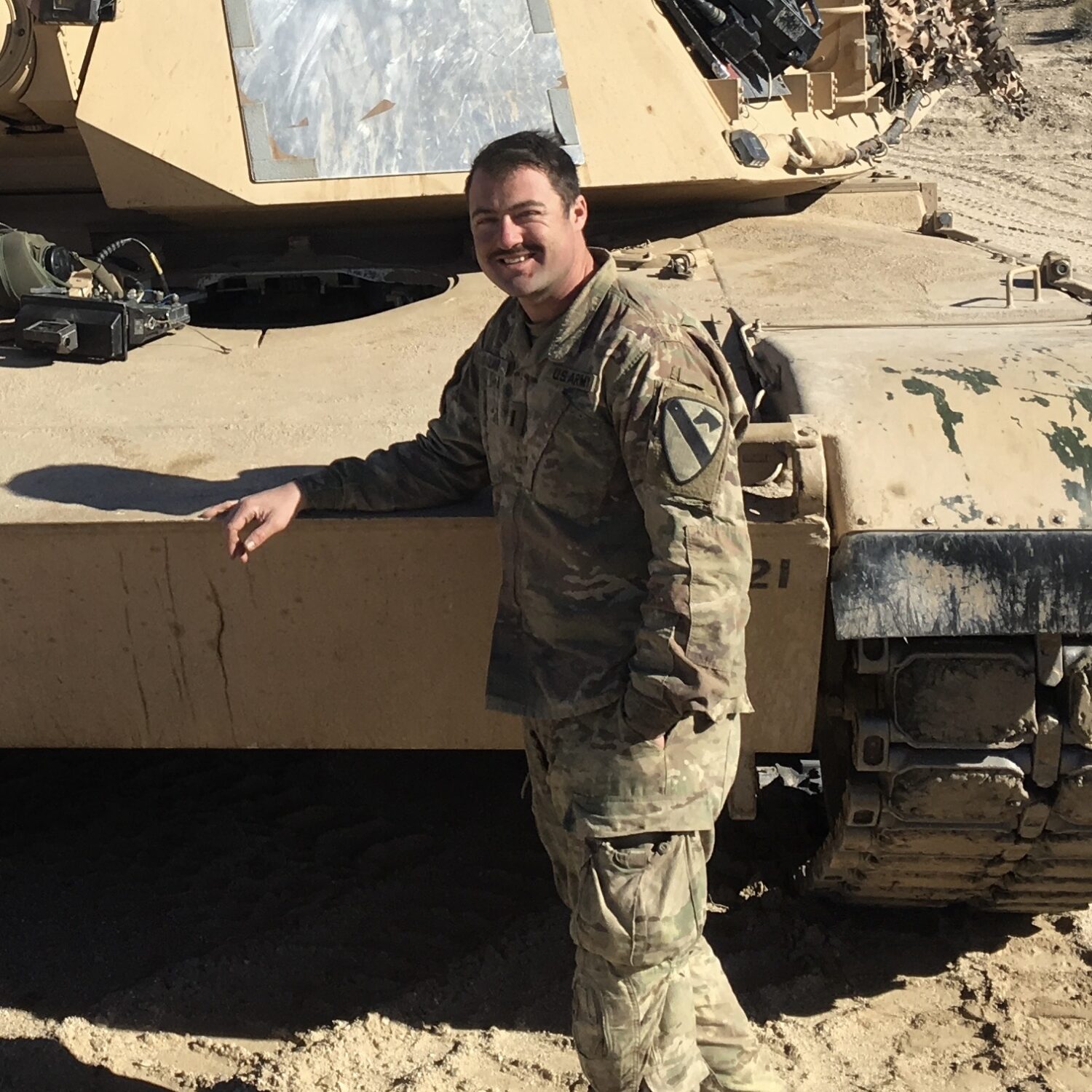
Micah Clark,
Army
Degrees: Bachelor’s degree in international relations, United States Military Academy; master’s degree in conflict, security, and development from King’s College London
Clark served in the Army for eight years. For the first four, he served as an armor officer and worked as a tank platoon leader in the 1st Cavalry Division at Fort Hood, Texas. Later, as a captain, he served as a civil affairs officer based at Fort Bragg, North Carolina. Clark also spent time in Kuwait, Bahrain, and Germany.
What skills did you acquire or sharpen during your military service that are proving to be beneficial in law school?
Writing for a military audience made me a stronger legal writer. In the Army, I learned how to produce clear, concise reports that enabled commanders to make informed decisions. Those skills translate well to legal writing, where complex case law must be applied to specific facts to help clients achieve their goals. I also learned how to build interpersonal relationships and work effectively on small teams, skills that will transfer well to collaborating under pressure in my future legal roles.
How has Texas Law made you feel welcome and supported as a veteran?
Texas Law has a uniquely strong and diverse community of veteran students and alumni. During my 1L year, several veteran alumni provided guidance as I explored different legal career paths. Those conversations were instrumental in helping me to clarify my goals and understand the profession. Also, TLVA’s weekly coffee hour is always one of the highlights of my week.
What advice would you offer to other veterans who are considering law school?
Approach the process with humility. Your military experience is incredibly valuable, but so are your classmates’ diverse experiences. Seek out opportunities to apply your life skills and background to help your classmates and look for ways that you can learn from them. When law school becomes demanding, be encouraged by the challenges that you’ve already overcome in your service.
What’s next for you after law school?
I will clerk on the U.S. Court of Appeals for the 5th Circuit and then join the Austin-based boutique litigation firm Scott Douglass & McConnico as an associate. My goal is to develop broad experience in trials, appeals, and regulatory work.
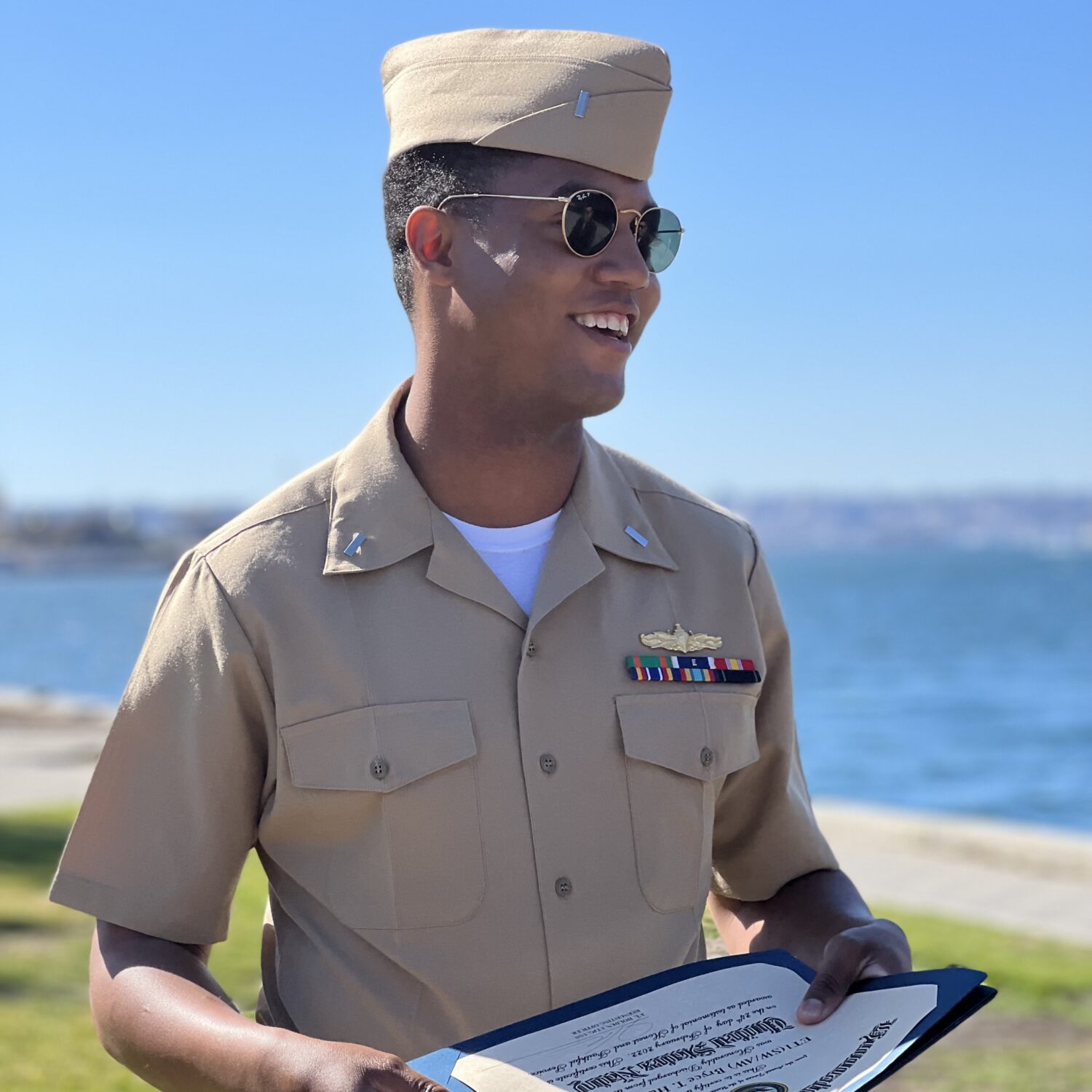
Joe Holden,
Navy
Degree: Bachelor’s degree in biochemistry and cell biology, Rice University
Holden earned his commission through the Rice University ROTC program, then served as a surface warfare officer in the Navy for five years. He was assigned to two ships: a guided-missile destroyer and then a littoral combat ship.
How did your military experience lay the groundwork for your law school journey?
My time in the Navy taught me the importance of periodically reassessing my priorities, knowing they could always shift. In law school, it’s easy to get overwhelmed by assignments and other commitments, and sometimes things don’t go as planned. Taking time at the beginning of each week to reexamine my schedule helps me set realistic expectations and stay on top of everything that needs to get done.
Who inspires you?
My mother, who is a retired Air Force veteran herself. Watching her accomplish her goals while balancing her parenting and military responsibilities taught me not to count yourself out before someone else does.
What’s your best advice for 1Ls?
Before law school starts, establish habits that support your well-being, whether it’s working out, making weekly calls to family, or another activity that matters to you. This will help you maintain balance once school begins and prevent law school from consuming all your time. School is important, but it’s not the only thing that’s important.
Do you plan to specialize in an area of law where your undergraduate science degree will be helpful?
Yes. I plan on practicing intellectual property litigation. While I don’t plan on working in the life sciences space exclusively, I believe the research skills that I’ve gained through my undergraduate coursework will enable me to take on litigation issues concerning different areas of technology.
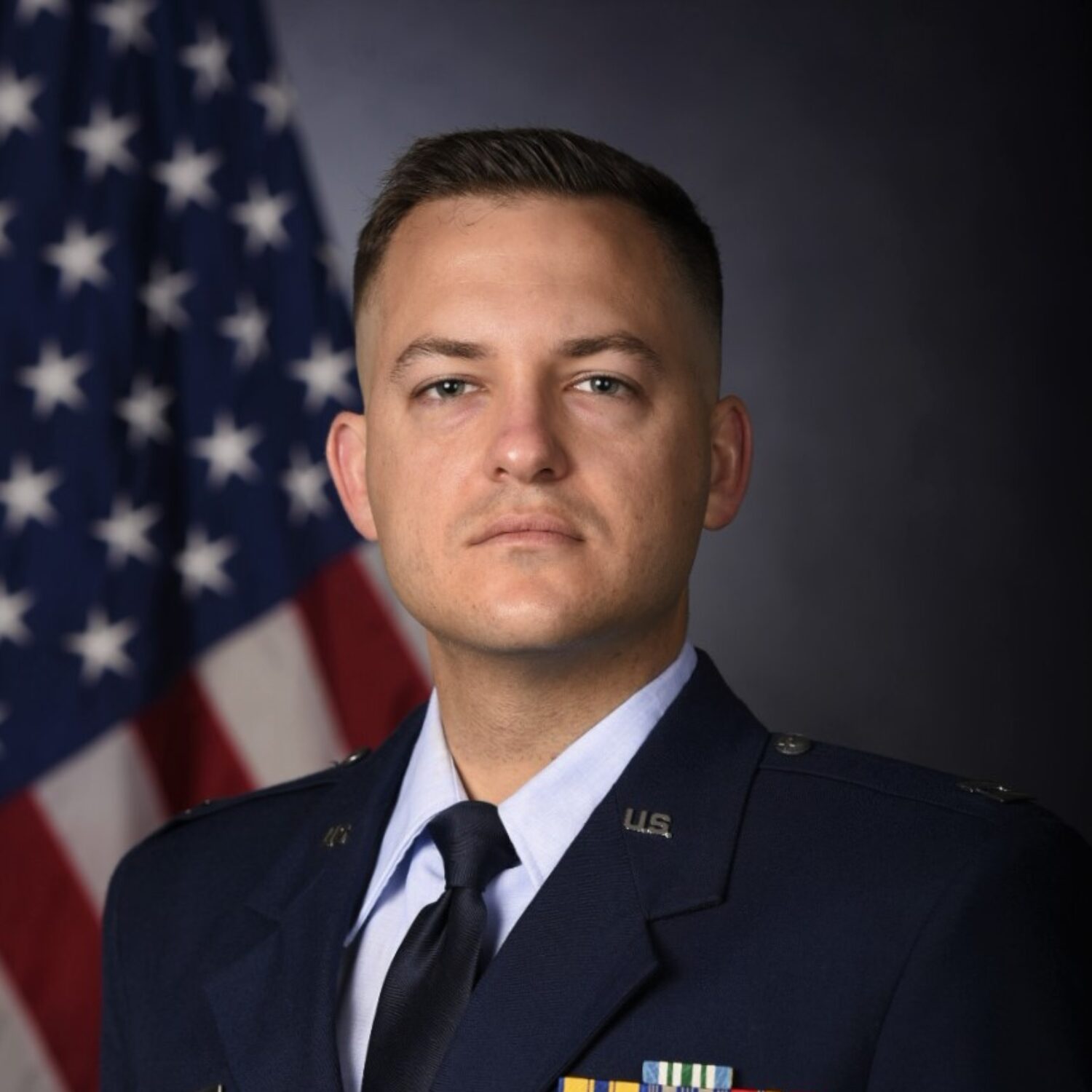
Tyler Moore,
Air Force
Degree: Bachelor’s degree in mathematics, Troy University
Moore was in the Air Force from 2013 to 2022, rising to the rank of captain. He was stationed at the Rome Research Site in New York; Bagram Airfield in Dahlke, Afghanistan; Wright-Patterson Air Force Base in Dayton, Ohio; and Joint Base San Antonio-Lackland.
What skill gained from your military service is the most relevant in law school?
Stress management. The Air Force taught me to thrive under demanding conditions.
What inspired you to pursue a legal education?
I was always told I’d make a great lawyer, and it seemed a meaningful way to make a living in a rural community. My Air Force career field would have limited me to metropolitan areas for post-military employment, but I wanted to return to the country living of my youth.
How has Texas Law made you feel welcome as a veteran?
From emailing veterans encouraging them to apply here to hosting the annual Veterans’ Day breakfast, Dean Chesney has made it clear that he supports veterans at Texas Law. At the breakfast, his remarks always show a sincere desire to have veterans succeed at the law school. Also, his continued support of TLVA has made it a thriving organization.
What advice would you offer to other veterans who are considering law school?
If it makes economic sense and your family is on board, go for it. The structure and work ethic developed in the military provide a solid foundation for success in law school.
What’s next for you after law school?
My goal is to work for a small estate planning and probate administration firm until I gain the experience needed to hang my own shingle.