
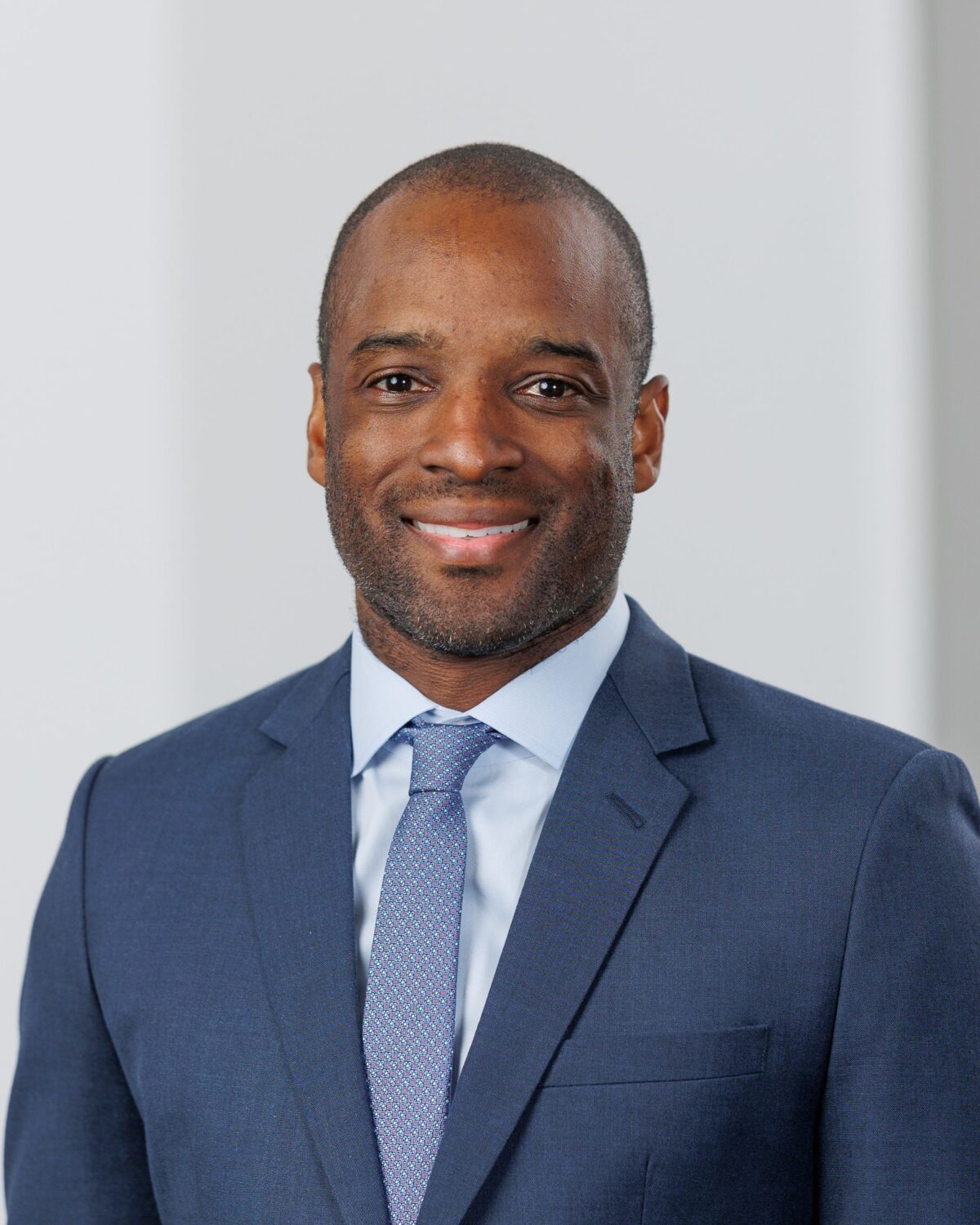
Eliot Cotton ’10 brings a wealth of industry experience to business education at Texas Law.
The Houston native is a double Longhorn, having earned a bachelor’s in communication studies from The University of Texas at Austin and a juris doctor from Texas Law. Cotton then worked as an attorney at Vinson & Elkins LLP, where he specialized in capital markets, mergers and acquisitions, private equity, and fund formation and led the firm’s venture capital and emerging companies practice in the New York City office. Next, Cotton spent more than five years as the general counsel for Riverstone Holdings LLC in New York, focused on investments in decarbonization, renewable energy, and infrastructure projects through both private equity and credit platforms.
Now, Cotton is back in Austin, where since 2024 he’s served as the inaugural director of the Texas Law and Business Program (LAB). “I want students to hear about my own experience and career trajectory,” he says. “I’ve been in their shoes, and when I give advice, it comes from experience and genuine care for their careers.”
The LAB Program will co-host the second Director–Executive Summit on campus at the AT&T Hotel & Conference Center, Feb. 26-27, 2026.
As lawyers, what’s important to know about business?
Business is how capital, people, and ideas move through the global economy. For lawyers, that might mean anything from advising a startup to navigating a major corporate restructuring. So, fluency in business practices is essential. You must understand incentives, risk, and leverage. The LAB Program teaches business as an operating reality, not as a side subject.
What makes the LAB Program unique?
Law and Business isn’t an arbitrary program name: it’s a lived experience. Students learn from people who’ve negotiated billion-dollar deals, raised funds, and built companies. They learn in one of the nation’s fastest-growing markets—surrounded by venture capital, energy, and tech—from professors who know their names and invest in their trajectories, which is what makes Texas Law still feel like a personal community.
I started with a simple question: “How can we better prepare our students for what comes after law school?” Following countless hours spent with law firm lawyers and their business clients, we’ve built a program that directly responds to the needs of the dynamic market that our students will soon enter.

There’s a shortage of programs that truly engage students at the intersection of law and business. Our students don’t just study the importance of a well-drafted term sheet or how past disputes have been litigated; they draft them from scratch and then negotiate them with classmates. They don’t just learn fiduciary duties; they draft fund documents, analyze cap tables, and think through governance conflicts. It’s experiential, pragmatic, and deeply tied to the markets and industries where our graduates will operate.
The program’s offerings extend from students’ first semester through graduation. What are current students learning?
It’s a full ecosystem. For example, for 1Ls, we’ve partnered with the Texas Business Law Society to host the Transactional Law Skills Competition, where students learn from practicing lawyers how to draft and negotiate foundational agreements. From there, they negotiate in front of lawyer-judges for their first real taste of professional practice.
Starting in their second year, students become eligible to take courses under the LAB Program curriculum—more than 40 courses designed to do three things: build the foundations for becoming a transactional lawyer, provide opportunities to apply those skills, and expose students to a range of practice areas so they can begin perfecting their craft.
Can you highlight any specific classes or opportunities?
In the transactional law negotiation class I teach every fall, students spend half their time negotiating with their classmates in live, multi-round simulations that mirror actual deal dynamics. The other half is spent dissecting their own performance so they can learn and improve. Another is an initial public offering course taught by Dave Oelman ’90, a seasoned capital markets lawyer, who walks students through a hypothetical offering from start to finish. Students will look back on these courses and realize: “That was the first time I saw what practice really looks like.”
There are levels of involvement for students. The LAB Fellows Program is a selective track that brings a small group together for deeper mentorship, advanced experiential learning, and exposure to business leaders across industries. Right now, we have 14 fellows participating in intensive bootcamps, exclusive networking events, and immersion programs nationwide offering a front-row seat to how law and business truly intersect in practice. It’s one of the most distinctive and rewarding parts of what we offer.
What makes Austin such an excellent location for the program?
Austin is experiencing incredible growth as a convergence point of capital, talent, and innovation. This is where the next generation of legal and business leadership is forming. You can walk out of class and be in the offices of top law firms or some of the largest companies in the country within minutes. The proximity between classroom and real-world business here is unmatched.
And UT is the perfect home. As a double Longhorn, I’m admittedly biased, but the university combines scale, credibility, and access in a way few others can. You have a top-tier law school, a world-class business school, and one of the most extensive alumni networks in the country from a single university. That ecosystem allows us to integrate legal training, business practice, and leadership development seamlessly.
Texas Law students enjoy some incredible opportunities. Speaking of which, tell us about Rubi.
I’m so excited about Rubi Legal Training. Rubi is a new platform designed to bridge the gap between academic preparation and the practical demands of transactional practice, and Texas Law students are among the first to have full access to its modular, skills-based workshops that simulate the early years of practice in a corporate or transactional group—everything from drafting and redlining to structuring term sheets. It complements the LAB Program perfectly by giving students repeated, hands-on exposure to the mechanics of being a junior lawyer in a controlled environment.
You’re about to host the second Director–Executive Summit on Feb. 26-27. What can attendees expect?

It’s our flagship annual event, bringing together corporate directors, executives, judges, and policymakers for two days of high-level dialogue on the issues—at the intersection of law, governance, and strategic decision-making—shaping modern boardrooms.
For students who attend, it’s an unparalleled educational experience. They support the planning and attend the sessions alongside senior leaders from across industries. It’s another example of connecting academic study to practice, modeling the kind of cross-disciplinary fluency we want our graduates to develop—the ability to approach complex business decisions through legal, ethical, and strategic lenses.