
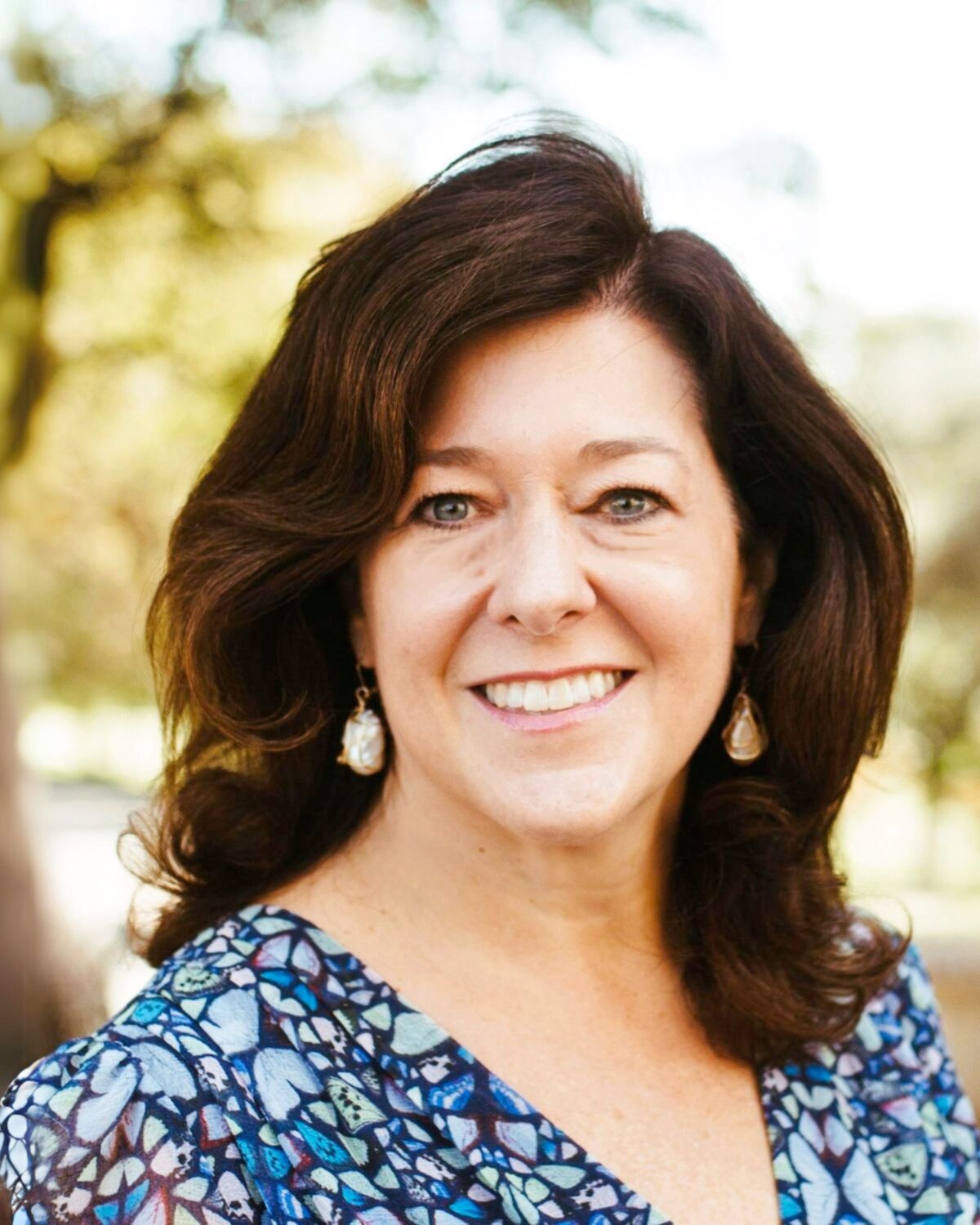
For 22 years as a lobbyist for the Texas Hospital Association, sixth-generation Texan Jennifer Banda ’98 helped shape Texas public policy, enhancing healthcare for millions of residents.
Her work representing nearly 500 Texas hospitals led to real results: more nurses on hospital floors, a dent in the nationwide nursing shortage, and expanded insurance coverage for residents. Her interest in public policy and politics was nurtured by her father, Congressman Jim Chapman, an attorney who represented Texas’s 1st congressional district in the U.S. House of Representatives from the mid-1980s through the late 1990s.
Banda is a proud Double Longhorn. As a Plan II Honors Program undergrad, her senior thesis centered on women’s impact on the development of public policy. During college and law school, she interned in the Texas and U.S. capitols, seeing firsthand the power of policymaking. After Texas Law, she took a job in the Texas Capitol. Banda worked in the House for the Chairwoman of the Public Health Committee, and then as the Health and Human Services advisor to former Texas House Speaker Pete Laney before accepting a job at the Texas Hospital Association (THA).
In 2024, Banda had been working for nearly three years as THA’s Senior Vice President of Advocacy and Public Policy, leading its lobbying and policy team, when she came across a job posting for the Executive Director of the Center for Women in Law, housed at the law school, and decided to apply. Now, a year and a half into the role, Banda is adjusting to living her life by semesters instead of legislative sessions as she leads the Center’s rich slate of programming.
In April, Banda and her team hosted the Center’s ninth annual Women’s Power Summit on Law and Leadership. The event drew some 250 attendees and featured speakers from former Dallas Mavericks Chief Executive Officer Cynthia “Cynt” Marshall to Noel Francisco, the 47th Solicitor General of the United States. We recently caught up with her.
Let’s start from the beginning: Where are you from originally, how did you make your way to UT, and why law school?
I’m from Sulphur Springs, Texas, but we moved to D.C. when I was in the 8th grade for my dad’s job. After undergrad, I didn’t know exactly what I wanted to do, but I knew a legal education would give me a lot of opportunities. The foundation of a law school education is issue identification and problem-solving. You learn to look at issues from all sides.
And Texas Law gives you an amazing academic education along with the relationships you build that carry you through your career. I’m still close to many people in my class. I still count them as my very best friends. They’re my confidants, my cheerleaders.
How did you find your way to the Texas Hospital Association?
While at the Texas Capitol, I worked closely with the Texas Hospital Association, and they approached me about an opening for a lobbyist. I was thrilled.
You’re trying to make sure the needs of the patients and the hospitals are being communicated to elected officials and policy makers. I did a lot of work around women’s health, the healthcare workforce, and reimbursement. A lot of reimbursement issues are about federal policy, because you’re working with Medicaid and Medicare, while workforce issues have you working with community colleges and the institutions of higher ed that educate nurses. Personnel shortages are critical issues for hospitals. We were one of many partners that helped get the Nursing Shortage Reduction Program created. It was an outcomes-based initiative that gave nursing schools funding to grow so they could educate more nurses.
I loved working in government; I loved working in public policy. It was so challenging, and no day was the same.
I thought, what if I pursued my passion project—working with strong women—as my career?
Then, how did you come to make the transition to returning to the law school 25 years after graduating?
I’ve been a mentor at the law school for a long time. When this role opened up, I thought, what if I pursued my passion project—working with strong women—as my career? So, coming back felt like a natural fit.
The skills of being in advocacy have translated very well into leading the Center. You have to develop strategic plans and engage with a variety of people. The root of being a lobbyist is relationships. I also ran THA’s political action committee, and that translates to my current work because we’re self-sustaining and need to fundraise. I really enjoy working in the law school and just being in the building because of the energy of the students. It’s exciting, and it makes it fun to come to work.
For those who don’t know, what exactly is the Center for Women in Law?
The Center was founded in 2009 by 50 women who thought we needed more opportunities for women to have mentorship and community to advance in the law. They went to the dean of Texas Law at the time, said we want to create this center, and we’ll bring our own investment dollars to do it. He said, “Okay, that’s fantastic!” Housed at Texas Law, the Center serves all interested law students as well as women and men practicing law all over the country—not just alumni. Our goal is to empower and encourage early- and mid-career lawyers and law students to confidently build, navigate, and advance their careers, and we do that through professional development programs, mentorship, and community building.
What are some examples of that?
A lot of our programming is focused on the soft skills of how to be a good leader. We have a two-day student program called the Institute for Law and Leadership, which is about how to step with authority from being a law student into the practice of law. We also do Power Lunches, bringing in lawyers from the pinnacles of their careers to talk about their career paths and life lessons. We’ve had the chair of the ABA Litigation Division, a former U.S. ambassador, and an executive leader at the FDIC. Practicing lawyers can earn CLE credit from our programs. We have a program for first-year law firm associates, too, our Accelerate Career Start program. It’s about how to be successful in Big Law and includes five virtual programs throughout the year. Our 14-member board governs our strategy, and I love seeing how much they enjoy giving back to the next generation of lawyers.
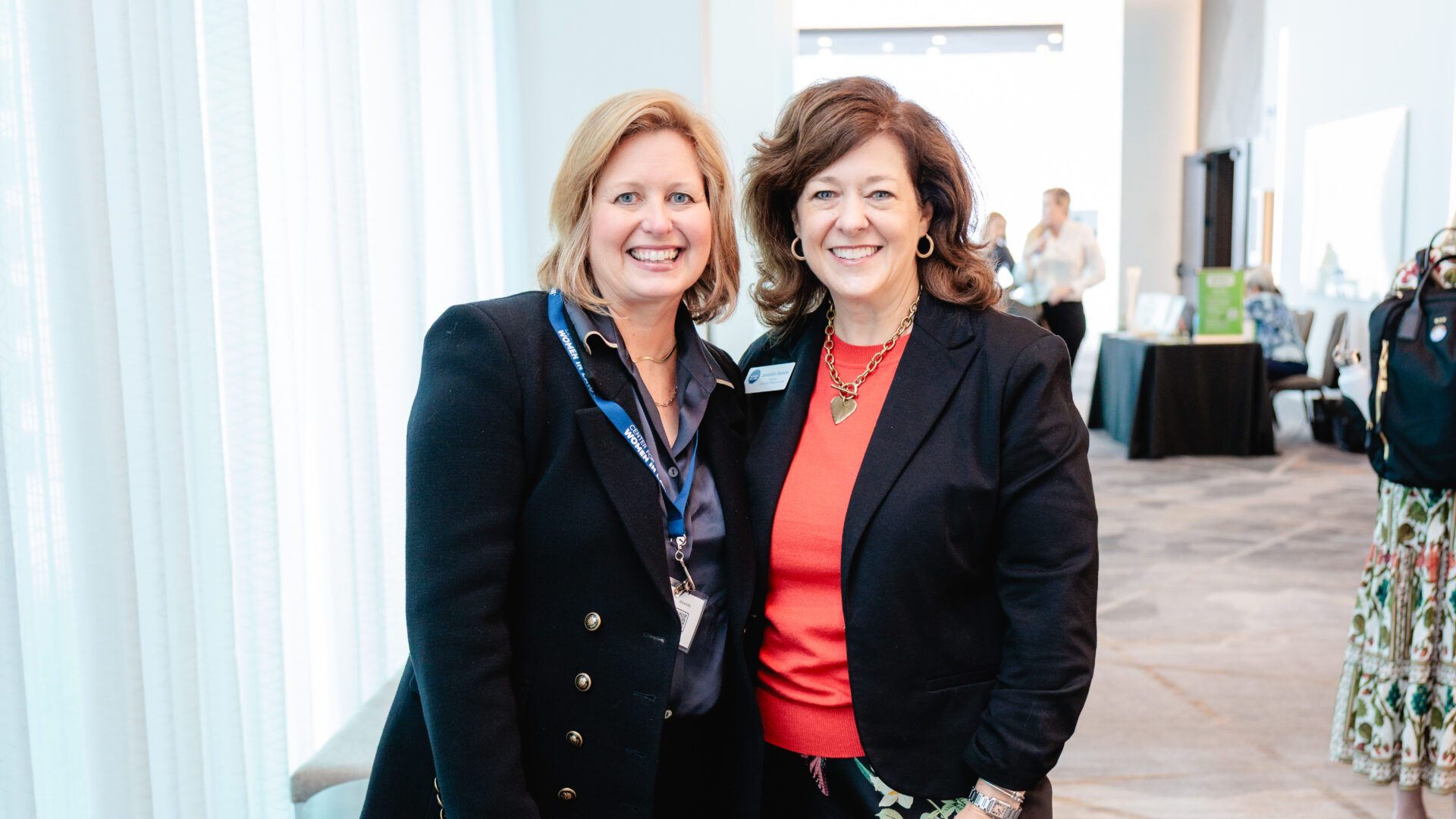
You just wrapped up another highly successful Women’s Power Summit. For our readers who might not know, what is the Summit?
It’s our every-other-year, three-day program geared toward lawyers who are in the advanced leadership stages of their careers. It’s really about getting people in the room who want to continue to build on the success of their career. It’s called the Power Summit because those who attend are the ones in the rooms where decisions are being made who can really help advance the practice of law for everyone. Attendees like hearing from lawyers at the pinnacle of their careers in law: a chief legal officer, a law firm managing partner, or a former Solicitor General of the United States. We’ve also had panels on transitions in the law and how legal skills can translate into all kinds of different careers. We’ve had speakers who now run foundations, who started a wine company, or who are best-selling authors.
What made this year’s summit special?
We had managing partners from some of the biggest national law firms, two former Solicitors General of the United States—one from the Trump administration, one from the Biden administration—and we heard from Amy Purdy, who was a Paralympian. She was a snowboarder who contracted bacterial meningitis, lost her legs below her knees, and then created her own path to become a Paralympian, winning several medals. She is a living example of perseverance.
Every year, we hear how the event re-energizes people’s passion for their practice. They say: I was sitting at the summit when I realized I should try to be the chief legal officer of my corporation, why wouldn’t I throw my hat in the ring? Or it dawned on me that I could be on the managing partner track. Or they say, the event gave me the opportunity to launch my own firm. When you hear what’s possible, and when you’re empowered, it can change your life.
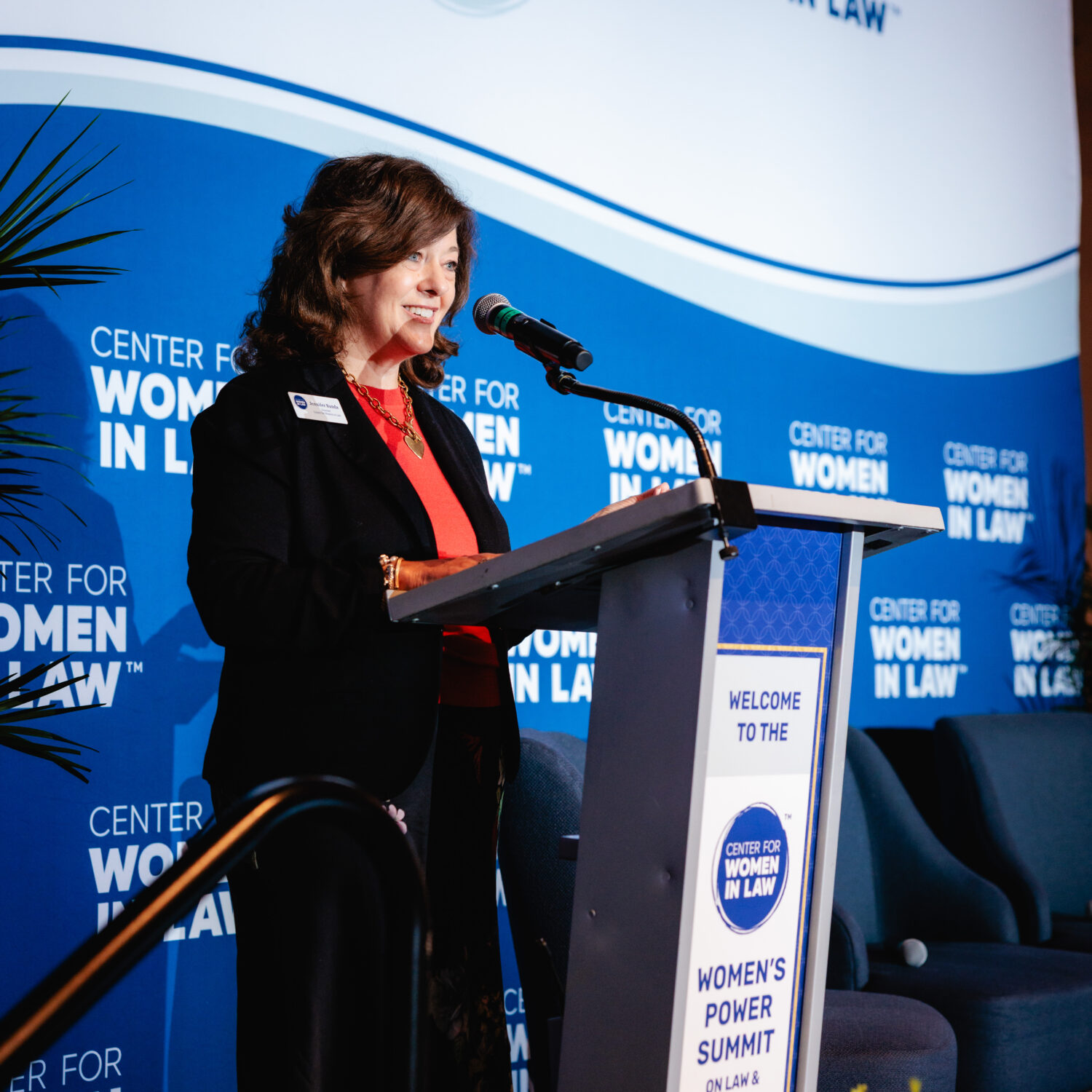
When you hear what’s possible, and when you’re empowered, it can change your life.
What advice do you typically give students or alumni who ask for it?
Figure out what you enjoy doing, really lean in and do it well, and then continue to volunteer when people need help and put your hand up. Volunteer to lead the initiative. Go to the dinners. Take opportunities to try and to learn new things. That will lead you on a path forward that you may not expect.
When you’re not helping attorneys develop their careers, what are you up to?
I’m an avid reader and have been in a book club for 12 years. I’m a dog mom. I’m also on the board of a Federally Qualified Health Center, which serves underserved and low-income patients. I’m a mom with a senior in college and a senior in high school, so we’re deeply immersed in graduations now in all the best ways. I’ve always been a really active, engaged mom. As my husband and I approach being empty nesters, I’m getting to find my passions, and it’s exciting how you get to re-craft your life.
What are three things inspiring you to feel that the future is bright?
My kids and getting to see them move on to their next stage; the people I work with at the Center; and the law school leadership and the lawyers we engage with—they’re really the best and brightest and are so passionate about the work that they do.