
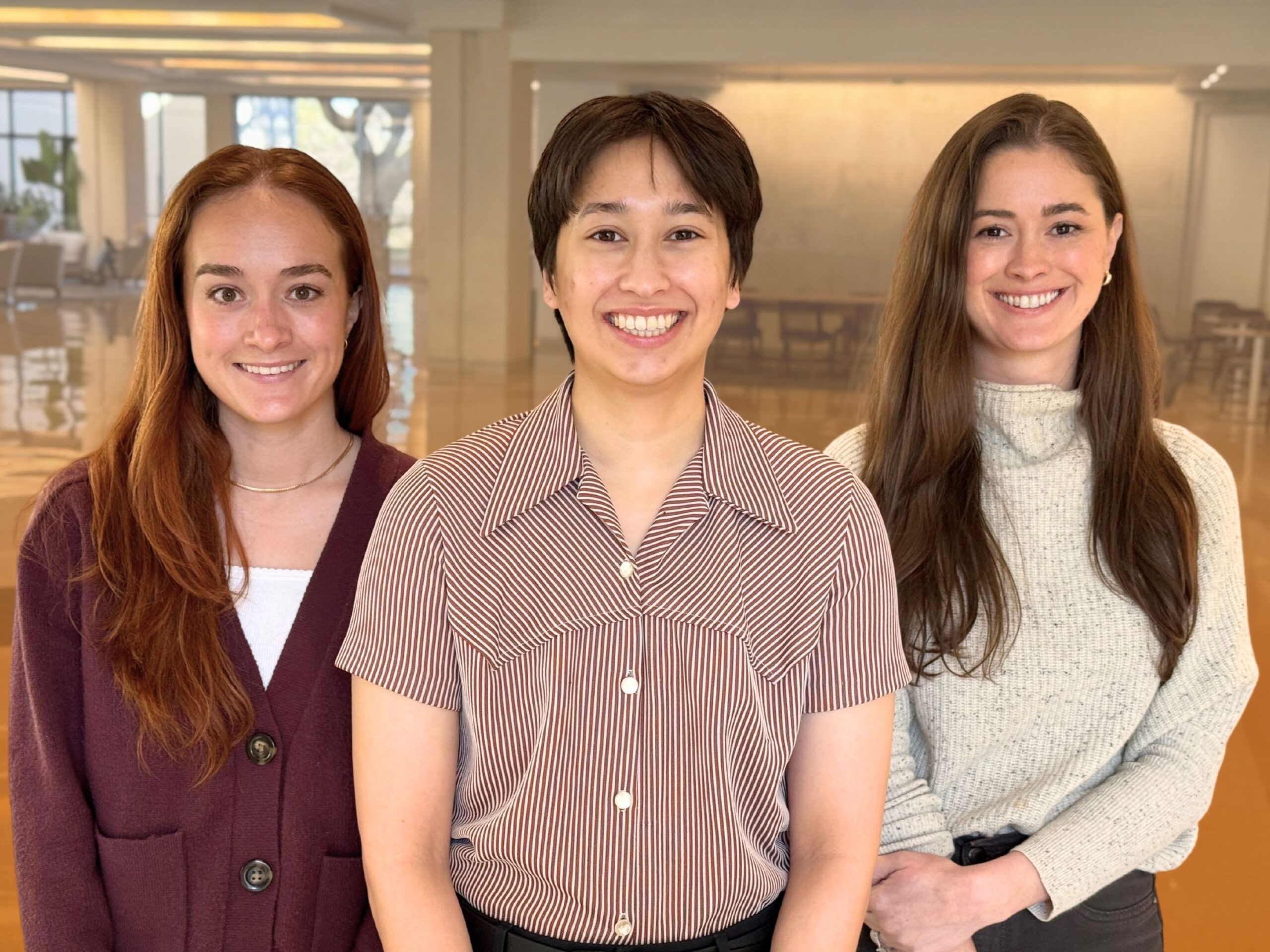
Texas Law continues its dominance in the annual Paper Chase Legal Writing Competition.
The Law School achieved a first-ever feat, as its students swept the competition’s top three places: 2L Elizabeth Graff won, 3L Kayla Shelkey finished second, and 3L Beth Ann Baker claimed third.
Now in its eighth year, each fall the Paper Chase invites law students across Texas to demonstrate their legal writing skills by responding to a fictional prompt based on current events. The Paper Chase is organized by the Texas Young Lawyers Association and Baylor Law School. Members of the TYLA serve as judges, while Austin-based firm FVF Law sponsors the prizes. The first, second, and third place students receive trophies and cash prizes of $5,000, $1,500, and $500, respectively.
With a Jan. 28 announcement of the winners, it marks the first time all three have come from a single law school. In addition, Texas Law 3L Grant Shellhouse was named a semifinalist, placing among the top six competitors. Shellhouse finished second in last year’s competition.

“Going into the contest, I knew my toughest competition would be my peers here at Texas Law, so finding out that I placed first was a huge surprise and truly an honor,” says Graff. The victory resulted from a combination of being “surrounded by outstanding classmates” and sharpening their legal writing skills “under a faculty of unmatched caliber,” Graff says. “Texas Law prepares us to succeed in a profession where even the strongest arguments and best ideas are seldom persuasive if they cannot be articulated clearly and concisely.”
At Texas Law, Graff is a staff editor of the Texas Journal on Civil Rights and Civil Liberties, serves as a research assistant for Professors Rachel Rebouché and Alexander Zhang, and is a teaching assistant for Zhang’s 1L Contracts class. Graff hopes to secure a clerkship when they graduate in 2027, then plans to focus their legal career on litigation.
Testing Practical Legal Skills
For last fall’s competition, participants were tasked with drafting a trial brief in support of a motion to disqualify opposing counsel, applying a series of presumptions established by Texas courts. They had to do so in no more than 10 pages.

Facing challenges similar to those they’ll encounter in practice, the Paper Chase “is a test of practical legal skills that forces competitors to produce high-quality work,” says Matthew Cordon, Baylor Law’s director of legal writing and A. Royce Stout Chair of Law. A Texas Law student has earned the No. 1 spot in the Paper Chase for five of the eight competitions, with at least one Lawhorn among the top three participants every year and multiple place winners on several occasions. “University of Texas law students have always done well in the Paper Chase,” Cordon says, “but we have never before had students from the same school occupy the three top spots.”
A total of 27 students representing six of the nine Texas law schools participated. As the host school, Baylor students are not eligible to compete.
Foundation for Success
“The Paper Chase competition is judged by practicing lawyers and we’re delighted that they see the same talent and skill in our students that we see,” says Kamela Bridges, director of the Law School’s David J. Beck Center for Legal Research, Writing, and Appellate Advocacy. 1Ls “complete complex assignments and receive thorough feedback,” Bridges says. “This solid foundation in fundamentals prepares them for success after they graduate—and, for these winners, even before graduation.”
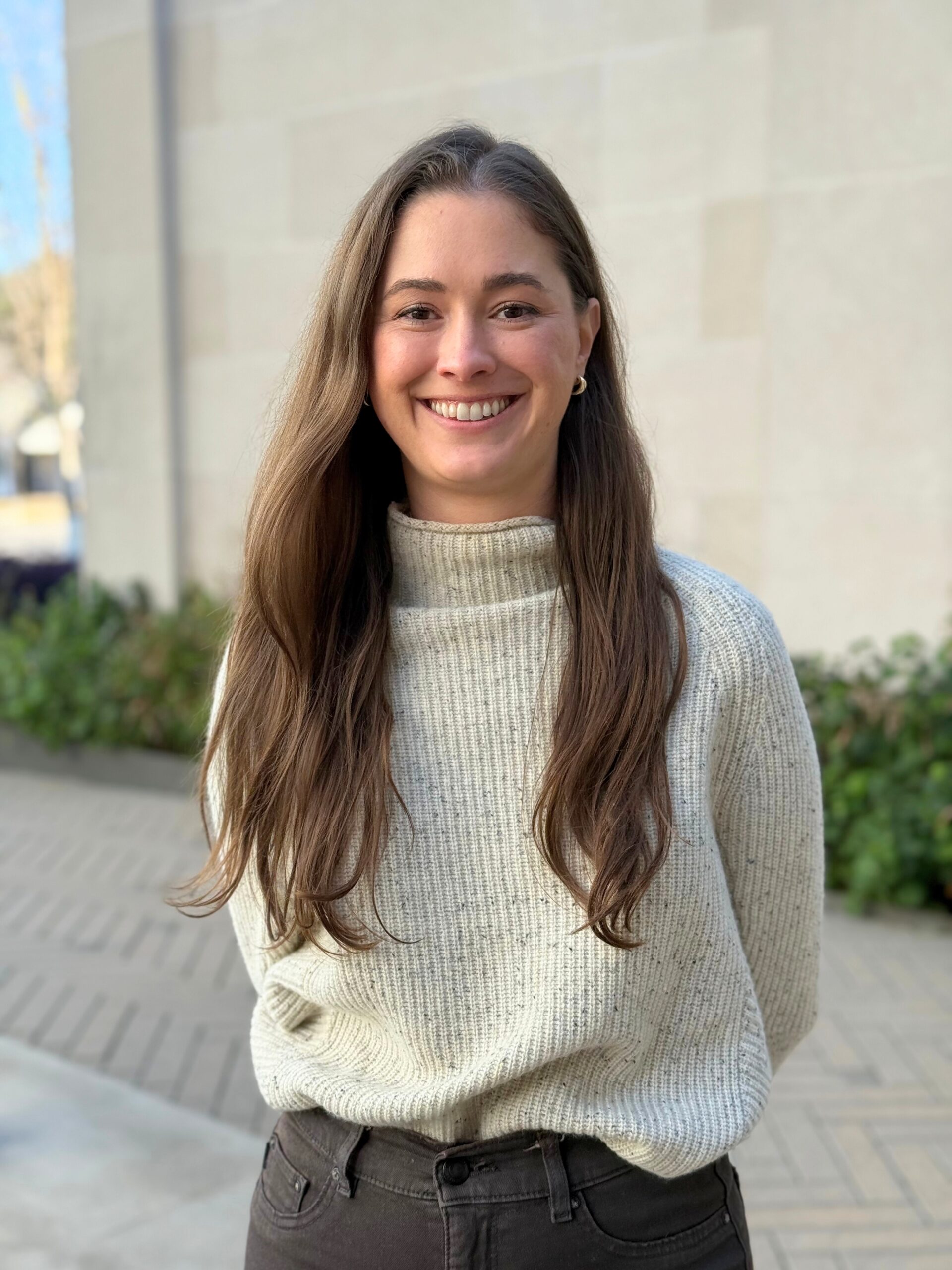
The Beck Center teaches all Texas Law students legal research, writing, and oral advocacy through required first-year courses, advanced upper-division offerings, and writing seminars. In addition, the Law School Writing Center offers individualized writing support, and Texas Law students write, edit, and publish 10 student-run law journals, most of which focus on specialized areas of law.
Legal writing faculty provide feedback to 1Ls that’s both “personalized and thorough, and there is a strong emphasis on clarity and substance over flourish,” says third-place finisher Baker. “We are trained not just to write persuasively, but to write responsibly, by anticipating counterarguments, grounding claims in authority, and communicating in a way that is useful to the reader, rather than just trying to sound ‘impressive,’” says Baker, who this summer will work as a transactional associate in the Austin office of Kirkland & Ellis.
“The Beck Center faculty are exceptional—highly skilled, deeply knowledgeable, and consistently focused on building practical, real-world legal writing skills,” agrees runner-up Shelkey, who after graduation will be clerking for Judge Leslie Southwick on the 5th Circuit Court of Appeals in Austin. “That foundation has been invaluable to me as a law student and a writer.”