
Classes are done, exams are over, and commencement ceremonies are underway across campus. With the exception of final grading and paperwork, faculty can now head into the break—and tackle their summer reading lists!
Summer is actually a busy season for faculty, filled with research, writing, and course planning. That means reading. A lot of reading. But we suspected that, alongside stacks of books on theory, history, and analysis, we might find the stray detective novel or work of classical literature.
So, we asked six Texas Law faculty members to share two books on their reading lists this summer: one book tied to their scholarship or legal interests, and one they’re reading purely for enjoyment. The result is a wide-ranging mix of ideas, genres, and recommendations from some of the sharpest legal minds in the country.
Check out the Texas Law Faculty Summer Reading List for 2026 below:

Steve Collis
Clinical Professor, Director of the Bech-Loughlin First Amendment Center and the Law & Religion Clinic
Personal
“The War for Middle-earth: J.R.R. Tolkien and C.S. Lewis Confront the Gathering Storm, 1933-1945” (2025) by Joseph Loconte
Historian Joseph Loconte tells for the first time how the dark shadows cast by the Second World War brought J.R.R. Tolkien and C.S. Lewis together in friendship and transformed their lives and literary imagination.
“I chose this because I find the story of Tolkien and Lewis and the complex relationship between their writing and their positions in higher ed to be both salient and personally powerful.”
Academic
“The Dying of the Light: The Disengagement of Colleges and Universities from Their Christian Churches” (1998) by James Tunstead Burtchaell
Through examining case studies of 17 colleges and universities, Burtchaell narrates how each school’s religious identity eventually became first uncomfortable and then expendable, then analyzes the processes that eroded the bonds between school and church.
“I chose this because it relates to some research I’m working on related to religiosity and the role it plays or does not play in helping create virtuous citizens who can govern themselves.”
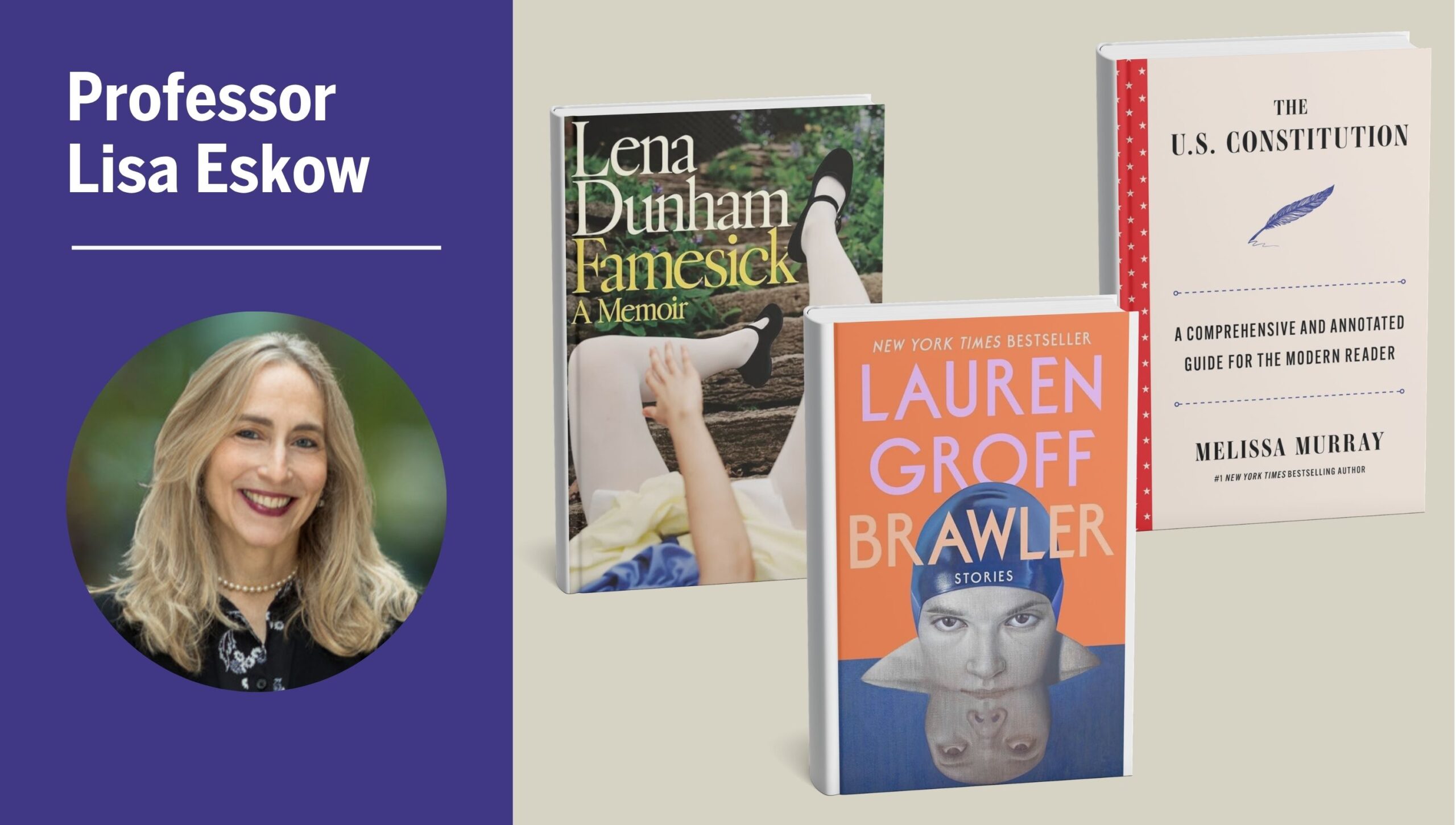
Lisa Eskow
Clinical Professor, Co-director of the Supreme Court Litigation Clinic
Personal
“Famesick” (2026) by Lena Dunham
In this rowdy, frank reflection on illness, fame, sex, and everything in between, Lena Dunham asks whether fulfilling her creative ambitions has been worth the pain. What she finds is deeper than physical relief, and more lasting, as she learns to live with what she can’t change and turn her regrets into wisdom that can carry her forward, as she reconnects to what, and who, she loves.
“I am ‘reading’ (Audible) Lena Dunham’s narration of her memoir ‘Famesick.’ It’s everything you’d want (and some things you won’t) from the polarizing creator and star of Girls, who continues to generate challenging and valuable—even if less headline-making—on-screen works. You already know whether this whip-smart, funny, dishy, exasperating, sad, and profoundly human book is for you.”
“Brawler” (2026) by Lauren Groff
Lauren Groff’s nine short stories trace the battle between our dark and light angels — from a young woman thrust into her sibling’s care to a banking heir with a troubling inheritance. Spanning the 1950s to today, from New England to California, these are people trying to do the right thing for as long as they can.
“In my hands is ‘Brawler,’ a short-story collection by Lauren Groff, whose writing shimmers while packing a gut punch.”
Academic
“The U.S. Constitution” (2026) by Melissa Murray
Bestselling author, podcast host, and legal expert Melissa Murray provides in-depth, accessible, and irreverent analysis of the Supreme Court and its cases, culture, and personalities. Think of this as the U.S. Constitution explained by America’s favorite law professor.
“Law-wise, I’m looking forward to getting back to basics with Melissa Murray’s ‘The U.S. Constitution,’ which includes annotations providing historical context for the substance and phrasing of this founding document. Can’t we all be contextualists now?”
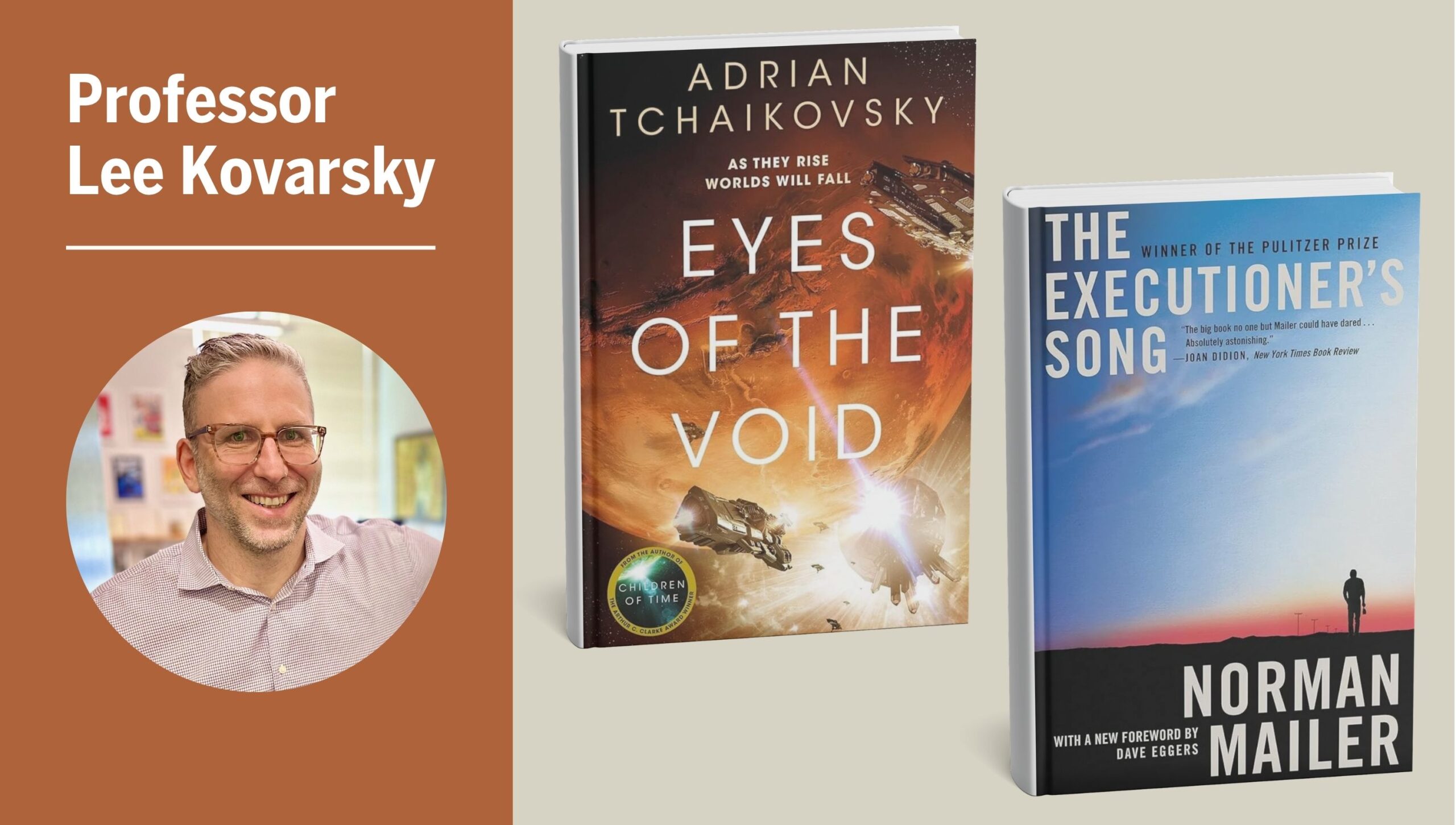
Lee Kovarsky
Bryant Smith Chair in Law Professor
Personal
“Eyes of the Void” (2022) by Adrian Tchaikovsky
The Final Architecture space opera trilogy continues with its second installment, “Eyes of the Void.” Facing impending extinction, the Human Colonies are in turmoil. While some believe a unified front is the only way to stop the Architects, alien aggressors wreaking havoc as they consume entire planets, others insist humanity should fight alone. And there are those who would seek to benefit from the fractured politics of war – even as the Architects loom ever closer.
“Because my work reading is always pretty morbid (see below), I only read science fiction for pleasure. I especially like multi-volume series that go long on the world-building, for maximum escapism. I just finished ‘Shards of the Earth,’ the first book in The Final Architecture trilogy, and couldn’t wait to read the next one.”
Academic
“The Executioner’s Song” (1979) by Norman Mailer
“The Executioner’s Song” follows the true story of cold-blooded murderer Gary Gilmore, who, after being tried and convicted, insisted on being executed for his crimes. To do so, he fought a system intent on keeping him alive long after it sentenced him to death. Impossible to put down and difficult to forget, Mailer’s novel tells Gilmore’s story with impressive authority and compassion.
“I am writing a book about modern execution delay, and Mailer’s book won a Pulitzer for documenting the quest for the first modern condemnee to facilitate his own execution. It therefore feels like essential reading for my own project.”
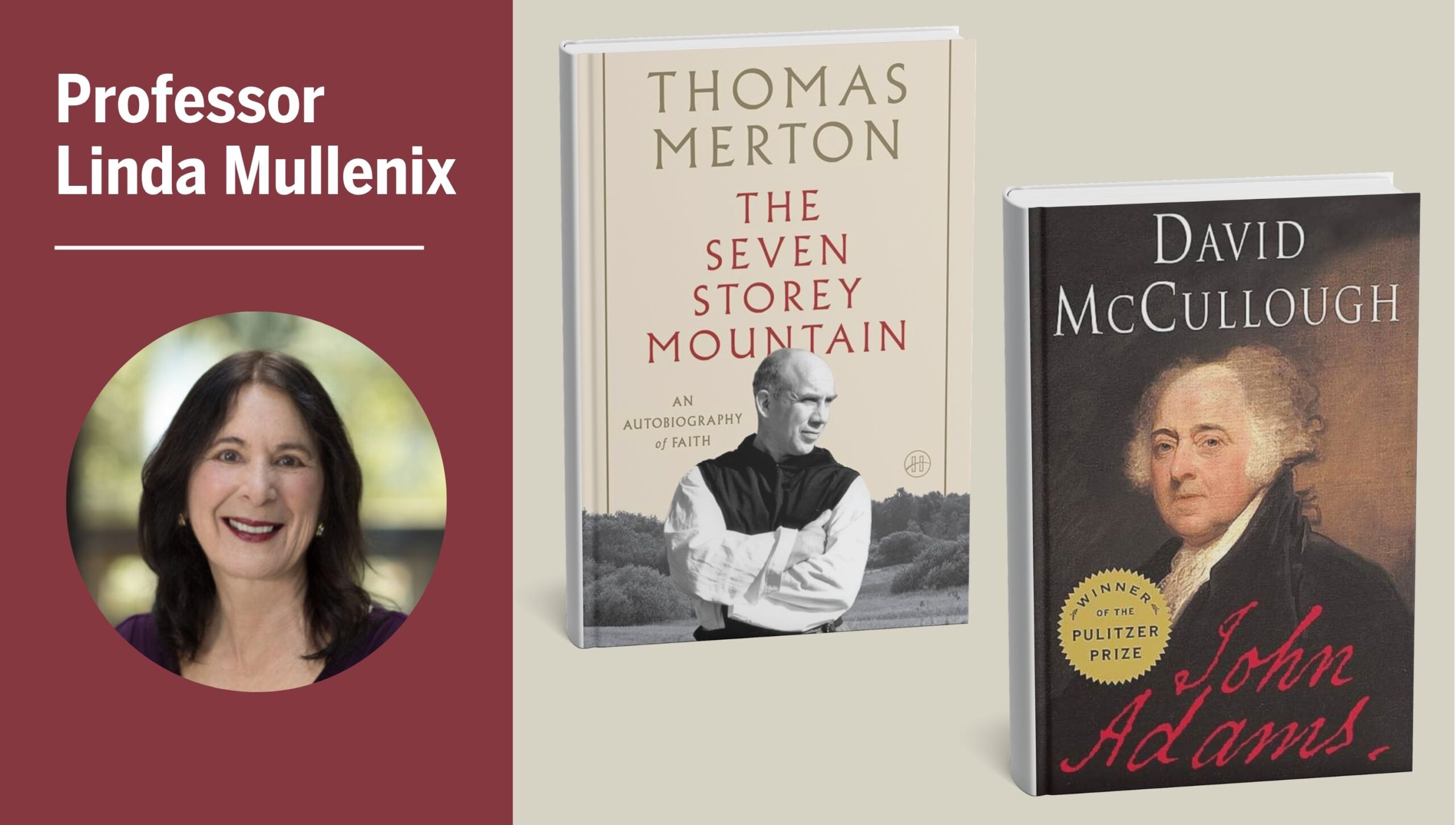
Linda Mullenix
Morris and Rita Atlas Chair in Advocacy Professor
Personal
“The Seven Storey Mountain” (1948) by Thomas Merton
Credited as being the first major Catholic book to achieve widespread popularity in America, this celebrated Christian classic details Thomas Merton’s spiritual evolution, which has captivated millions since its publication. Based on Merton’s personal journals, The Seven Storey Mountain is a profound Catholic conversion story that tells of the growing restlessness of a brilliant and passionate young man, who at the age of twenty-six, takes vows in one of the most demanding Catholic orders―the Trappist monks.
“To renew my faith in faith.”
Academic
“John Adams” (2001) by David McCullough
In this powerful, epic biography, historian David McCullough unfolds the adventurous life journey of John Adams, the brilliant, fiercely independent, often irascible, always honest Yankee patriot who spared nothing in his zeal for the American Revolution; who rose to become the second president of the United States and saved the country from blundering into an unnecessary war; who was learned beyond all but a few and regarded by some as “out of his senses”; and whose marriage to the wise and valiant Abigail Adams is one of the moving love stories in American history.
“To renew my faith in the American project.”

Theodore Rave
The Bernard J. Ward Centennial Professorship in Law Professor
Personal
“The Power Broker” (1975) by Robert Caro
A modern American classic, this huge and galvanizing biography of Robert Moses reveals not only the saga of one man’s incredible accumulation of power but the story of his shaping (and mis-shaping) of twentieth-century New York.
“For fun I’m planning on reading Robert Caro’s ‘The Power Broker’ because it’s about the part of the country where I grew up.”
Academic
“Pluralist Democracy in the United States: Conflict and Consent” (1967) by Robert A. Dahl
The book traces the roots of America’s pluralist democracy, the evolution of the country’s political institutions, and the role that conflict and consent play in upholding America’s democratic processes.
“Dahl’s book relates to work I’m doing on the obligations of lead lawyers in multidistrict litigation.”
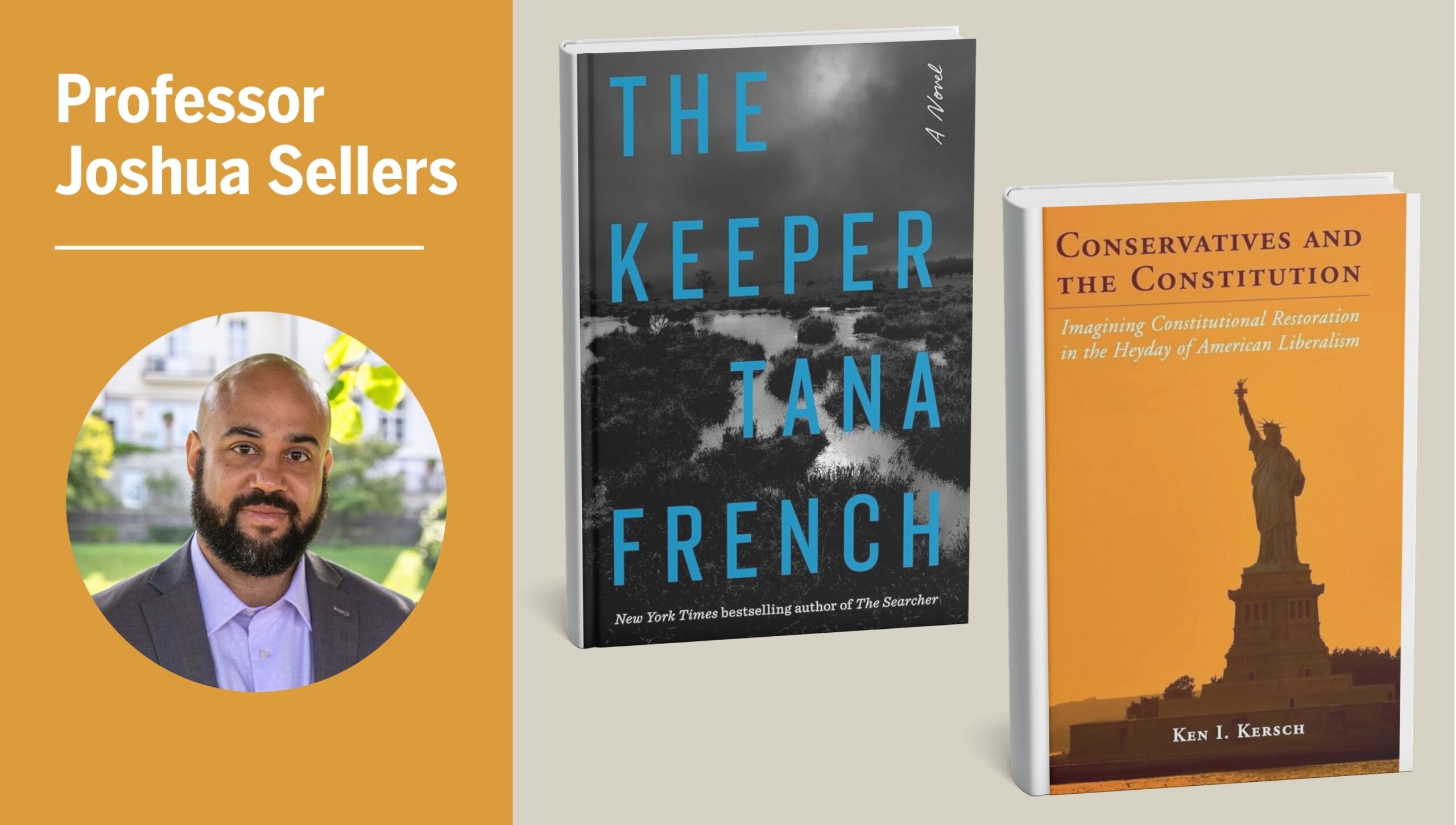
Joshua Sellers
Professor
Personal
“The Keeper” (2026) by Tana French
On a cold night in the remote Irish village of Ardnakelty, a girl goes missing. Sweet, loving Rachel Holohan was about to be engaged to the son of the local big shot. Instead, she’s dead in the river. Retired Chicago detective Cal Hooper has friends here now, and he owes them loyalty, but his fiancée Lena wants nothing to do with Ardnakelty’s tangles. As the feud becomes more vicious, their settled peace starts to crack apart. And when they uncover a scheme that casts a new light on Rachel’s death and threatens the whole village, they find themselves in the firing line.
“I read a lot of crime fiction and, like many others, eagerly anticipated the recent publication of Tana French’s ‘The Keeper.’ It’s the final book of her trilogy centered on a retired Chicago cop who moves to a small village in rural Ireland. French is justly celebrated for her evocative writing, brilliant ability to convey the complexities of the simplest interactions, and capacity to build and sustain suspense.”
Academic
“Conservatives and the Constitution: Imagining Constitutional Restoration in the Heyday of American Liberalism” (2019) by Kenneth I. Kersch
By looking at the deep stories told either by identity groups or about what conservatives took to be flashpoint topics in the postwar period, Ken I. Kersch seeks to capture the developmental and integrative nature of postwar constitutional conservatism, challenging conservatives and liberals alike to more clearly see and understand both themselves and their presumed political and constitutional opposition.
“I missed the book when it was published in 2019, but, in large part due to Professor Levinson’s recent endorsements, have moved it to the top of my reading list. Last summer I read Sam Tanenhaus’s superb biography of William F. Buckley, and I anticipate Kersch’s book providing an even richer exploration of the rise of modern conservatism.”