
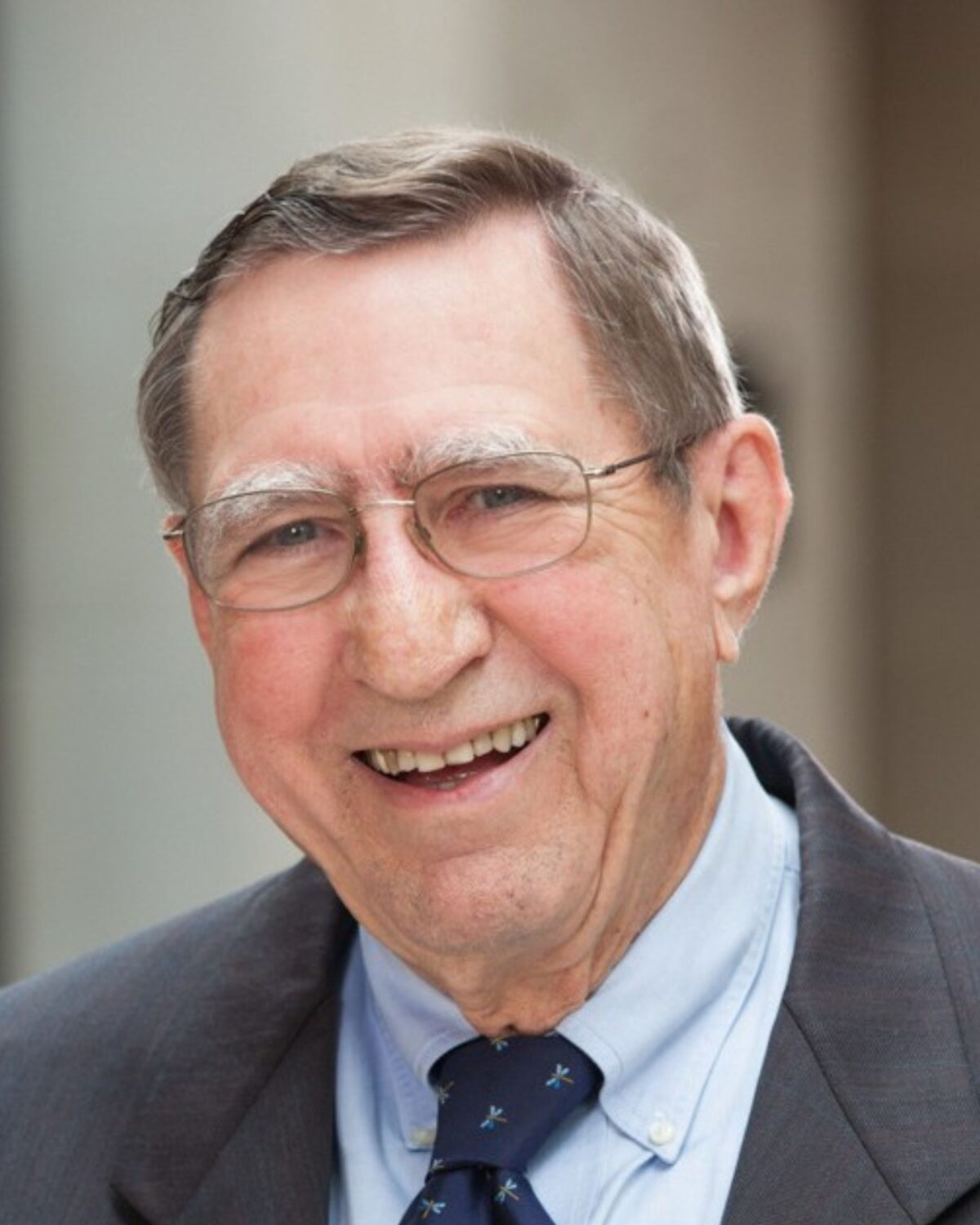
Legendary Texas Law professor John J. “Jack” Sampson died in June 2025. In December, family, friends, and former colleagues gathered in Austin to remember Sampson and his legacy of service to generations of law students, and those vulnerable Texans on whose behalf he spent his professional life advocating.
Sampson was the former William Benjamin Wynne Professor Emeritus in Law and the co-founder and longtime director of the Law School’s Children’s Rights Clinic.
Colleagues and former students remembered Sampson as a down-to-earth, approachable mentor and friend who recognized how vulnerable children can be and did everything he could to ensure their legal rights, working as an advocate, scholar, and clinical professor.
“He was open and welcoming,” says Lori Duke ’95, who began as Sampson’s student and later became his colleague, now serving as the Children’s Rights Clinic’s co-director.
“As a supervising attorney, he gave me a lot of independence and flexibility, which I really appreciated,” adds Duke. “And he was able to identify holes in cases or problems without making you feel like an idiot.”
Thousands Helped
Born in St. Paul, Minnesota, and raised in a rural community outside the city, Sampson earned a business degree from the University of Minnesota and spent five years working in a steel mill in East Chicago, Indiana, before deciding that industry was not for him.
In 1980 Sampson founded the Children’s Rights Clinic, one of the first clinics at Texas Law. The clinic represents children in Travis County District Court in cases in which the state seeks custody or termination of parental rights based on allegations of abuse and neglect. Sampson had an exceptional ability to see cases from multiple angles.
Since the clinic’s founding, “we have helped thousands of children, and we have educated probably hundreds—maybe a thousand—students who then went on to become lawyers, some of whom have specialized in this kind of work,” says Duke. “Jack has really impacted the legal landscape.”
Jack has really impacted the legal landscape.
Lori Duke ’95,
co-director of the Children’s Rights Clinic
Creating Laws
In addition to leading the clinic, Sampson was a principal drafter of Texas family law legislation, including laws governing child support, termination of parental rights, visitation, and more. He was instrumental in creating a law that requires appointment of an attorney “ad litem”—a Latin phrase meaning “for the case”—for every child under the conservatorship of the Texas Department of Family and Protective Services. Texas law generally requires “ad litem” attorneys to follow the expressed objectives of their child clients, unlike many states in which those attorneys often substitute their own determinations of what is best for the child.
“In some states, kids don’t have lawyers” in these types of cases, says Duke. “In Texas, they are always entitled to lawyers.” The credit for that belongs in large part to Sampson.
“I don’t know anybody who did more for the children of this state, legally,” says former student Kate Goode ’85. Years after she was a student, Goode and her husband, Professor Steven Goode, got to know Sampson socially through events Sampson graciously hosted along with his wife, Joyce. Goode describes Sampson as “the least pretentious person in the world.”
Notable Case
In 2008, more than 400 minors were placed in state custody following a raid on the Eldorado, Texas, compound of the Fundamentalist Church of the Latter Day Saints, a religious sect that practices polygamy. By state law, the children were all required to be provided representation in their custody cases. Within days of the order, the clinic—under Sampson’s leadership—began training hundreds of attorneys who volunteered to represent those children. The media frequently called on Sampson to help explain the case, and he later served as an expert witness in some of the resulting litigation.
Sampson was a sought-after expert on children’s law issues statewide, nationally, and internationally. He led and served in numerous advisory roles, including the Texas Supreme Court Child Support Advisory Committee, Texas Pattern Jury Charges committee on family law, U.S. Secretary of State’s Advisory Committees on International Private Law for both Protection of Minors and Enforcement of Maintenance, and U.S. State Department Delegation to The Hague Conference on Private International Law. His work with that conference culminated in a convention governing recovery of child support and other family maintenance in signatory nations.
Sampson also co-authored “Sampson and Tindall’s Texas Family Code Annotated,” which is now in its 35th edition.
Ethical Pathfinder
As he centered children’s voices in family law issues, Sampson thoughtfully considered ethical issues around the attorney-client relationship with minors who often were dealing with issues of trauma, addiction, and disability. “Figuring this out involved research in the areas of child development, communications, developmental psychology, and pediatrics,” clinic co-founder and former director Cynthia Bryant noted during a 2017 retirement tribute for Sampson. “Jack was our pathfinder, always focusing on our ethical responsibilities as lawyers toward our clients.”
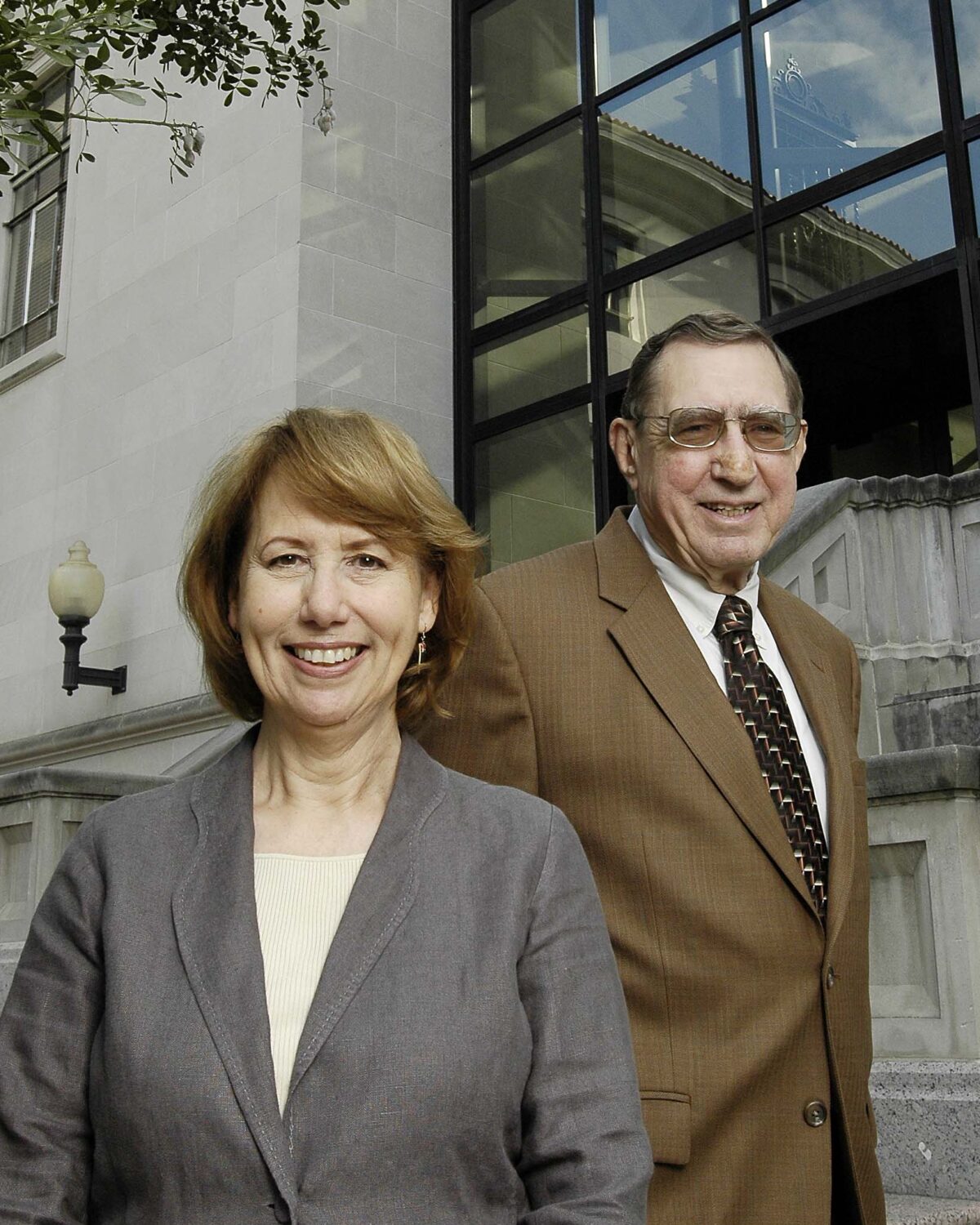
Sampson was preceded in death by his wife Joyce, with whom he hosted Super Bowl parties and end-of-semester faculty potluck dinners at their home. Together, they created the Jack and Joyce Sampson Family Foundation, which funds initiatives in Texas and Minnesota, including several legal services organizations. The couple is survived by their daughters, Margaret ’00 and Eleanor.
Tribute to the Sampsons
At the December 2025 memorial, former Texas Law Dean Mark Yudof—who, with his wife Judy, was a regular guest at those Super Bowl parties—presented the most personal tribute to both Sampsons:
“While Jack published erudite articles, his mission was to create a more just legal system with better outcomes for families without substantial resources. And he did it. He sought justice for the poor and never self-aggrandizement. He was a thinker—but also a doer.
“Joyce fit the same mold. She was a one-woman army in service of the causes she believed in, (including) a compassionate government led by able political leaders… Personal recognition was not on her radar screen.”
To learn more about the life and legacy of Jack Sampson, read the oral history (pdf) he provided to the Tarlton Law Library in 2014, as well as our past article on his work and recognition.