
Professor Emeritus Douglas Laycock has completed a major scholarly undertaking that will help shape future tort law and remedies. Laycock, working with Richard L. Hasen of the UCLA School of Law, served as Reporter for the American Law Institute’s “Restatement of the Law Third, Torts: Remedies,” the newest installment of ALI’s decades-long project to reflect the evolution of tort law in American courts. The work was approved at the institute’s 2026 annual meeting on May 18.
Laycock is widely recognized as a leading legal scholar on remedies and religious liberty.
“Doug Laycock is the titan in the field of remedies,” said Samuel Bray, professor at the University of Chicago Law School in a 2025 article. “He wrote the history of the field, the most widely used casebook, and the most important work of scholarship. The field of remedies is more than Doug Laycock, but it is not much more.”
I am delighted that the Institute has adopted important parts of my longtime scholarly work on injunctions.
Douglas Laycock
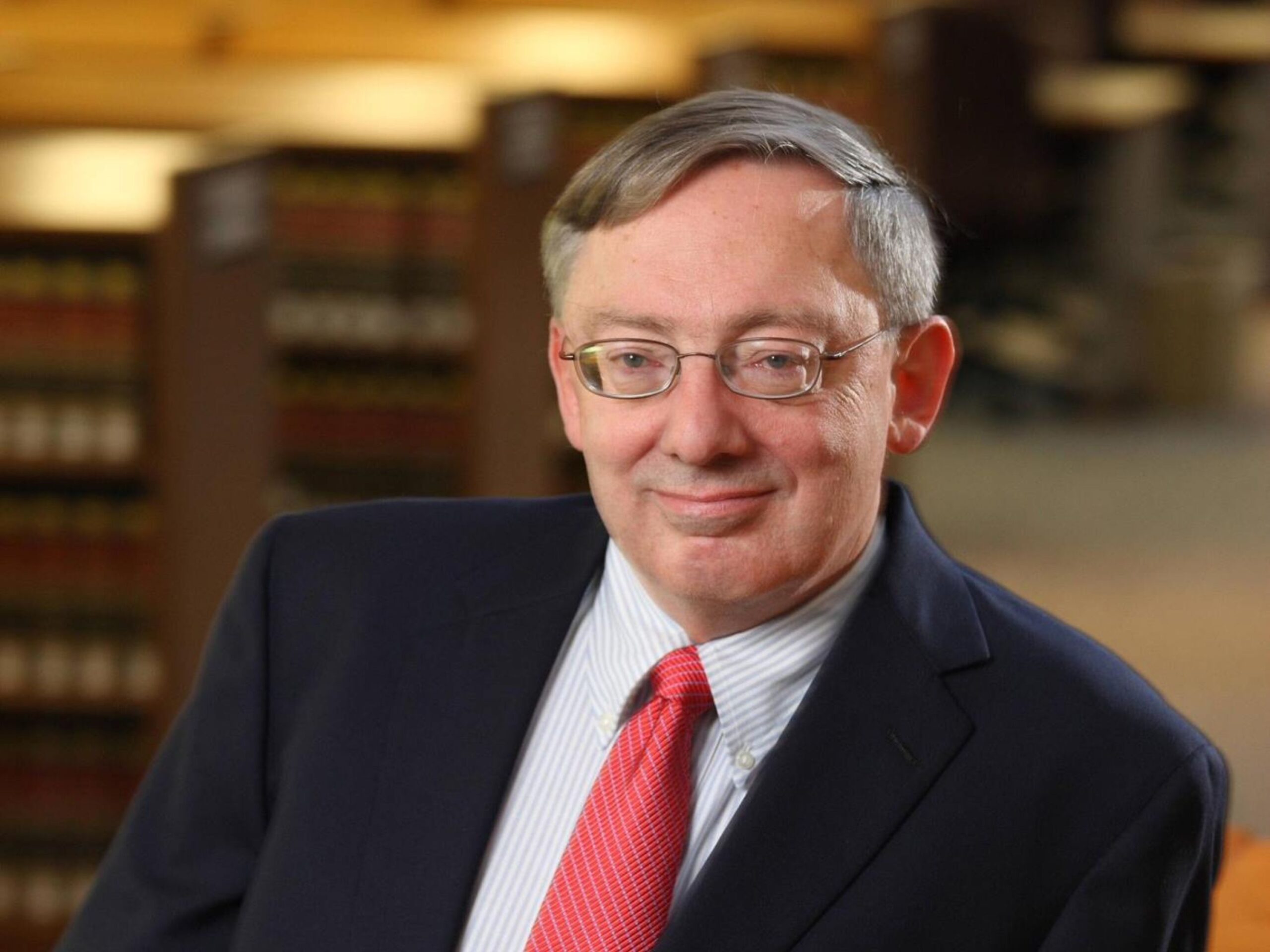
The Restatement addresses the principles governing available relief after liability is established in a tort action. Organized around categories of remedies and types of harm, the project provides guidance on the recovery and measurement of damages, restitution of a wrongdoer’s profits, injunctions against threatened or continuing torts, and other forms of specific relief.
Topics covered include general rules for measuring compensatory, nominal, and punitive damages, along with compensation for specific harms such as lost wages or lost profits, medical expenses, pain and suffering, emotional distress, and damage to property.
“I am delighted that the Institute has adopted important parts of my longtime scholarly work on injunctions,” says Laycock, who has been working on the project for the past seven years.
“Doug Laycock is a force of nature and a national treasure,” says co-author Hasen. “He’s driven the field of Remedies strongly into the 21st century with clarity, fairness, and thoroughness. I’ve been fortunate to have come along with him for part of the ride.”
Much of Laycock’s scholarship has focused on demonstrating that permanent injunctions are, and should be, freely available when necessary and not unduly burdensome.
“Courts often say that injunctions are a subordinate remedy, available only when damages cannot be made to work, but that is not how courts act,” explains Laycock. “This Restatement sets out what courts actually do, more explicitly and in much greater detail, than earlier Restatements. It reflects a significant evolution in how remedies are treated within the Restatement framework.”
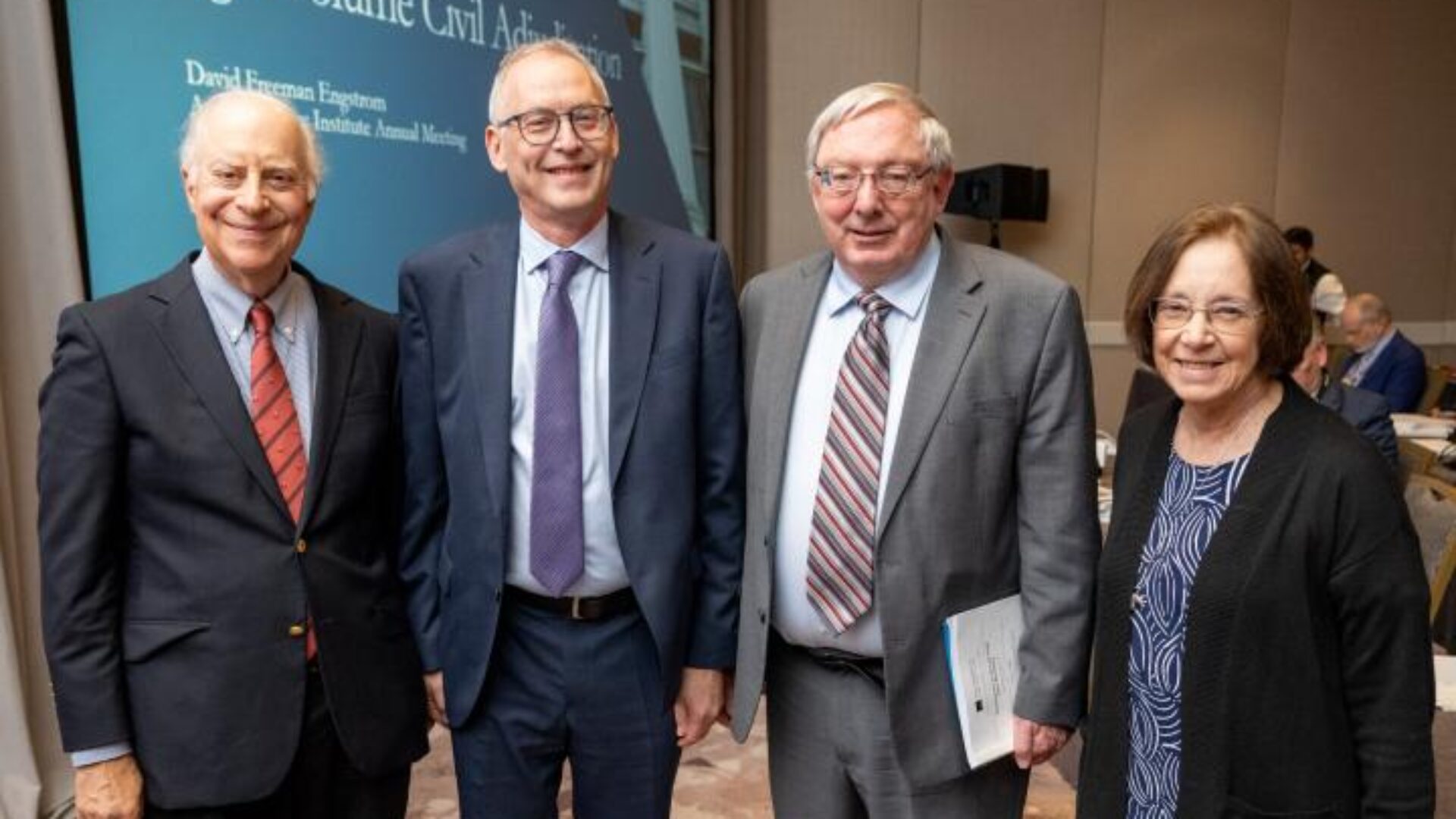
Earlier Restatements treated remedies as a brief concluding topic, but Laycock and Hasen’s new edition takes a more comprehensive and integrated approach, with remedies examined in greater depth, reflecting their central role in determining the real-world consequences of tort liability and shaping how courts administer relief.
“We have spelled out the actual considerations that guide the choice of remedy in much greater detail, and we have tried to explain these considerations more clearly,” says Laycock. “We have cited vastly more cases.”
“The completion of Torts: Remedies represents a major milestone in the Institute’s work on the Third Restatement of Torts,” said Diane P. Wood ’75, director of the American Law Institute, in an ALI press release announcing the approval of the Restatement. “(Laycock and Hasen) have brought clarity and coherence to an area of law that is essential to the administration of justice.”
The authors will now prepare the official text for publication, incorporating editorial revisions and updated citations.
In addition to nearly four decades at Texas Law, Laycock has held tenured positions at the University of Chicago, the University of Michigan, and the University of Virginia. Laycock has testified before Congress and argued cases in courts across the country, including in the U.S. Supreme Court. A longtime fellow of the American Academy of Arts and Sciences, he earned his J.D. from the University of Chicago.
Texas Law and the American Law Institute
Texas Law has a long history with the ALI, with 27 current and retired faculty serving as institute members. In addition to Laycock, former deans Ward Farnsworth and Bill Powers served as ALI reporters for the Third Restatement of Torts. Professors Linda Mullenix, Charles Silver, and Jay Westbook have held major roles on ALI projects. Professor Joshua Sellers was the most recent Texas Law faculty member elected to ALI membership to be involved in the writing of one of ALI’s Restatements. Longtime faculty member Charles Alan Wright was the ALI’s president from 1993-2000. Alumna Lyrissa Lidsky ’93 is a co-reporter on Restatement of Torts, Third: Defamation and Privacy.
Texas Law alumni are also prominent in the institute’s leadership. In addition to Wood, Wallace Jefferson ’88, former Chief Justice of the Texas Supreme Court, is the ALI president.
Founded in 1923, the American Law Institute is the nation’s leading independent organization dedicated to producing scholarly work that clarifies, modernizes, and improves the law.